What was Lonnie Johnson's invention?

Lonnie Johnson is known by millions, perhaps unknowingly, as the creator of one of the most popular summertime toys ever conceived: the Super Soaker water gun. However, the man behind the ubiquitous plastic device was, and remains, a serious aerospace engineer whose career spanned decades at the forefront of American space exploration. His most famous invention was born not in a toy workshop, but during an independent experiment in his bathroom, demonstrating that true innovation often sprouts from unexpected places and deep scientific knowledge.
# Alabama Roots
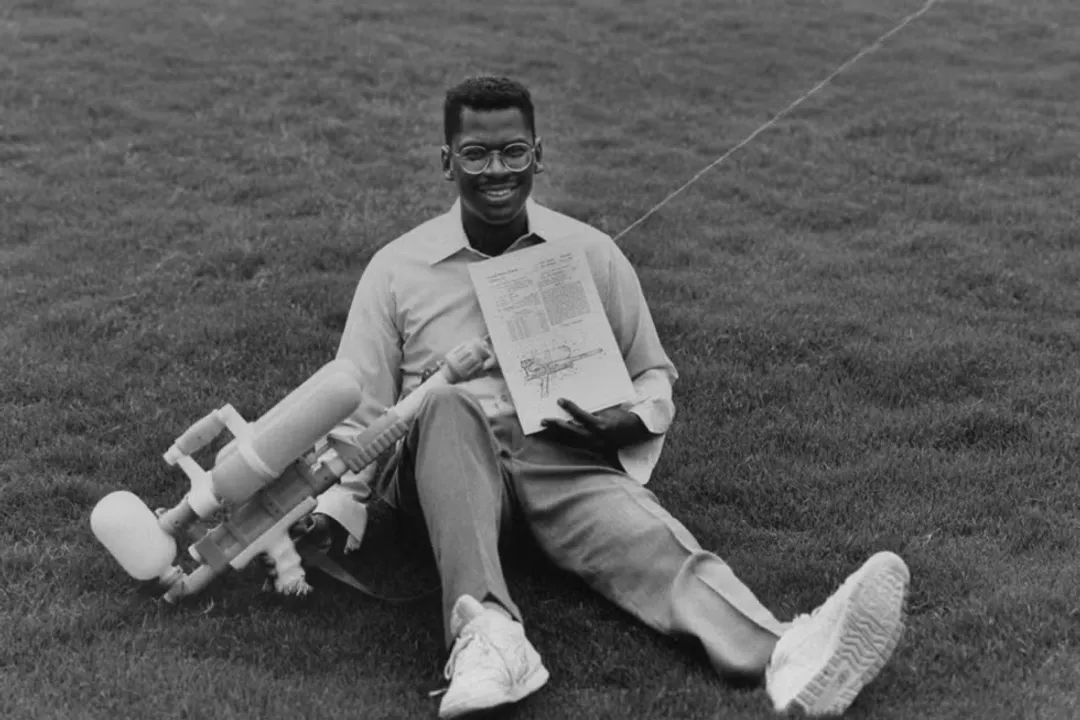
The seeds of invention were sown early in Johnson’s life in Mobile, Alabama. From a young age, he exhibited a profound curiosity about how things worked and a strong drive to achieve ambitious goals. This early fascination was evident when, as a boy, he built a homemade rocket that managed to reach an altitude of nearly a mile. This early success underscored a developing aptitude for engineering principles that would later define his professional life.
Johnson pursued his passion through higher education, earning a bachelor’s degree in mechanical engineering from Tuskegee University. His academic commitment deepened when he later secured both a master’s degree in nuclear engineering and an honorary doctorate from the institution. This solid educational foundation in complex engineering disciplines provided the perfect springboard for a high-level career.
# Aerospace Work
Lonnie Johnson’s professional life centered on space technology for the U.S. Air Force and later NASA. He moved to the Johnson Space Center in Houston, Texas, where he served as a systems development scientist. His expertise was critical to numerous advanced projects, including modeling for the Galileo mission to Jupiter, where he worked on electrical system simulations and testing. Over the course of his extensive career in aerospace, Johnson secured more than one hundred U.S. patents for his various inventions, showcasing a consistent dedication to applying engineering solutions to practical problems. It is fascinating to consider that the same mind fine-tuning spacecraft guidance systems was also looking for ways to improve recreational gadgets.
# Accidental Toy
The genesis of the Super Soaker is a classic example of accidental discovery within scientific practice. The breakthrough occurred around 1982 while Johnson was working in his bathroom at home. He was conducting an experiment involving pressurized water and air to test a concept for a future heat pump system. During this pressure test, he observed a powerful jet of water shoot across the room. Johnson immediately recognized the potential for something far removed from his current aerospace work.
The initial concept was rooted in his engineering understanding: how to use compressed air to propel a stream of water with greater force and distance than existing water toys. While the immediate inspiration came from a pressurized stream, the development process required several iterations. Johnson spent years refining the design, focusing on elements like air pressure containment and nozzle efficacy.
This refinement phase illustrates a key component of applied science that often gets overlooked when viewing consumer products. Unlike a product developed through standard toy prototyping, Johnson’s approach was methodical, drawing directly from his deep knowledge of fluid dynamics and pressure systems perfected during his NASA tenure. This rigorous, scientific approach—treating the water gun as a complex pressure vessel rather than a simple novelty item—is what allowed the final product to achieve unprecedented water pressure and range, setting a new benchmark for the entire water toy industry.
The patent for the pressurized water gun was officially issued on May 27, 1991. This date marks the legal beginning of what would become a cultural phenomenon.
# Licensing Success
Securing the patent was only the first hurdle; bringing a complicated, pressurized device to mass market required partnership. Johnson opted not to manufacture the toy himself, choosing instead to license his invention to established toy companies. He initially showed the prototype to a variety of manufacturers, who were initially skeptical about the device's capabilities.
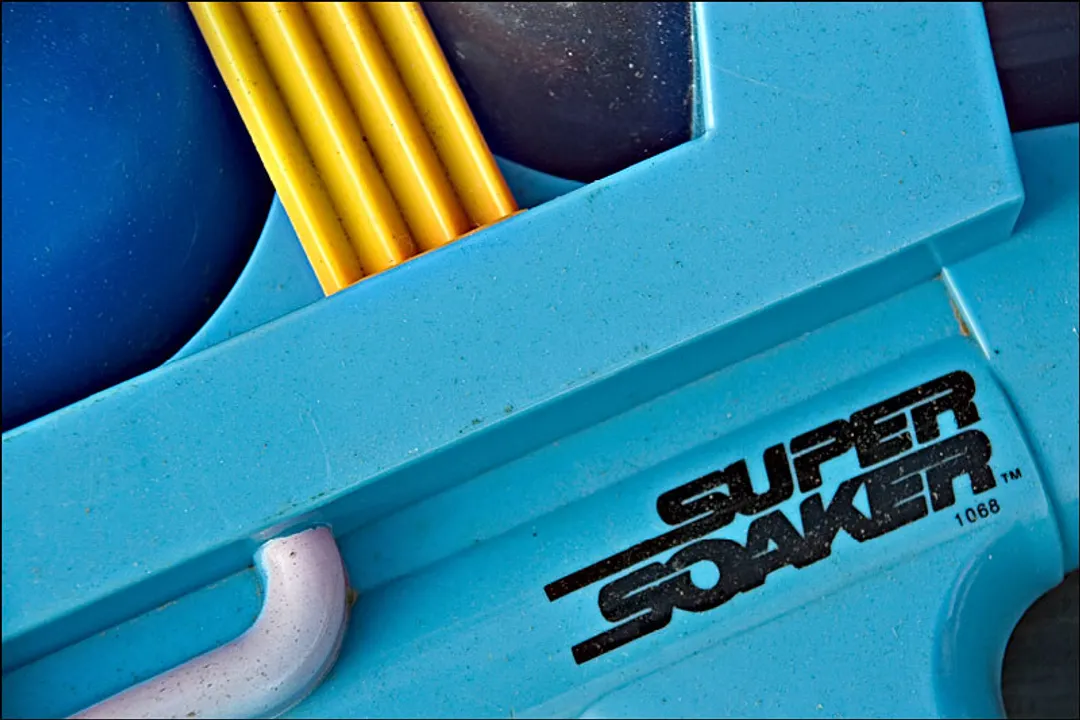
Ultimately, Lonnie Johnson struck a deal with Larami Corporation, which was later acquired by Hasbro. The product was launched under the name Super Soaker. The timing proved impeccable. Released in the early 1990s, the toy quickly became a massive commercial success. The sheer power and distance capabilities of the Super Soaker far surpassed older squirt guns, transforming water play.
While exact revenue figures can be complex due to licensing structures, reports indicate that the Super Soaker generated hundreds of millions of dollars in sales, leading Johnson to earn substantial royalties. This financial success afforded him the freedom to dedicate more time to his other passions, particularly STEM education.
| Feature | Standard Squirt Gun (Pre-1990s) | Lonnie Johnson's Super Soaker |
|---|---|---|
| Propulsion Method | Simple manual pump action/Squeeze bulb | Pressurized air chamber |
| Range/Force | Short distance, weak stream | Significant distance, high-pressure stream |
| Engineering Basis | Basic fluid displacement | Applied thermodynamics and fluid dynamics |
| Patent Date | N/A | May 27, 1991 [9] |

# Beyond the Toy
The creation of the Super Soaker is certainly Johnson’s most visible contribution to popular culture, yet his professional output extends much further. He holds over one hundred patents in total, covering fields from medical devices to energy conservation. This diversity highlights a consistent theme: Johnson views engineering as a tool for tangible improvement across various sectors, not just government or defense.
In considering his trajectory—from a boy in Alabama building backyard rockets to a NASA engineer whose bathroom experiment launched a toy empire—it presents a powerful lesson for anyone interested in invention. The real value proposition of Johnson's story isn't just the money made from the toy, but the demonstration that profound expertise (aerospace engineering) can be directly translated into accessible innovation (a summer toy), underscoring the importance of cross-domain thinking in problem-solving.
Johnson has channeled some of the success from his invention back into promoting science and technology education for future generations. He continues to work to inspire young people, especially those from underrepresented backgrounds, to pursue careers in Science, Technology, Engineering, and Mathematics (STEM) fields. Through his foundation, he encourages learning and engagement, ensuring his legacy is one of both mechanical achievement and educational outreach. Lonnie Johnson remains an active inventor and a prominent figure advocating for technical literacy.
#Videos
How the Super Soaker's inventor made a big splash - YouTube
Related Questions
#Citations
Lonnie Johnson (inventor) - Wikipedia
Lonnie Johnson – Inventor of the Super Soaker
Lonnie Johnson - The Alabama Business Hall of Fame
Inventor Spotlight: Lonnie Johnson
How the Super Soaker's inventor made a big splash - YouTube
Lonnie Johnson was a boy who always dreamed big. He grew up in ...
Lonnie Johnson: Biography, Inventor of Super Soaker, Engineer
Lonnie Johnson: Inventor of the Super Soaker and Nerf Dart Gun
African American inventor Lonnie Johnson patents the Super ...