What is the most valuable invention of all time?
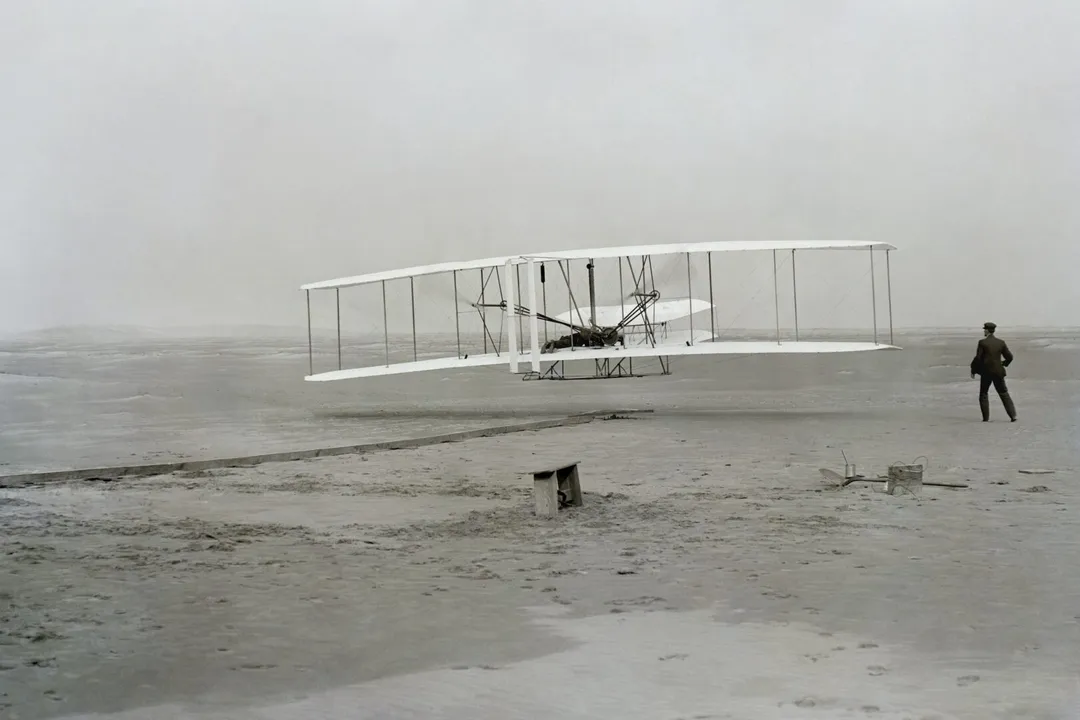
The sheer scope of human ingenuity makes isolating a single "most valuable" invention nearly impossible, as every significant leap builds upon thousands of preceding minor discoveries. To truly assess value, one must look not just at modern convenience, but at the inventions that fundamentally altered the trajectory of human survival and societal structure. Many contenders emerge, each representing a complete paradigm shift in how we live, interact, and understand the world around us. [1][7]
# Foundational Shifts

Many argue that the earliest, often pre-historic, innovations are the most crucial because without them, civilization as we know it could never have coalesced. The mastery of fire, for instance, provided warmth, defense, and the ability to cook food, which significantly impacted human development and nutrition. [7]
Following the control of fire, the move from nomadic existence to settled life stands out. Agriculture, or farming, represents perhaps the single greatest change in human history, moving us from hunter-gatherer groups to settled communities capable of supporting specialized labor. [4][7] This development is cited frequently because it directly enabled the concept of surplus, which is the prerequisite for everything from architecture to philosophy. [1] Without a reliable food source that didn't require constant movement, complex societies could not form.
Another invention often placed near the top is the wheel. While simple, its application transformed transportation, irrigation, and mechanics. [4][7] Its initial use may have been as a potter's wheel, but its adaptation for carts and wagons revolutionized trade and construction capabilities. [9]
# Recording Thought

Once survival was moderately secured, the need to transmit complex knowledge across time and space became paramount. This brings us to the invention of writing. Writing systems—from cuneiform to the alphabet—allowed for the preservation of laws, history, literature, and scientific observation, effectively democratizing knowledge beyond the limitations of human memory. [2][4] A person living centuries after the invention of writing could read the precise calculations of an ancient mathematician.
This concept of scalable knowledge transfer was dramatically amplified by Gutenberg's printing press in the mid-15th century. [2][6] Before this, books were laboriously copied by hand, making them incredibly expensive and rare, concentrating knowledge among a tiny elite. [4] The printing press slashed the cost and time required to reproduce texts, directly contributing to the Renaissance, the Scientific Revolution, and the spread of literacy across Europe and subsequently the world. [2][7]
If writing allowed knowledge to persist, the printing press allowed knowledge to proliferate.

# Modern Power
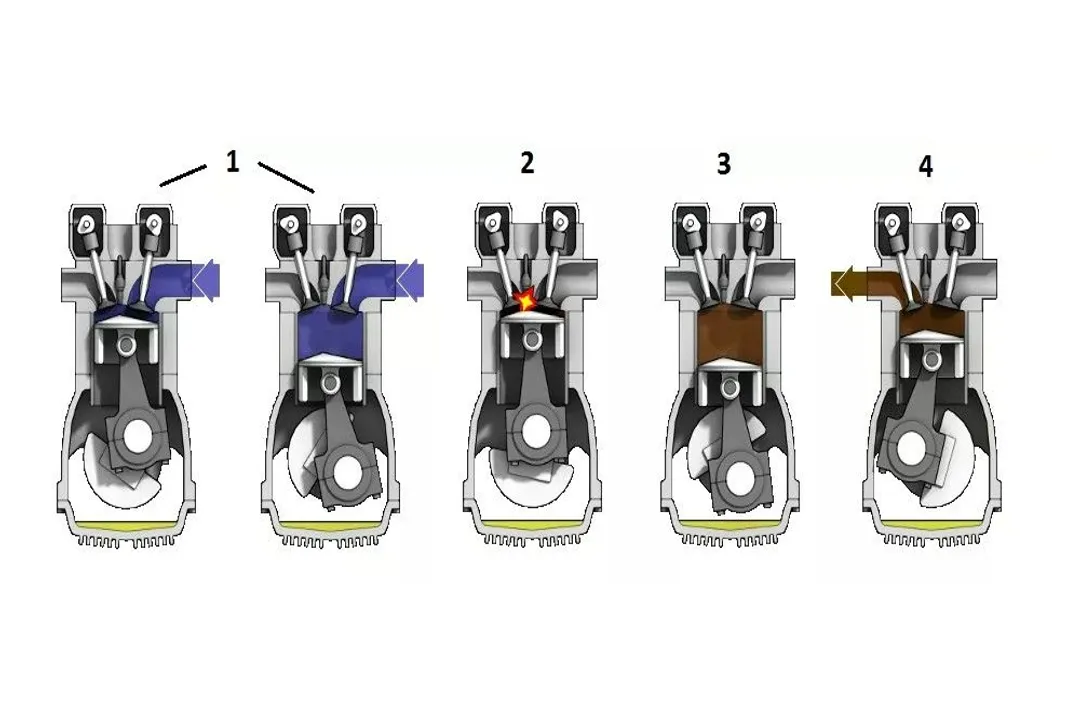
When assessing value based on the scale of daily utility and economic impact in the modern era, controlling natural forces takes precedence. The harnessing of electricity often tops modern lists. [2][7] While the discovery of electrical phenomena is ancient, the ability to generate, transmit, and efficiently utilize electricity—through inventions like the practical light bulb, the motor, and the transformer—underpins virtually every aspect of 20th and 21st-century life. [9] Everything from computers to modern manufacturing relies on this controlled energy source.
Similarly impactful, though slightly older in concept, is the development of efficient mechanical power, such as the steam engine and later the internal combustion engine. [4][7] These inventions broke the dependency on animal or human muscle power for large-scale tasks, fueling the Industrial Revolution and fundamentally changing demographics by allowing mass production and rapid transit. [6]
# Health and Longevity

For an individual, the most valuable invention might be the one that directly prevents their death or severe suffering. In this category, innovations related to health are unmatched. The development of sanitation systems and clean water infrastructure saves more lives annually than any single pharmaceutical product. [2][7] The understanding that disease transmission is linked to invisible agents (germ theory) led to public health systems that drastically increased the average human lifespan in developed nations within a few decades. [1]
Following this, the discovery of antibiotics, particularly penicillin by Alexander Fleming, revolutionized medicine by providing a scalable way to treat bacterial infections that were previously death sentences. [2][7] Before this, a simple cut could lead to fatal sepsis.

# Weighing Competing Claims
When examining what multiple sources cite as paramount, the top three consistently circle back to Agriculture, Writing/Printing, and Electricity. [1][2][7]
| Invention Category | Primary Impact Area | Value Proposition | Contender Ranking Basis |
|---|---|---|---|
| Agriculture | Food Supply & Settlement | Enables population density and specialized labor. | Civilization Foundation |
| Writing & Printing | Knowledge Transfer | Allows for cumulative scientific and societal progress. | Information Scalability |
| Harnessing Electricity | Power & Modern Life | Underpins virtually all current industrial and domestic functions. | Modern Utility |
The inherent difficulty lies in comparison. If the wheel was never invented, the steam engine would have no mechanical base, and if writing didn't exist, the blueprints for the steam engine couldn't have been preserved or scaled. [4] This dependency structure suggests that the earliest necessary components hold the highest intrinsic value, as they serve as prerequisites for all subsequent complexity.
Here is a consideration for framing value: an invention is more valuable the greater the number of people it affects, and the deeper the effect on their daily existence. On a purely human scale, the ability to reliably feed a family—Agriculture—affects the most fundamental requirement: existence itself. [1]
When thinking about an original insight here, consider the difference between invention and discovery. Many essential elements, like fire or electricity, were discovered phenomena; the true invention was the technological manipulation that made them useful. The invention of the simple metal plow, perhaps less celebrated than the printing press, allowed a single farmer to cultivate ten times the land an ancient farmer could with wood and bone tools. This refinement in an existing necessity, enabling massive agricultural efficiency gains, arguably has a more direct, measurable impact on the number of people surviving into the modern era than the creation of the computer chip, which benefits a smaller (though highly influential) segment of the population. [9]
# Information Flow
The modern world is defined by instant global connectivity, making the Internet a strong candidate for the most valuable recent invention. [2] It combines the storage power of writing, the dissemination power of the printing press, and the speed of the telegraph into one system. It has fundamentally altered commerce, politics, education, and social relationships globally. [6]
However, the internet relies entirely on a preceding invention: the semiconductor or transistor. This tiny component, developed in the mid-20th century, is the literal building block of all modern digital technology, from smartphones to supercomputers. [4][7] Without the transistor, the internet remains theoretical. This makes the transistor a classic example of a hidden enabling technology; its value is immense, yet it remains invisible to the end-user, unlike the tangible impact of a car or a vaccine.
# Economic Value
From a purely monetary perspective, some lists focus on the inventions that generated the most wealth or had the highest profitability potential historically. [3] These often include:
- The Telephone: Creating entirely new global communication industries.
- The Internal Combustion Engine: Fueling transportation and logistics industries worth trillions.
- Money/Currency: An abstract invention that acts as a universal medium of exchange, allowing for complex trade that far exceeds simple barter. [9]
Profitability, however, often tracks application and timing rather than foundational necessity. The telephone was profitable because it arrived at a time when global commerce was hungry for faster communication, but without the prior invention of reliable electricity, the telephone could not have functioned on a large scale. [3]
# The Hidden Value of Standardization
To move past the standard list and consider a truly undervalued invention, we must look at the systems that allow inventions to work together. This leads to the concept of standardization.
Imagine trying to build a modern computer if every screw, every voltage level, and every communication protocol was unique to the manufacturer. The ability to agree on standards—like the standard gauge of railway tracks, the standard alternating current (AC) system developed by Tesla and Westinghouse, or the standardized measurements used in engineering drawings—is what turns individual inventions into a functioning industrial ecosystem. [4]
This leads to a second original observation: The greatest value-add often comes not from the primary breakthrough, but from the meta-invention that makes the primary breakthrough scalable. For instance, the invention of standardized, interchangeable parts in manufacturing (often attributed to Eli Whitney, though the concept predates him) is arguably more valuable economically than the specific machine it was first applied to. It transformed repair, mass production, and supply chains by ensuring that Component X from Factory A fits perfectly into Machine Y made at Factory Z. This principle applies everywhere, from the uniform size of shipping containers to the agreed-upon syntax of programming languages.
# Categorizing Impact
To visualize the dependency, one can think of inventions not as a list, but as layers in a geological structure.
| Tier | Invention Examples | Function |
|---|---|---|
| Tier 1 (Existential) | Fire, Agriculture, Language | Allows human survival and societal aggregation. |
| Tier 2 (Structural) | Wheel, Writing, Basic Metallurgy | Enables complex construction, storage, and early transmission of knowledge. |
| Tier 3 (Information/Power) | Printing Press, Steam Engine, Electricity | Allows mass knowledge dissemination and industrial-scale physical power. |
| Tier 4 (Digital Age) | Transistor, Internet, Antibiotics | Enables global, instantaneous connection and radical life extension. |
Based on this structure, an argument for Agriculture as the most valuable is logically sound; it is the foundation that supports all subsequent tiers. If Tier 1 collapses, Tiers 2, 3, and 4 become irrelevant because the population density and stability required for them vanish. [7] Conversely, if one argues for Antibiotics or Electricity, the argument rests on the quality of life—the immense value derived from living longer and more comfortably—even if survival itself was secured earlier.
Many people, when surveyed, lean toward the one that most directly impacts their current quality of life. A person in a developed city might say electricity or modern sanitation, while a historian might argue for the alphabet. [8] The inherent subjectivity of "valuable" is what makes the discussion perpetual.
# Conclusion
There is no single correct answer to which invention reigns supreme. The most valuable invention is the one whose removal would cause the most widespread and immediate collapse of our current societal structure. [1] If writing disappeared, organized governance, law, and science would suffer an immediate, irreversible blow over generations. If agriculture vanished, mass starvation would occur within months.
However, if we must select the invention that most profoundly changed human potential by allowing ideas to transcend geography and time, the combination of Writing and the Printing Press offers the strongest case. They are the invention of cumulative, accessible knowledge. Every vaccine, every circuit board, and every philosophical treatise is built upon the foundational premise that what one person learned yesterday can be reliably taught to a million people tomorrow. [2][6] This ability to rapidly build upon ancestral knowledge is the engine of all subsequent innovation, suggesting that the tools for sharing thought are the ultimate high-value asset of humankind.
Related Questions
#Citations
What is humankind's greatest invention? : r/AskHistory - Reddit
22 inventions that changed the world | Live Science
The 11 Most Profitable Inventions of All Time - Biz Kids
Timeline of historic inventions - Wikipedia
What is the most important human invention? - Facebook
Top 100 Famous Inventions and Greatest Ideas of All Time
The 20 Greatest Inventions of All Time - Tom Triumph
What is the greatest invention of all time that had affected ... - Quora
TOP 20 GREATEST INVENTIONS OF ALL TIME - ELITE Law Firm