Did Gordon Gould invent the laser?
The question of who deserves credit for inventing the laser—that focused beam of light that has reshaped everything from surgery to data storage—is far more complex than simply pointing to the first person who made one work in a laboratory. For many, the answer points toward Dr. Gordon Gould, an electrical engineer whose visionary concept predated the actual device by several years, yet whose official recognition arrived long after the technology had become commonplace. [1][2] Gould’s story is less about a single Eureka moment and more about a protracted, two-decade-long administrative battle to secure the intellectual property for an idea he first scribbled down in a notebook in 1957. [3][5]
# Early Concepts
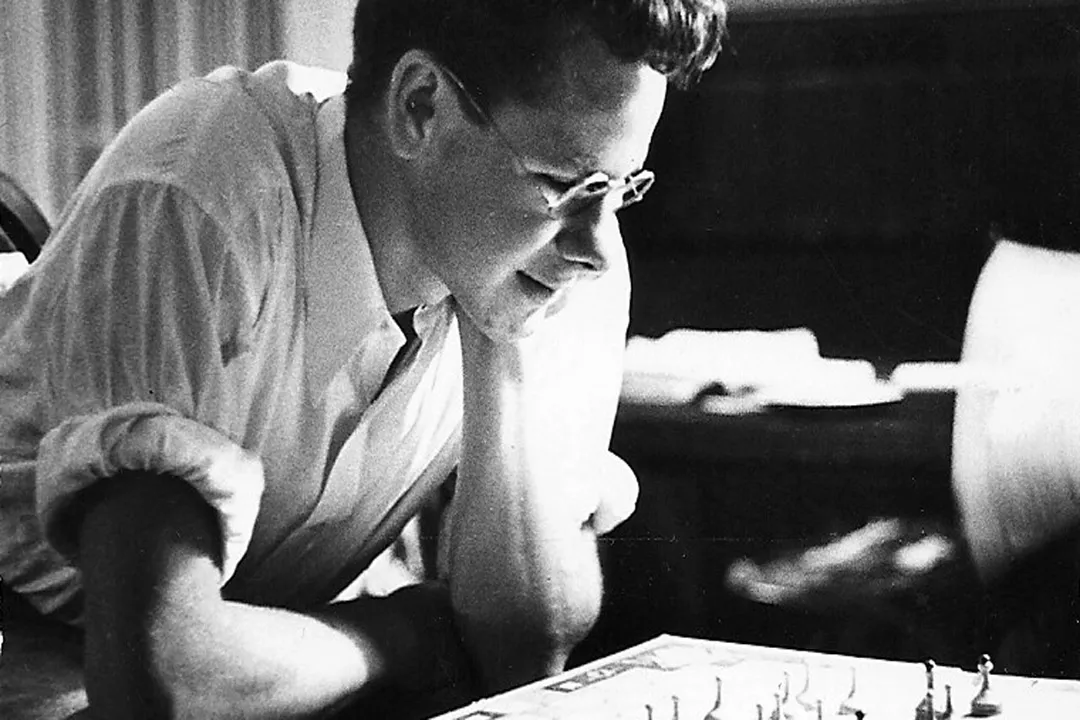
The path to the laser began with its predecessor, the MASER (Microwave Amplification by Stimulated Emission of Radiation), which used microwave frequencies. [1][2] Gordon Gould, while studying at Columbia University, recognized the potential to extend this principle to light waves. [3] While working at the Polytechnic Institute of Brooklyn (now NYU Tandon School of Engineering) in 1957, Gould conceptualized a device that would use stimulated emission to amplify light—a phenomenon Albert Einstein had predicted decades earlier. [3][5][7] It was Gould who coined the now-ubiquitous acronym LASER for Light Amplification by Stimulated Emission of Radiation. [1][2][3]
Gould’s early notes from that period detail not just the concept but also proposed methods for building the device, including the use of optical pumping to excite the lasing medium and the necessary reflective ends of the cavity. [3][7] This conceptual groundwork was undeniably sophisticated. He theorized about different types of lasers, including semiconductor devices, which are central to modern technology. [3] His initial technical paper, submitted to Physical Review, was rejected, partly because the concept was too far ahead of the available technology to be immediately accepted by the scientific community. [3] Despite this initial setback, Gould persisted, filing his patent application on June 18, 1957. [3][5]
# Patent Hurdles
The initial patent application filed by Gould contained what would become the central sticking point in his decades-long fight: an oath or declaration that he had not publicly disclosed the invention before filing. [5] Gould later discovered that he had lectured on the concept at the Brookhaven National Laboratory in April 1957, several months before his June filing. [3][5] In the United States patent system, a public disclosure before filing can disqualify an inventor from receiving a patent. Because of this technicality, the U.S. Patent Office suspended his application proceedings. [5] Gould’s initial filing was essentially abandoned. [5]
This administrative error created a massive legal and historical opening. While Gould struggled to secure the necessary funds to pursue the application further, others moved forward with building and demonstrating the actual device. [3][5] It took Gould nearly twenty years, and the assistance of patent attorney Arthur L. Bennett, to successfully reopen the application in 1973. [5][7] During those two decades, the technology itself exploded into existence, creating a complex situation regarding who should be credited as the inventor—the person with the idea, or the person who executes the working model?
# The Working Device
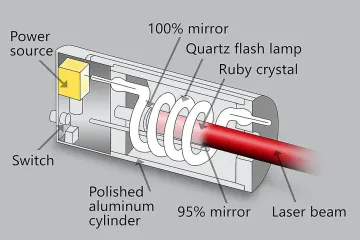
The historical record firmly attributes the creation of the first working laser to Theodore H. Maiman. [1][2] In May 1960, Maiman, working at Hughes Research Laboratories, successfully demonstrated a functioning laser utilizing a synthetic ruby crystal pumped by a flash lamp. [1][3] Maiman’s achievement was tangible; he had built the machine that worked, a crucial step that moved the laser from theoretical possibility to physical reality. [2] Because Maiman’s successful demonstration and subsequent patent application were filed after Gould’s initial, albeit technically flawed, 1957 filing, a complicated priority battle ensued. [5]
It is fascinating to consider the different types of scientific contribution at play here. Gould provided the blueprint and the name—the fundamental, detailed theory of operation—while Maiman provided the engineering execution that proved the theory correct and made it immediately useful. [3] In many fields, the builder is given the primary title, but Gould’s detailed notes suggest he had a more complete grasp of the necessary components than was initially acknowledged by the patent office. The fact that Maiman’s laser was a pulsed ruby laser, whereas Gould envisioned continuous-wave operation, also highlights a difference in initial scope, though Maiman’s demonstration was the necessary first step for the entire field. [1]
The contrast in timing is stark and provides insight into the nature of scientific recognition. Gould had the expertise—the deep theoretical understanding—but lacked the administrative follow-through or the immediate capital to protect it. [5] Maiman, on the other hand, had the immediate engineering resources to turn theory into a physical reality recognized by his peers. [2] If we look at the trajectory of innovation, Gould’s situation serves as a powerful, if unfortunate, example of how administrative negligence or simply running out of money can severely delay the legal validation of genius. [7] This historical case provides a unique data point on the high cost of entry into the formal patent system, even for groundbreaking concepts born in academia.
# Decades of Recognition
After the application was reopened in the 1970s, the legal proceedings dragged on for years. [7] Eventually, Gould’s persistence paid off. In 1977, after decades of application history and opposition, U.S. Patent Number 3,991,307 was finally issued to Gordon Gould for his invention related to laser technology. [1][3][5][7] This was a massive victory, securing his rightful place in the history of the invention, albeit twenty years late. [2] It is notable that by 1977, the laser field was already mature, with countless variations and applications in use worldwide. [7] Gould’s patent covered fundamental aspects, allowing him to eventually collect royalties from some of the largest laser manufacturers. [7]
The scientific community’s view evolved over time, acknowledging Gould’s foundational contributions alongside Maiman’s demonstration. [2] Gould’s legacy is perhaps best cemented by his induction into the National Inventors Hall of Fame in 2005. [2][7] This final honor recognized the depth of his original conceptual work and his unwavering commitment to defending his intellectual property. [7]
# Chronological Milestones
To better appreciate the timeline of this complex invention story, it helps to lay out the key dates:
| Event | Date | Contributor(s) | Significance |
|---|---|---|---|
| Public Lecture/Disclosure | April 1957 | Gordon Gould | First public discussion of the light amplification concept. [3] |
| Patent Application Filed | June 1957 | Gordon Gould | Formal attempt to secure the idea. [3][5] |
| First Working Laser Demonstrated | May 1960 | Theodore Maiman | Physical realization of the laser principle. [1][3] |
| Patent Application Reopened | 1973 | Gordon Gould | Gould resumes the patent prosecution process. [5] |
| Patent Issued | 1977 | Gordon Gould | Official government recognition of the invention. [3][7] |
| Hall of Fame Induction | 2005 | Gordon Gould | Final major institutional recognition. [2][7] |
This table clearly illustrates the 20-year lag between the conceptualization/initial filing and the final patent grant, a span during which the technology became fully commercialized by others. [7]

# Beyond the Mainstream Narrative
While the debate often centers on Gould versus Maiman, Gould’s contributions extended into areas that required significant foresight. His work included developing concepts for optical pumping and contemplating the use of specific materials for the lasing medium. [3] Furthermore, he was one of the earliest to envision the practical, diverse applications of the laser, not just as a laboratory curiosity. [7] His early vision encompassed uses in fiber optics, telecommunications, and even bar-code scanning long before those fields were mature. [3] This aspect of his work speaks volumes about his expertise—he didn't just see a light source; he saw an entire future infrastructure built upon it.
One might reflect on the historical irony embedded in the patent system itself. The system is designed to reward invention, yet the very rule designed to prevent inventors from hiding discoveries—the public disclosure bar—is what tripped Gould up in the first place. [5] His subsequent legal maneuvering, fighting the very system that was supposed to protect him, required a different kind of engineering skill: legal and bureaucratic persistence. [7] It’s a testament to his character that he did not simply accept defeat after the initial administrative block in the late 1950s. His continued effort, spanning his time at the Pratt Institute and later at Union College where he was a professor, shows a dedication to scientific integrity over immediate commercial gain. [4][6]
# Lasting Influence
Gordon Gould’s ultimate success in securing the patent and receiving posthumous honors like induction into the National Inventors Hall of Fame confirms that invention is often a multi-faceted process involving conception, demonstration, and legal defense. [2][7] While Theodore Maiman’s ruby laser was the necessary spark that lit the world’s imagination regarding the device, Gould provided the foundational documentation that secured his place as the originator of the light amplification concept itself. [1][3] It is this duality that makes the laser's history so compelling—it required both a brilliant theoretical leap and an equally brilliant engineering feat to bring it into being. [2]
Today, the laser is indispensable, underpinning medical diagnostics, data transmission across the globe, and precision manufacturing. [7] The very fact that we still discuss who invented it highlights the ambiguity inherent when scientific progress outpaces administrative processes. Gould’s story is a compelling case study for any inventor: protect your idea meticulously, but be equally prepared for a long campaign to enforce that protection against the currents of time and prior art. [5] His legacy isn't just in the paperwork, but in proving that a powerful idea, even if initially dismissed or technically complicated to protect, can eventually command its due recognition. [7] The invention of the laser was not a single event; it was a protracted series of scientific claims, engineering demonstrations, and legal assertions, with Gordon Gould at the intellectual starting line. [1][3]
Related Questions
#Citations
Gordon Gould - Wikipedia
NIHF Inductee Gordon Gould and the Optical Amplifier
Gordon Gould | Laser inventor, Optics pioneer - Britannica
Gould, Gordon · Union Notables - Library & Art Exhibitions
Gordon Gould, 85; Physicist Finally Got His Due for the Laser
The Man, the Myth, the Laser | Science History Institute
Gordon Gould - Lemelson-MIT Program
The Invention of the Laser - PubMed
Gordon Gould's Scientific “Patent” Method | Oct 2008 |