Did a black man invent the door knob?
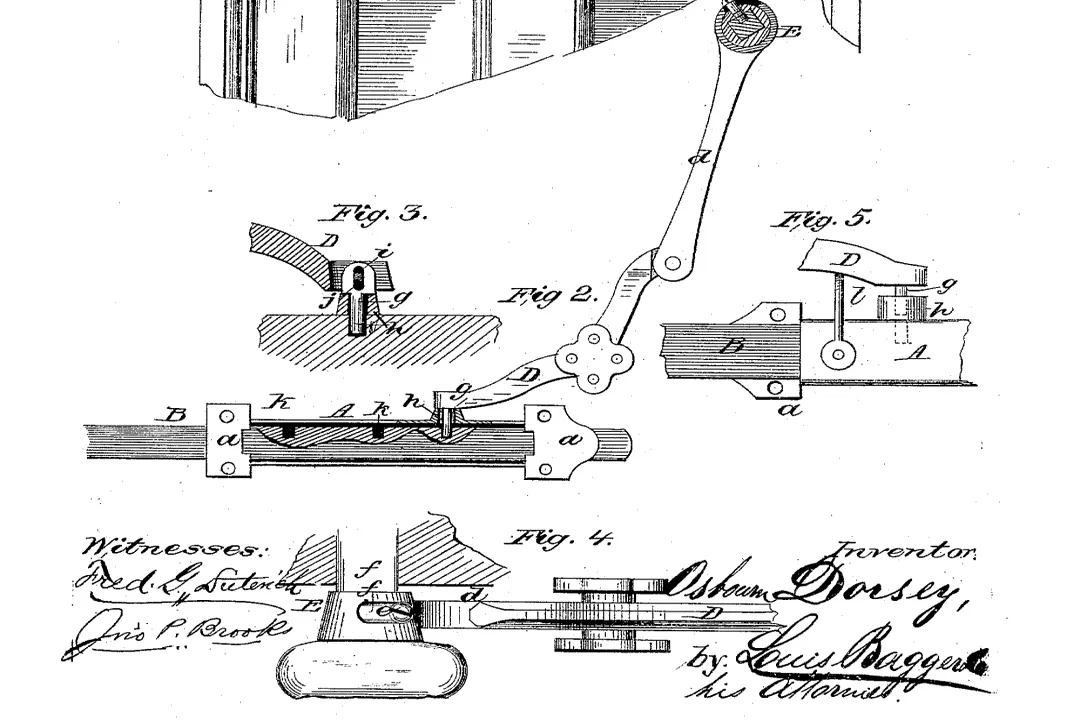
The object we grasp countless times each day, the humble doorknob, is a silent gatekeeper of privacy and security in our homes and workplaces. We rarely pause to consider the mechanism that allows us to transition from one space to another with a simple twist, yet this invention fundamentally changed daily interaction with our built environment. The question of who should receive credit for this everyday essential often leads back to a singular, trailblazing figure: Osbourn Dorsey.[1]
# Precursors to Access
Before the widespread adoption of the device Dorsey patented, securing a door relied on decidedly less convenient methods. For many, the system was rudimentary: a simple latch served to keep the door in place, or perhaps even less sophisticated mechanisms involving a latch-string. [1] This string system, as described by some historians, required a hole drilled through the door panel, through which a leather thong or string was threaded, looped around a wooden cross-bar to keep the door shut. [1] For the wealthy, a lock and key provided security, but this was far from universal access. [1]
The evolution toward the modern form was gradual. Even by the mid-19th century, door hardware was still catching up with the Industrial Revolution. Evidence suggests that cast-metal knobs were already being introduced to the market around 1846. [1] Furthermore, ceramic or China knobs, often imported from England or France, were available, and patents existed for making knobs from potter's clay. [1] Wooden knobs were also common fixtures that saw extensive use before being gradually supplanted by metal alternatives. [1] While these were certainly functional steps forward, they lacked the specific convenience and mass-producible design that would define the standard we recognize today.
# A Young Mind
The person credited with patenting the design that became the foundation for the modern doorknob was Osbourn Dorsey, who accomplished this feat at the astonishingly young age of 16. [1][2] In 1878, Dorsey secured U.S. Patent #210,764 for what he termed a “door-holding device”. [1] Born around 1862—a detail inferred from records indicating he was an infant around the time of Washington D.C.'s emancipation records in April 1862 [2]—Dorsey lived during a period of immense hardship for African Americans. [2]
Dorsey was a self-taught inventor, beginning his career path working as a blacksmith. [2] This background in metalworking provided him with the practical skills necessary to conceive of and execute a design that moved beyond the simple latches and straps of the time. [2] Though his formal education may have been limited, his ingenuity led him to create a design that integrated the latch mechanism with an easy-to-grasp knob shape, capable of being readily attached to doors using screws. [1] The idea wasn't just a novelty; it was a practical answer to an existing problem of securing and opening doors conveniently. [1]

# The Cast Iron Difference
What set Dorsey’s patented device apart from earlier hardware, such as the cast-metal knobs of 1846, appears to have been the integration of the entire mechanism into a cohesive, user-friendly system, realized through durable material choices. [1][2] Dorsey’s doorknobs and doorstops were manufactured using cast iron. [2] This choice provided a significantly more robust and easier-to-operate component compared to the wooden knobs or less durable metal iterations that preceded it. [2]
Considering the historical context, Dorsey’s patent essentially formalized the act of turning for entry, moving away from merely pulling a strap or operating a separate latch bolt. It’s important to recognize that while cast-metal components existed earlier, Dorsey’s innovation lay in creating the specific knob-like shape—described in the patent as a “case or cap”—that was designed to be easily attached and universally functional across various door types. [1] This move from component to integrated, intuitive device is what established the blueprint for almost all doorknobs that followed. [1]
# Adoption and Obscurity
Despite obtaining the patent for this groundbreaking hardware, the transition to widespread adoption was not immediate. Historical accounts suggest it took several years before the public fully embraced the installation of doorknobs in their residences. [2] For an African American inventor in the late 19th century, securing market acceptance and recognition amidst systemic racism and discrimination proved to be an ongoing hurdle. [2] Consequently, while his invention became a "ubiquitous success" and he eventually manufactured his products on a large scale, very little detailed information about Dorsey’s actual life during his time has been preserved. [2]
It is fascinating to consider how this single piece of hardware, which now feels entirely standard, required a specific legal and engineering breakthrough in 1878 to become the expected norm. We often assume that once an item is patented, it is instantly adopted. However, Dorsey’s contribution wasn't just the invention; it was also the perseverance required to see his design mature from a patented concept into a manufactured reality that defined modern architecture. [2]

# Beyond the Doorway
Dorsey’s inventive spirit was not confined to the mechanism that opens a door. He was a prolific creator who continued to address other practical needs of the era. [2] In addition to the doorknob and the related doorstop, his portfolio included other essential household and industrial inventions. [2] Among his other contributions were a clothes wringer, a fire escape, and a machine for making bricks. [2] This range of inventions, spanning domestic tasks, building safety, and manufacturing efficiency, speaks to a mind focused on tangible improvements in everyday life. [2]
# The Evolving Handle
Dorsey’s 1878 design established the foundation, but hardware has continued its evolution in the century-plus since. [1] The initial success of his cast-iron knobs paved the way for styles that expanded far beyond mere function. With the advent of the Industrial Revolution and increasing material availability, the focus shifted to aesthetics as well as mechanics. [1] Door hardware designs began to reflect prevailing interior trends, incorporating styles like Art Deco or reviving older Georgian and Tudor period looks. [1]
Modern iterations build directly upon Dorsey’s core concept. Contemporary doorknobs are engineered with an emphasis on ergonomics, featuring no sharp edges and a shape that is easily grasped, often including textured finishes to improve grip. [1] We now see the integration of advanced technology, resulting in keyless entry systems and smart locks. [1] Yet, underneath the sleek modern finishes or within the complex circuitry of a smart lock, the basic premise—a rotating mechanism that operates an interior latch—remains a direct descendant of Dorsey’s 1878 filing. [1]
When looking at the timeline, it is useful to chart the progression, even acknowledging the slight overlap in available technologies. Dorsey’s critical achievement was arguably standardizing the form and ease of use for the masses, taking hardware from a collection of disparate pieces (latches, simple knobs, leather straps) to a singular, intuitive product. [1][2]
| Hardware Stage | Approximate Era/Context | Key Feature/Material |
|---|---|---|
| Pre-1846 Methods | Before mid-19th Century | Leather straps, simple wooden bars/latches, or expensive locks. [1] |
| Early Metal Introduction | Around 1846 | First documented introduction of cast-metal knobs in the U.S., alongside imported ceramic/China knobs. [1] |
| Dorsey's Breakthrough | 1878 | Patent for "door-holding device" using cast iron; established the modern knob form. [1][2] |
| Modern Evolution | Post-Dorsey to Present | Increased focus on ergonomics, diverse styles (Art Deco, Minimalist), and technological integration (keyless entry). [1] |
The enduring relevance of Dorsey’s contribution is often overlooked precisely because the object he perfected has become so integrated into our concept of a "closed" space. It moved beyond being a mere convenience, as it established an immediate, standardized expectation of what opening or securing a passage entails. Imagine trying to sell a home today where every interior door required threading a leather thong through a hole; the house would be deemed functionally obsolete. Dorsey didn't just patent a thing; he helped patent a standard of living related to personal space and architectural functionality. [2]
It’s worth pausing to reflect on the context of his work. Being a self-taught inventor operating as a blacksmith during the post-Reconstruction era, navigating a world not designed for Black advancement, yet producing an object so universally beneficial provides a compelling counter-narrative to the idea that innovation happens in isolation or only by those with institutional access. Dorsey’s work is a testament to ingenuity solving an immediate, shared human problem using materials and skills available to him. [2] His success in manufacturing on a large scale, despite these obstacles, speaks volumes about the inherent quality and need for his door-holding device. [2] Every time we enter a room without conscious effort, we are interacting with a legacy established by a 16-year-old blacksmith from the 19th century. [1][2]
Related Questions
#Citations
At 16, Osbourn Dorsey opened the door for all of us
Who Invented the Door Knob?