Who invented the chain drive?
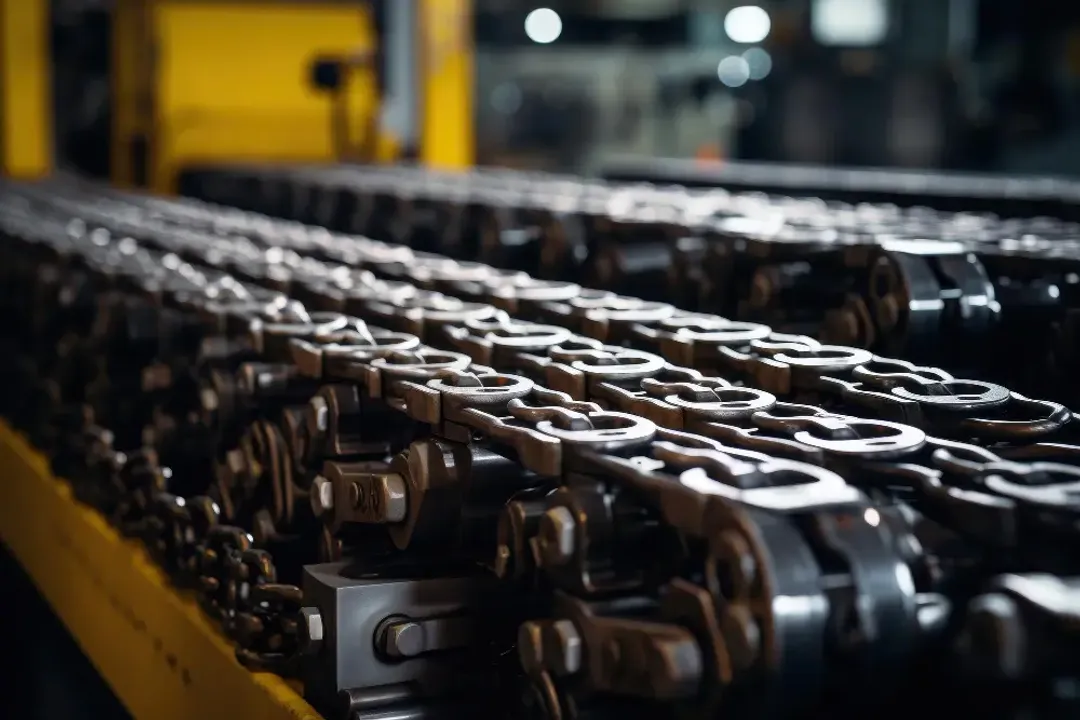
The story of the chain drive is less about a single "eureka" moment and more a layered history, moving from abstract mechanical diagrams to indispensable industrial and personal transport components. Unlike a lightbulb or a telephone, where a singular inventor often claims the patent, the chain drive's invention spans centuries, evolving when different needs—lifting heavy objects, transmitting industrial power, or propelling a bicycle—demanded a superior method of rotary motion transfer. [1][6] The principle itself is ancient, relying on interlocking links to transmit force, but its successful application required material science and precision engineering that didn't exist until relatively recently. [1][9]
# Early Conceptions
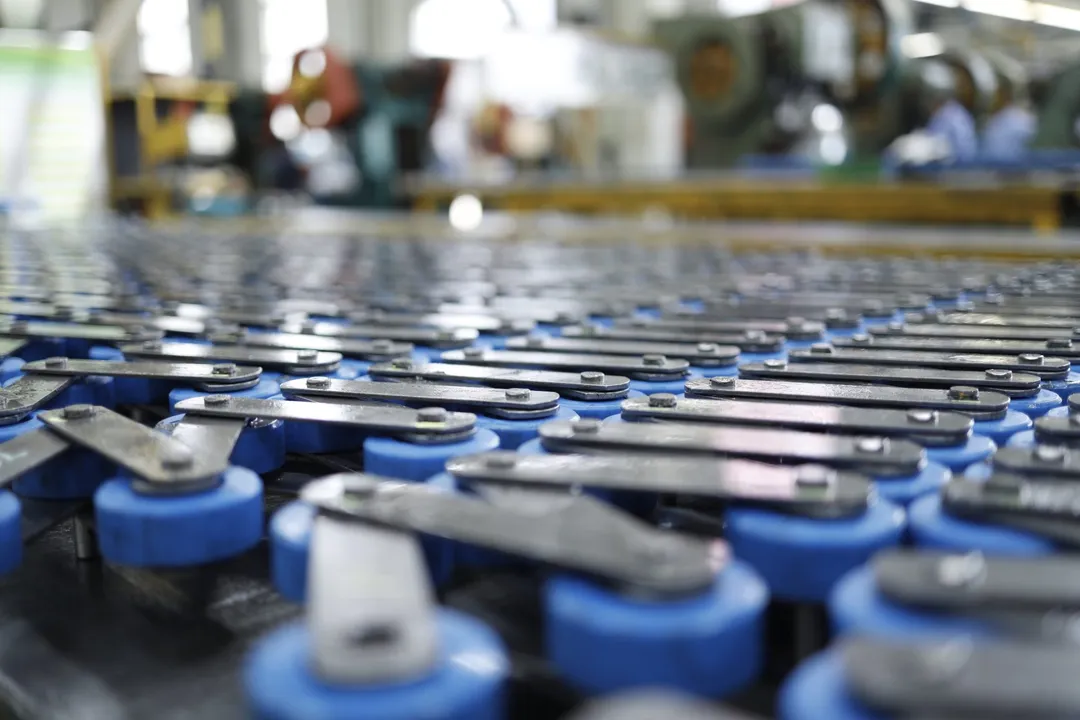
Long before chains were fitted to bicycles or factory machinery, the idea of using linked components for mechanical advantage was conceptualized. Leonardo da Vinci, the quintessential Renaissance man, is often credited with sketching chain drive mechanisms centuries ago. [5][6] These early drawings suggest an understanding of how a continuous loop of links could transfer rotation, yet they remained theoretical sketches rather than functioning, mass-produced hardware. [5] These conceptual designs served as foundational blueprints for what would later become practical reality, illustrating that the need for non-slip power transfer was recognized early on. [6]
Historically, chains were also employed in simpler applications, such as lifting mechanisms. In some medieval European designs, chains were used for traction or in primitive hoisting equipment, though these were often crude and lacked the precise meshing required for high-speed, efficient power transmission. [5] The critical conceptual leap involved realizing that the pitch (the distance between the centers of adjacent pins) of the chain needed to be consistent relative to the sprocket’s teeth to ensure smooth, non-jerky operation—a requirement for sustained mechanical work. [1]
It is crucial to distinguish between the concept of a chain and the functional chain drive we recognize today. Da Vinci sketched the concept; the breakthrough came when engineers developed a durable, repeatable mechanism. This distinction marks the first major interpretive hurdle in tracing the invention: are we looking for the first person who drew a chain, or the person who made one that worked reliably in a demanding application? The latter answer shifts the timeline significantly forward, into the age of steam and mass production. [3]
# Power Transmission
The real impetus for developing the practical chain drive came not from personal transport but from the factory floor. As industrialization took hold, manufacturers required ways to transmit power reliably from a central steam engine or water wheel to various machines throughout a workshop. [2][9] While belts were common, they often slipped, especially when high torque was needed or when shafts were not perfectly aligned. [1]
A need for positive drive—where the output speed is directly proportional to the input speed without slippage—spurred innovation in chain technology. [9] Several inventors contributed to the development of industrial chain drives over time, focusing on durability and strength. [2] For example, historical accounts credit figures like William Armstrong with developing early crane chains and James Murray with advancements in chain manufacturing in the late 18th and early 19th centuries. [2] These early industrial chains were often bulky, heavy, and designed more for brute strength than for the precision required for high-speed machinery. [9]
The goal in this industrial setting was purely functional: keep the machine running under load. This contrasts sharply with the later bicycle application, where efficiency and low weight became equally important considerations. [3] The engineering challenges solved here—such as creating links that wouldn't quickly wear out at the pin joints under constant tension—laid the groundwork for everything that followed. [1][8] When considering the overall history, the industrial chain development phase represents the transition from idea to commodity, even if it wasn't yet the refined mechanism seen on a modern bicycle. [2]

# Cycling Revolution
The trajectory of the chain drive shifted dramatically with the advent of personal, self-propelled transport. Early bicycles, like the high-wheel "penny-farthing," used direct drive; the pedals were attached directly to the front wheel axle. [7] This meant that to go faster, the front wheel simply had to be much larger, leading to inherent dangers and instability. [7]
The development of the "safety bicycle" in the 1880s necessitated a completely different transmission method. The safety bicycle featured two wheels of roughly equal size, placing the rider lower and safer. [3] To achieve speed without massive wheels, engineers needed a way to step up the pedal rotation (low gear) to a faster wheel rotation (high gear). [5][7] The chain drive was the perfect solution for this requirement, offering a positive drive ratio that could be easily adjusted by changing the sprocket sizes. [1][3]
This application immediately imposed new, stringent demands on chain technology. An industrial chain could fail under load with the loss of factory production; a bicycle chain failure meant a rider could be thrown onto the road. The chain had to be lightweight enough not to bog down the rider, yet strong enough to handle sudden bursts of rider power over many thousands of rotations. [4] It had to operate cleanly and quietly, unlike its rougher industrial predecessors. [3]
If we pinpoint the invention of the practical chain drive for personal transport, the focus must turn to the refinement of the roller chain. While the concept of using chains on bikes existed before, the specific mechanism that succeeded was the roller chain. [3]
# Roller Chain
The inventor most famously associated with perfecting the modern, efficient chain drive essential for the safety bicycle is Hans Renold. [4] In the 1880s, Renold, working in Manchester, England, developed and patented the Inverted Tooth Chain and later, the Inverted Tooth Roller Chain. [4]
Renold’s key contribution was making the chain mechanism highly efficient. Early roller chains were prone to wear because the chain links did not mesh perfectly with the sprocket teeth as they engaged and disengaged, leading to premature failure. [3][4] Renold’s design, by inverting the shape of the chain link plates, ensured that the load was distributed more evenly across the rollers as the chain engaged the sprocket. [4] This innovation drastically increased the lifespan and efficiency of the drive train, making the safety bicycle a viable, long-lasting machine. [3][4]
It is interesting to note the evolutionary pressure applied here: the need for the safety bicycle drove the perfection of the roller chain, turning it from a brute-force industrial tool into a precision component. [4] While others were certainly working on chain-and-sprocket concepts concurrently, Renold’s patented roller chain design provided the necessary longevity and efficiency for mass adoption in cycling. [3] The ability of a simple machine like the bicycle chain to transfer power with efficiencies sometimes exceeding 98% is a testament to this late 19th-century engineering refinement. [1]
We can see a clear progression:
| Stage | Primary Goal | Key Feature/Limitation | Notable Contribution Link |
|---|---|---|---|
| Conceptual | Lifting/Traction | Low precision, heavy materials | Leonardo da Vinci sketches [5][6] |
| Industrial | High Torque Transfer | Strength over efficiency, prone to wear | Various 18th/19th Century Engineers [2] |
| Personal Transport | Efficient Power Transfer | Must be lightweight, long-lasting, precise | Hans Renold’s Roller Chain [4] |
This comparison shows that the "inventor" depends entirely on the definition. If the inventor is the person who solved the final, most widespread application problem, Hans Renold holds the title for the component that defined the modern chain drive. [4]

# Modern Reliability
Even after the roller chain was established in the late 1800s, innovation did not cease. The principles established by pioneers like Renold formed the basis for modern chain drives used everywhere from motorcycles to massive agricultural equipment. [2] Modern engineering focuses on material science to further enhance longevity, especially in harsh operating environments. [8]
For instance, advancements in steel alloys and surface treatments allow today’s roller chains to survive conditions that would have destroyed early designs in weeks. [8] In environments where chains are exposed to moisture, abrasive dust, or high temperatures, manufacturers now focus on specialized coatings and lubrication systems that reduce friction and minimize wear between the pins and bushings. [8] This continuous, incremental improvement is what allows a chain drive in a high-stress environment to last significantly longer than its 1890s counterpart, even if the fundamental geometry remains the same. [1]
The fact that standardized, high-precision roller chains, largely based on the late 19th-century designs, remain the standard for mechanical power transmission across industries speaks to the fundamental correctness of the solutions found by Renold and his contemporaries. [3][4] The challenge today is not how to link power transmission (the chain drive solved that), but how long that link can last under increasingly severe operational demands. [8] This evolution solidifies the chain drive as a testament to how a single, efficient mechanical concept, when coupled with proper execution, can endure through multiple industrial revolutions. [1][9]
Related Questions
#Citations
Chain drive - Wikipedia
Seven Key Inventors In the History of Industrial Chain
The History of Roller Chain | ACORN® | Insight Article
Renold's Cycle Chain History
Science of Cycling: History of Drives & Gears | Exploratorium
The Head, Heart & History of the Bike Chain | Made in Greater ...
Roller chain drives offer longer life, even in harsh environments
When Were Chains Invented? A Historical Overview