Who invented microbiome analysis tools?

The study of microbial communities, once dominated by plate counts and microscopy, underwent a profound transformation when sequencing technologies allowed scientists to catalogue the genetic material present in a sample. This shift immediately created a massive data challenge, making the "inventors" of microbiome analysis tools less a single person and more a collection of bioinformaticians, statisticians, and computer scientists who built the necessary computational scaffolding. The realization that the gut contained trillions of organisms, sometimes exceeding the number of human cells, necessitated moving analysis from the petri dish to the server farm. [2][6]
# Computational Birth
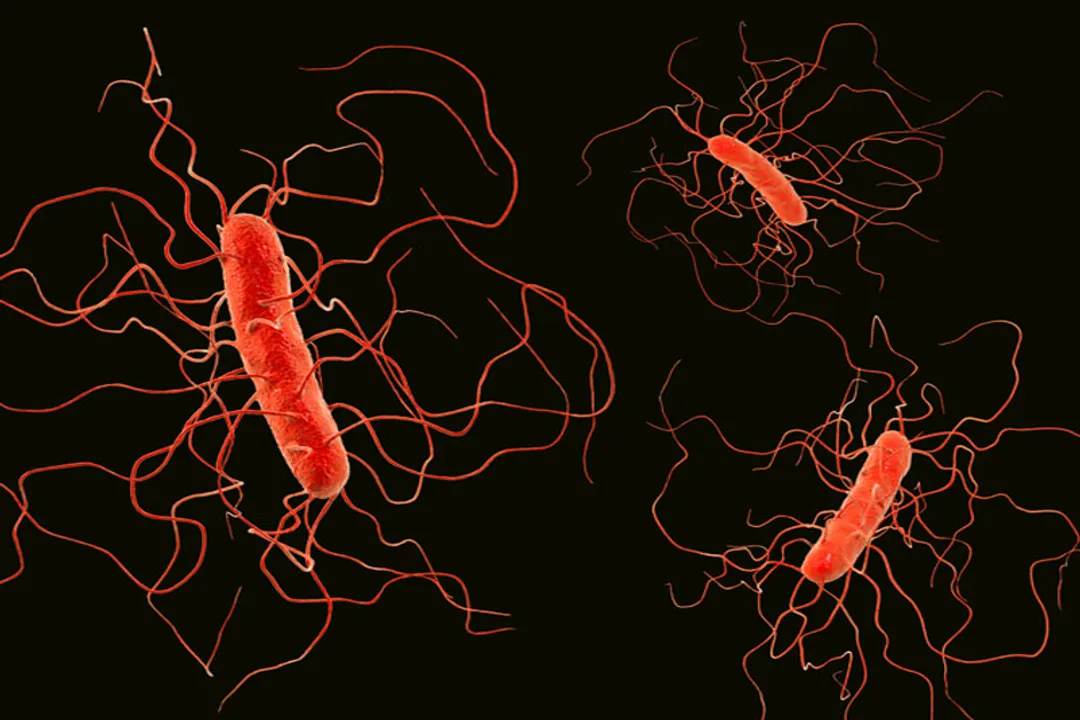
The groundwork for modern microbiome analysis wasn't laid by a single software release, but by the convergence of two major scientific advances: the ability to cheaply sequence the 16S ribosomal RNA (rRNA) gene—a marker for bacterial identification—and the growing accessibility of high-throughput computing. [1][7] Before specialized tools, researchers often adapted pre-existing methods from other fields, such as ecology or population genetics, to interpret sequencing data. [5] This early phase required researchers to first define what constituted a "species" in this new context, often relying on clustering sequences based on similarity thresholds, like 97% identity, to assign taxa. [1] The challenge was immense: you had to take millions of short DNA reads, group them by similarity, assign a name to that group, and then compare the relative abundance of these groups across hundreds of different samples.
# Sequence Shift
When 16S rRNA gene sequencing became the standard for community profiling, the immediate need was for software that could manage the raw sequence data and perform operational taxonomic unit (OTU) picking or sequence clustering. [7] Early pipelines were often developed ad hoc within individual labs to handle their specific data types or biases. For instance, tools emerged to address the inherent noise and error rates of early sequencing machines, such as those developed by developers like Benjamin C., who contributed to advancing data analysis techniques in this field. [10] These foundational tools established key metrics that remain in use today, such as alpha diversity (diversity within a single sample) and beta diversity (differences between samples). [7]
It is important to note that the success of these early analysis methods often dictated the biological questions that could be answered. If a tool could only reliably cluster sequences at the genus level, then studies reporting species-level findings were inherently built on an assumption rather than concrete analysis. This highlights an interesting point: the invention of analytical tools rarely precedes the technology that generates the data; rather, the tool follows the data deluge, often catching up slowly. This lag forces early adopters to often rely on general statistical software before specialized packages become mature enough for wide adoption. [5]

# Big Data Handling
The transition from processing hundreds of samples to thousands introduced a scaling problem that required dedicated architectural innovation. A specific example of this drive to manage large datasets came from researchers developing tools at institutions like the University of Georgia (UGA). In one documented instance around 2018, new analysis tools were specifically created to manage the sheer volume and complexity of data generated by modern sequencing runs, moving beyond the limitations of earlier methods that struggled to process results efficiently. [9] These efforts often involved creating user-friendly graphical interfaces or web-based platforms, aiming to democratize the analysis so that researchers without advanced coding skills could still derive meaning from their microbial data. [9]
Many established methods rely on reference databases that classify the sequenced fragments against known microbial genomes. The development, curation, and maintenance of these reference databases—such as Greengenes, SILVA, or RDP—are as crucial to the analysis pipeline as the algorithms themselves. [3] While not "inventors" of software, the teams behind these database projects essentially invented the reference maps onto which all subsequent analysis is projected.
# Evolving Platforms
The field quickly moved past simple OTU clustering towards more advanced methods, particularly with the advent of whole-genome shotgun metagenomics, which sequences all DNA, not just the 16S marker. [2] This jump required entirely new toolsets capable of assembly, gene prediction, and functional analysis, moving the focus from who is there to what they can do. Tools like QIIME (Quantitative Insights Into Microbial Ecology) became foundational for standardizing the initial steps of processing 16S data, providing a common pathway for comparison across studies. [7] Other platforms, such as those supported by university library guides, often aggregate and describe a growing ecosystem of specialized scripts and software built for specific downstream questions, like network construction or pathway analysis. [8]
The evolution of these tools shows a clear trend: moving from black-box solutions (where the user inputs data and gets a result) to more transparent, modular approaches. When evaluating any published result, it is useful for readers to recognize that the choice of the underlying statistical model—whether it's a simple rarefaction curve or a complex zero-inflated model—is as much an interpretive decision made by the tool's designer as it is a reflection of the true biology. For instance, a researcher analyzing a study's data should always check not just the tool version, but the specific version of the reference database used to assign taxonomy, as even minor updates in the database can shift relative abundance numbers slightly across the board. [10] This diligence ensures that observed differences between studies are biological, not merely artifacts of differing analytical starting points.

# Key Milestones
To summarize the development timeline of the analysis infrastructure, we can look at the progression of accepted standards:
| Analytical Stage | Primary Analytical Need | Key Contributor Type |
|---|---|---|
| Pre-Sequencing | Culture-based quantification | Traditional Microbiologists |
| Early Sequencing (16S) | Sequence clustering, diversity calculation | Bioinformaticians, Ecologists |
| High-Throughput | Scalability, standardized pipelines | Software Engineers, Large Consortia |
| Metagenomics (Shotgun) | Functional annotation, assembly | Computational Biologists |
The impetus for developing more advanced, user-friendly tools often stems from interdisciplinary necessity. When major initiatives like the Human Microbiome Project (HMP) began generating massive, publicly accessible datasets, the need for common, well-documented analysis methods increased dramatically to ensure that results were comparable across different research groups. [4]
Understanding who invented these tools requires looking at who funded the research that created them and who coded the open-source solutions. For many of the most widely used pipelines today, the "inventor" is a community: a group of developers who code, document, and maintain open-source repositories, often supported by government or foundation grants focused on making big data accessible. [9]
# Interpreting Results
The constant iteration in tool development means that today’s standard analysis relies on software that is far more sophisticated than what was available even five years prior. [10] For a general reader attempting to understand microbiome research, this historical context is vital. It explains why older papers might report very different diversity figures than contemporary ones using the same raw data—the analysis tool itself was updated. [4]
A practical tip for anyone digging into microbiome literature is to treat the analysis method almost as importantly as the sample collection method. If an article discusses the identification of a novel bacterium, one should look for confirmation that the tool used has a high confidence level in species-level assignment, which often requires whole-genome shotgun sequencing, not just 16S data. Simple adaptation of ecological formulas often misses subtle but important compositional differences between highly related microbial strains. Therefore, the true measure of invention in this area is the development of statistical models that account specifically for the technical biases introduced by DNA extraction, amplification, and sequencing errors, rather than just applying generic statistical tests. [7] The groups that have most successfully done this—by building tools validated against known mock communities—are the true architects of modern microbiome analysis.
#Videos
Microbiome Labs History - YouTube
Related Questions
#Citations
Microbiomes: An Origin Story - American Society for Microbiology
A Brief History of Microbial Study and Techniques for Exploring the ...
Milestones in Human Microbiota Research - Nature
The origins of gut microbiome research in Europe: From Escherich ...
Microbiome - Wikipedia
Microbiome Labs History - YouTube
Microbiome and Microbiomics: For Researchers - Research Guides
New microbiome analysis tool puts Big data to work