Who invented medical data lakes?
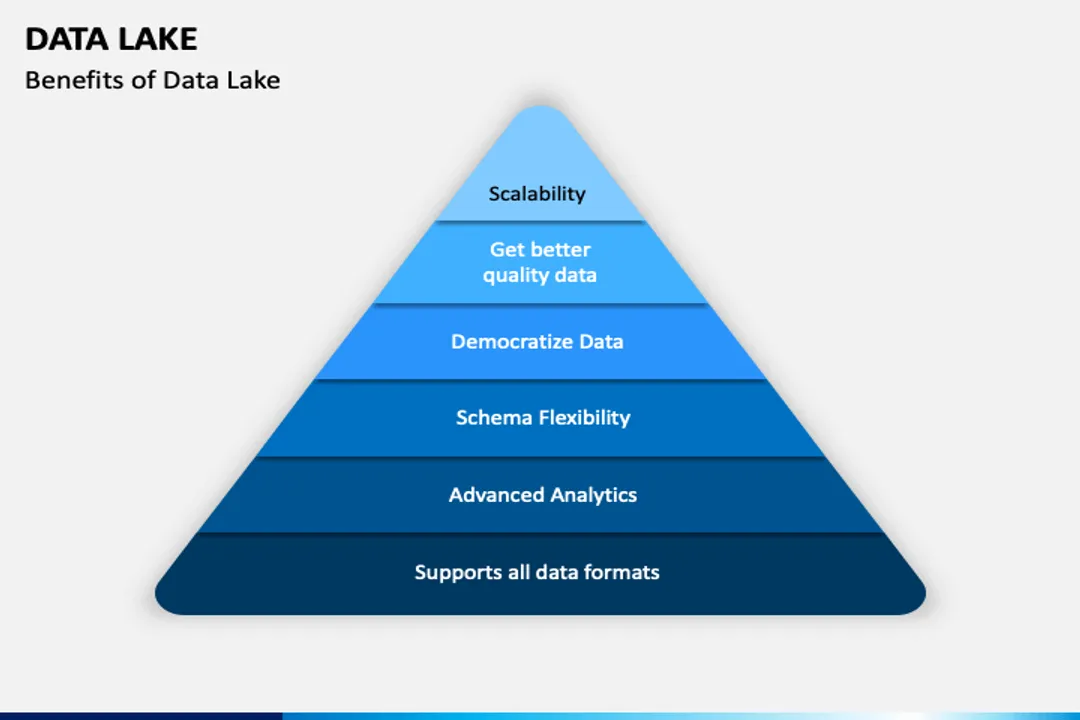
Tracing the origin of a specific technological application, such as the medical data lake, often proves more complex than naming a single inventor. Unlike the initial creation of a singular product, the medical data lake emerged from the collision of established data management concepts—like the general data lake architecture—with the overwhelming, unstructured data requirements unique to healthcare and biopharma. [7][3] While the general concept of the data lake is often traced back to around 2010 with figures like James Dixon at Pentaho, who coined the term, the adaptation of this technology specifically for clinical and patient data represents an evolution rather than a defined moment of invention. [1]
# Lake Definition

A data lake is fundamentally a large repository that holds a massive amount of raw data in its native format until it is needed. [4][1] Unlike a traditional data warehouse, which requires data to be structured and modeled before storage, the data lake accepts everything—structured, semi-structured, and unstructured data—without predefined schemas. [4][3] This "schema-on-read" approach means the data remains untouched, allowing different analytical needs to shape the data as it is pulled out for specific use cases. [4] Data lakes are typically built on scalable, cost-effective storage systems, often using technologies like Hadoop or cloud object storage. [1][4]
# Warehouse Contrast
Understanding the data lake requires contrasting it with the established data warehouse. Data warehouses have long been the standard for storing processed, filtered, and aggregated data tailored for specific business reporting. [3] In the biopharma world, for instance, a data warehouse might hold finalized results from clinical trials that have already passed rigorous quality checks. [5] The data lake, conversely, is designed to hold everything—raw sensor readings, imaging files, genomic sequences, clinical notes, and operational system logs—in their original fidelity. [5][3]
For healthcare providers, this distinction is critical for advanced analytics. While a warehouse is excellent for operational reporting (like monthly billing summaries), the lake is necessary for exploratory research. Consider this comparison tailored for a clinical or research setting:
| Feature | Data Warehouse (Clinical Context) | Data Lake (Clinical Context) |
|---|---|---|
| Data State | Processed, Cleaned, Aggregated | Raw, Native Format |
| Schema | Schema-on-Write (Defined upfront) | Schema-on-Read (Defined at query time) |
| Primary Users | Business Intelligence Analysts, Reporting Staff | Data Scientists, AI/ML Engineers, Researchers |
| Data Types Best Suited | Financial data, standardized EHR metrics | Imaging (DICOM), Genomics, Unstructured Text |
| Agility | Lower; changes require significant ETL work | High; rapid ingestion of new data sources |

# Healthcare Adoption
The shift toward data lakes in healthcare wasn't sudden; it was driven by necessity. As providers began to integrate massive, complex data types that traditional systems struggled to handle efficiently, the need for a central, flexible repository became apparent. [6] In the mid-2010s, discussions intensified around how hospitals and research institutions could better "tap into" data lakes to improve patient care. [2] This adoption was spurred by the explosion of data from sources like electronic health records (EHRs), high-throughput sequencing, and diagnostic imaging. [2][6]
It's worth noting the sheer scale involved, particularly in genomics. A single whole-genome sequencing run can generate hundreds of gigabytes of data. [5] Trying to force that volume and complexity into a traditional, highly structured warehouse schema before knowing what research questions will be asked next is inefficient and expensive. [5] The data lake architecture natively handles these large binary objects and sequencing files, which is why biopharma companies, specifically, found them compelling for early-stage research and drug discovery pipelines. [5]
# Architectural Evolution
The journey didn't stop at the basic data lake. As data scientists refined their methods, the industry recognized that simply dumping data into a lake sometimes led to a "data swamp"—a repository where data quality is poor and finding relevant information is nearly impossible without proper governance. [4] This challenge led to architectural advancements, such as the data lakehouse, which attempts to blend the low-cost, flexible storage of the lake with the data management features (like transactional support and strong governance) traditionally associated with a warehouse. [7]
In clinical trials, this evolution is visible. For example, researchers are now exploring AI-enabled clinical trials supported by a lakehouse architecture. [7] This structure allows researchers to ingest raw, diverse trial data—from patient wearables to lab results—into the low-cost lake environment, while applying warehouse-like consistency layers to specific, highly regulated subsets of that data used for primary outcome analysis. [7] The objective here is to speed up the analysis phase while maintaining auditability, a constant balancing act in medical research. [7]

# Governing the Flood
The true challenge in making the medical data lake function lies less in who built the first one and more in how organizations govern the data once it is flowing. Because the primary benefit of the lake is storing data without immediate structure, the responsibility shifts to metadata management and data cataloging. [4] Without clear documentation describing what a set of raw genomic files represents, who the patient was (while maintaining privacy), and when the sample was taken, the data is analytically useless. [4]
In a medical context, this governance layer must be exceptionally stringent due to regulatory requirements like HIPAA. When providers use these lakes for predictive analytics or to improve population health, the data—even in its raw state—must be correctly pseudonymized or de-identified before being made available to general analysts. [2] A poorly managed medical data lake risks not only analytical failure but severe compliance breaches. Therefore, the "invention" of the successful medical data lake is less about the initial storage technology and more about the development of secure, metadata-rich ingestion and access protocols tailored to sensitive patient information. [2] The collective experience gained by early adopters in refining these governance practices is what truly defined the concept in practice.
Related Questions
#Citations
Data lake - Wikipedia
What is a data lake? Advantages and disadvantages - Telefónica
Data Warehouse vs. Data Lake Technology: Different Approaches to ...
What Is a Data Lake? Exploring Its Functions and Significance
Providers Tap Data Lakes to Boost Patient Care
Data lakes vs data warehouses in biopharma - Front Line Genomics
Data lakehouse architecture in AI-enabled clinical trials
Data Lake Explained: Architecture and Examples - AltexSoft
Data Lakes in Healthcare: Applications and Benefits from the ...