Who created anchors?
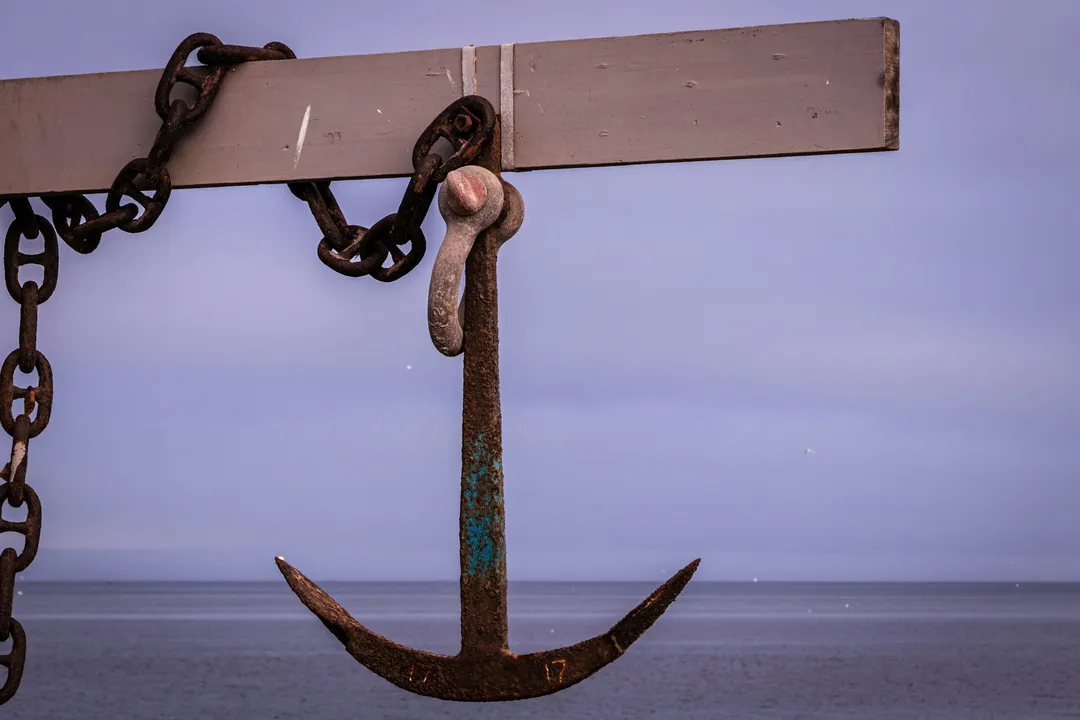
The origin of the device used to secure a vessel to the seabed is not attributable to a single creator, but rather to a long, evolving lineage of necessity and ingenuity spanning millennia. The most ancient anchors were likely simple rocks, heavy enough to sink and resist movement, and many modern moorings still utilize a large, unshaped stone as their fundamental holding element. Archaeological evidence, such as pottery vases found in Egyptian tombs dating back to 5000 to 6000 BCE, suggests that large ships already carried a weight hanging from the prow, presumably intended as an anchor.
# Primordial Methods
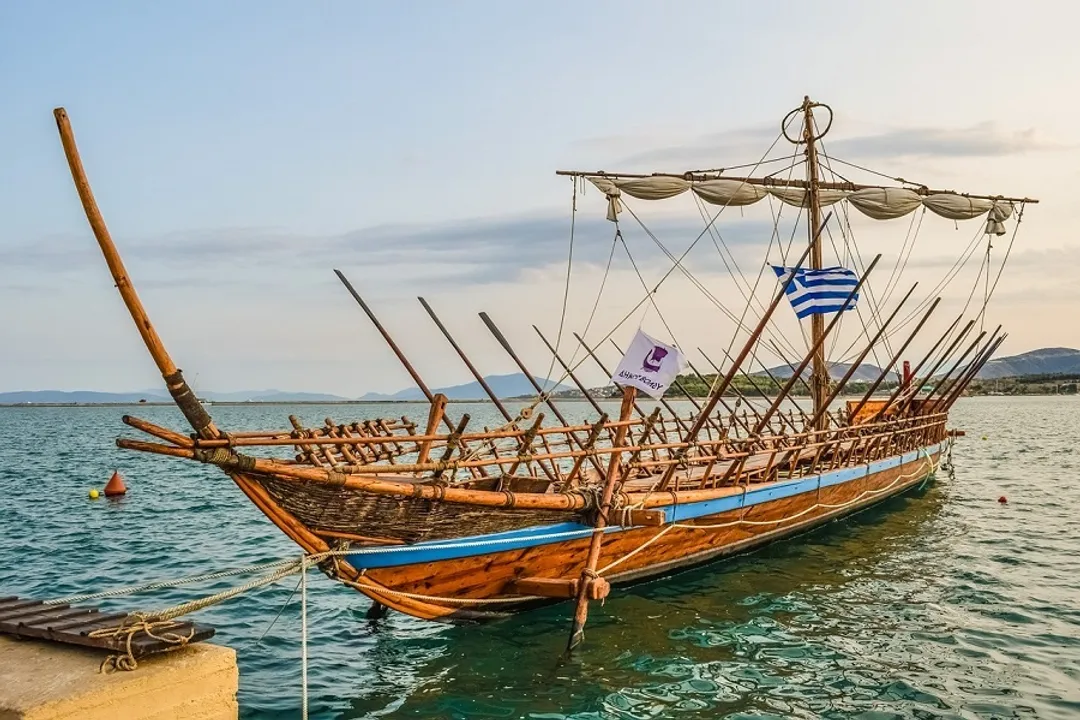
Before sophisticated metallurgy, maritime civilizations relied on basic mass and friction. The ancient Greeks, known for their extensive sea travel, employed perforated stones, often called or "sleepers," or sometimes used large baskets filled with rocks or sacks laden with sand to keep their ships steady when docking was impossible. Apollonius of Rhodes mentioned that these early anchors were essentially weighted buckets that held the vessel by grabbing onto the sea floor dirt. To improve the grip of these weighty anchors, early seamen, including fishermen, added lashing branches to the stone, creating primitive hooks or "teeth" ( in Greek). These early formations, known as Killicks, can be traced back thousands of years.
By about 400 B.C., the Greeks had developed the mushroom anchor, which involved fashioning a flattened stone with a central drilled hole and attaching a triangular eyebolt at the crown. This eyebolt served the purpose of "tripping" the anchor—a mechanism to dislodge it from the bottom when weighing anchor. The shift from pure stone to incorporating wood, such as lashing tree roots to a rock anchor, was an important step in improving holding capabilities.
# Classical Advancement

The first significant move toward the modern, recognizable anchor form came with the introduction of metal. Roman iron anchors appeared during their Republican period, initially mimicking the shapes of earlier wooden designs but incorporating lead stocks, which were often removable. By 800 B.C., bronze anchors were being produced in Malta, and around 300 B.C., iron anchors with a more recognizable form began to surface.
The concept of the fluke—the part that digs in—is subject to differing historical accounts. The invention of the two-pronged anchor is credited by Pliny the Elder to the Tuscans, while Pausanias attributed it to Midas, King of Phrygia. While early anchors may have had only one fluke, the addition of a second prong is ascribed to Eupalamus or, alternatively, to the Scythian philosopher Anacharsis. This two-pronged design () generally resembled modern anchors, though notably, it lacked a stock. By the first century, Roman anchors typically featured a wooden stem attached to a stock made of a hard lead alloy or antimony. This perpendicular stock was essential, as it was designed to lie flat on the seabed, ensuring one of the arms aligned correctly to penetrate the soil.

# Forging and Stock Stability

As navigation grew more complex through the Middle Ages, iron anchors became standard, forged by blacksmiths who also added a ring at the top to simplify retrieval. Around 700 A.D., Scandinavians were crafting iron anchors that included wooden stocks; these designs sometimes featured flattened palms at the ends of the arms to better distribute the holding force across the soil.
The classic design prevalent for the next thousand years was the Admiralty Pattern anchor, sometimes called the "Fisherman" anchor, characterized by its two symmetrical arms, a perpendicular stock, and a long shank. The stock was the critical feature that ensured the anchor would "cant" correctly. If the anchor settled on the seabed with one arm and the stock touching the bottom, the strain on the cable would cause the stock to pivot the anchor, forcing the arms downward to bury themselves effectively into the holding ground.
However, the early 19th-century manufacturing processes, lacking good welding techniques and using poor quality iron, meant the anchor’s straight arms frequently snapped at the crown when being weighed from firm holding ground. A crucial step in resolving this weakness occurred in 1813 when Richard Pering, a clerk at Plymouth Yard, introduced curved arms. This was followed by further refinement, such as Lieutenant (afterwards Captain) Rodger's anchor (post-1852), where the arms were cast in one piece and pivoted at the crown via a bolt passing through the forked shank.
Thinking about this transition offers an observation on engineering priority: the rigid stock, while ingenious for canting, added considerable bulk and complexity to handling, especially on smaller vessels. Modern anchor geometry, like the concave fluke or roll-bar designs that followed centuries later, manages the critical setting angle through the anchor’s shape rather than an external wooden or iron beam, making stowage and handling far simpler for contemporary boaters.
# Stockless Revolution
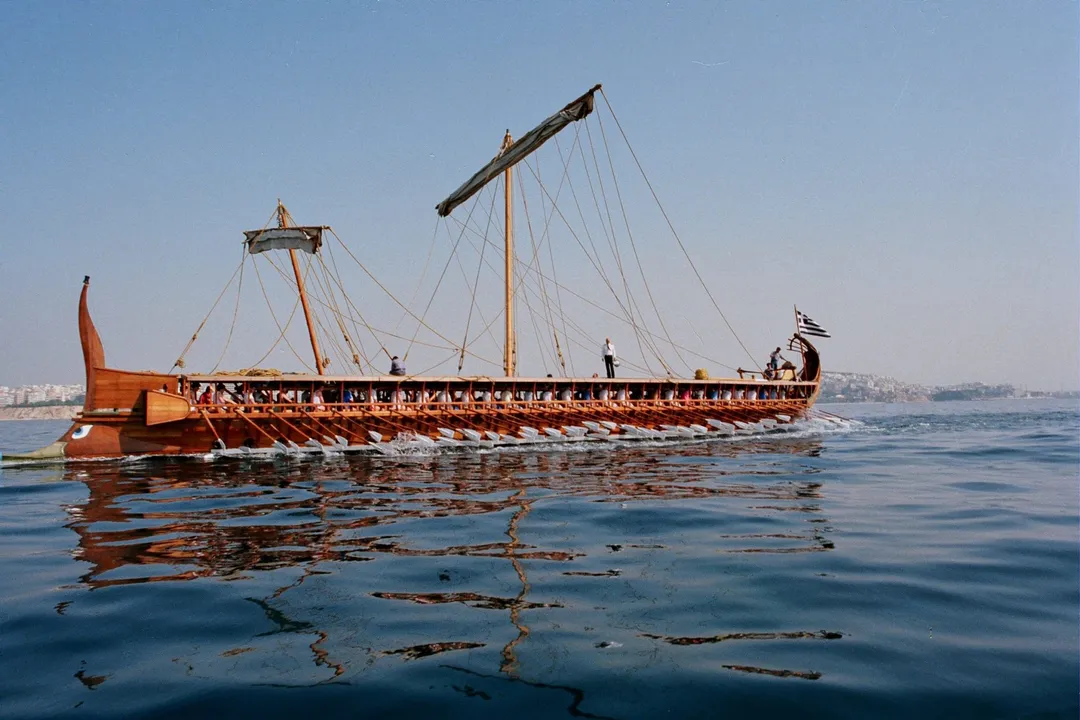
The quest for easier handling on larger, faster vessels led to the development of stockless designs. In 1821, Richard Francis Hawkins patented the first stockless and self-canting anchor principle, which was heralded as a major improvement over ancient designs, though it initially failed to gain traction after being dismissed by the Dutch Navy for poor performance in mud. Later in the 1850s, François Martin designed a close-stowing anchor that used forged iron and avoided welds, leading to a lower price point.
The move towards stockless anchors gained momentum in the late 19th century, becoming extensively adopted in the British mercantile marine and eventually by the Royal Navy in 1903 after trials starting in 1885. The advantages were clear: reduced weight due to the absence of the stock and associated gear, easier handling, and a clear forecastle deck for other work. Yet, this convenience came at a cost; many believed stockless anchors were less certain in action, taking longer to set properly and being more prone to dragging on uneven seabeds.

# Specialized Ground Anchoring
Beyond the maritime world, the principle of anchoring evolved for terrestrial stabilization, primarily for civil engineering projects. Before manufactured solutions, stabilization relied on nature, such as tethering to trees or using log deadmen—large logs buried to resist pulling forces.
A major inventor in this area was Alexander Mitchell (1780-1868), a blind Irish engineer. In 1833, he patented the screw foundation, a design used widely for constructing lighthouses and beacons on shifting sands and mudbanks. His invention marked a significant early step in engineered anchoring, earning him the Telford Medal. Later, in 1912, Albert Bishop Chance invented the world's first practical earth anchor, the “Never-Creep,” driven by the necessity to quickly secure telephone poles after an ice storm. This led to Chance developing the first anchoring manual in 1945 and later the Power-installed Screw Anchor, beginning the scientific documentation of predicting anchor performance in soil.
# Modern Fluke Designs
The 20th century saw an almost parallel development track for yacht anchors, focusing on maximizing holding power relative to weight and ensuring reliable setting regardless of bottom composition. This period shows that innovation became less about who invented the anchor, and more about which engineer solved a specific performance flaw.
| Anchor Pattern | Inventor / Origin | Key Feature | Era |
|---|---|---|---|
| CQR (Plow) | Sir Geoffrey Ingram Taylor | Asymmetrical design, convex fluke. | Early 1930s |
| Danforth | Richard Danforth | Symmetrical design with very large, flat plate flukes. | 1940s |
| Bruce (Claw) | Peter Bruce | Claw-type design. | 1970s |
| Spade | Alain Poiraud | First successful use of a concave fluke. | 1990s |
| Rocna | Peter Smith | Concave fluke, self-righting roll-bar, setting skids. | Early 2000s |
The CQR, or "Secure," anchor, developed in the early 1930s, was asymmetrical and required a bow-roller system for practical storage, making it suitable for smaller vessels but not easily scalable for large ships. In the 1940s, Richard Danforth returned to a symmetrical concept but with much larger, flat triangular flukes, providing high efficiency for its weight, though it was not ideal as a general-purpose anchor.
The most significant modern leap in shape came with the Spade anchor developed by Alain Poiraud in the 1990s, which was the first to effectively employ a concave fluke geometry, leading to greater efficiency than the convex (Plow) or flat-plate (Danforth) types. Building on this, New Zealander Peter Smith designed the Rocna anchor in the early 2000s, integrating the high-performing concave fluke with a roll-bar to guarantee the correct setting angle and setting skids for deep penetration. Smith later adapted this to the Vulcan design for boaters who could not accommodate the roll-bar, maintaining similar performance metrics.
The evolution from the heavy, stone-based anchor to the modern, sculpted metal fluke highlights that the "creator" of the anchor is a title distributed across time. It began with unnamed ancient peoples establishing the concept of mass, was refined by the Greeks and Romans who introduced shape and metal, advanced through the 19th-century metallurgists like Pering who solved structural failures, and finally perfected by modern designers like Smith and Poiraud who mastered the hydrodynamics of the fluke geometry. The persistent need for security has driven continuous iteration, proving that the anchor's history is intrinsically tied to the history of shipbuilding itself.
Related Questions
#Citations
History of the anchor
How the Ancient Greeks Invented the Anchors for Boats
The Anchor Was Invented in Ancient Greece
The history behind anchors: types, curiosities and their ...
History of the Anchor Patent
Anchors of the Seaport
About Us
Ground Anchors - The History
Historical timeline of anchor developments
A Brief History of Anchors