What is the origin of the anchor?
The device that keeps a vessel secure against the whims of the tide and wind has a lineage stretching back into antiquity, far predating modern maritime technology. Before standardized metal alloys and complex mechanical systems, mariners relied on ingenuity and whatever heavy, readily available materials they could find to prevent their boats from drifting away or running aground. [1][7] The very concept is intuitive: secure a heavy object to the bottom with a line, and the water’s resistance to the line’s pull, combined with the weight, will hold the craft in place. [2]
# Word Roots
The English word "anchor" finds its way to us through Old French, ancor, which itself derived from Latin ancora. [3] This Latin term traces its ancestry back to the Greek word ánkyra (ἄγκυρα). [3][4] While the term itself appears to have been adopted into Latin from Greek, the fundamental concept it describes is likely far older than the word itself, existing in practice long before standardized nomenclature was established. [1] Interestingly, the Greek term ánkyra is also closely related to the Sanskrit word aṅkuśa, meaning a hook or an elephant goad, suggesting a possible ancient linguistic connection across Indo-European languages centered around the idea of something used to hook or restrain. [3]
# Primitive Methods
The earliest anchors were far from the recognizable shapes we see today. In the very beginnings of seafaring, the primary requirement was simply mass. [1][7] Early sailors, particularly those in the Mediterranean region, often used massive stones as their first anchoring tools. [1][5] These stones might have a hole bored through them to attach the mooring rope, or perhaps a thick piece of wood was wedged into a natural crevice to serve as the makeshift hook. [1]
This stone-and-rope technique was effective only in relatively shallow waters and calm conditions. [7] If the vessel drifted into a soft, muddy, or sandy bottom, the stone might simply drag along the seabed without settling securely. [1] The weight provided the resistance, but there was no 'bite' into the substrate. Historical evidence suggests these early methods persisted for millennia, serving the needs of Phoenician, Egyptian, and early Greek mariners. [1][5]

# Iron Beginnings
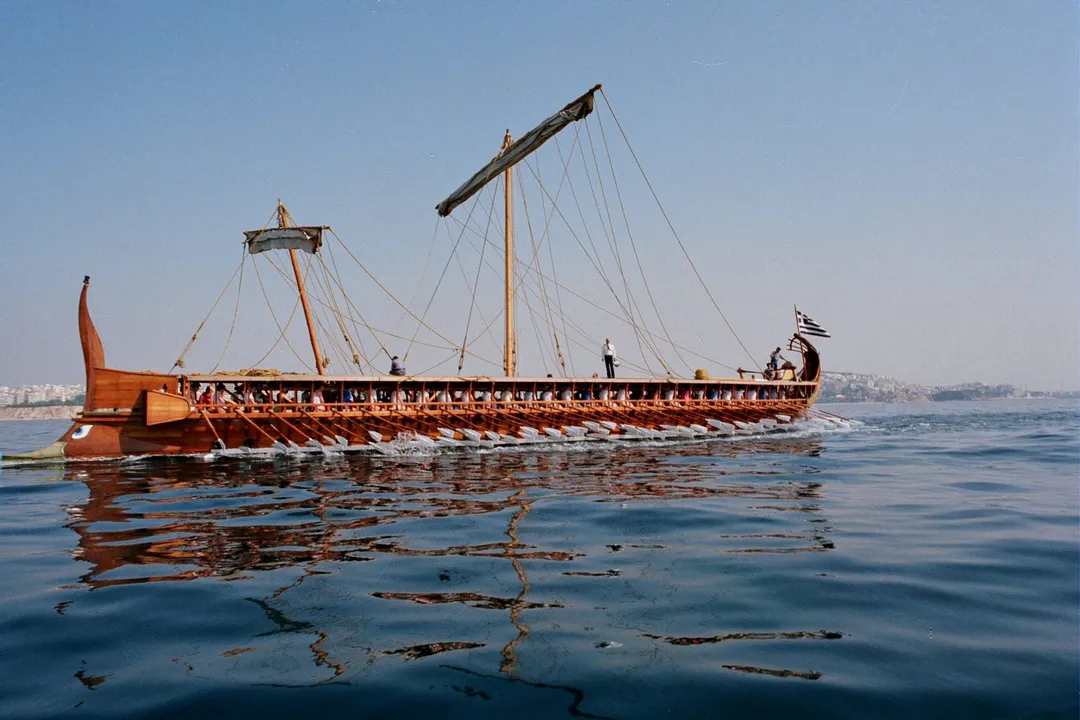
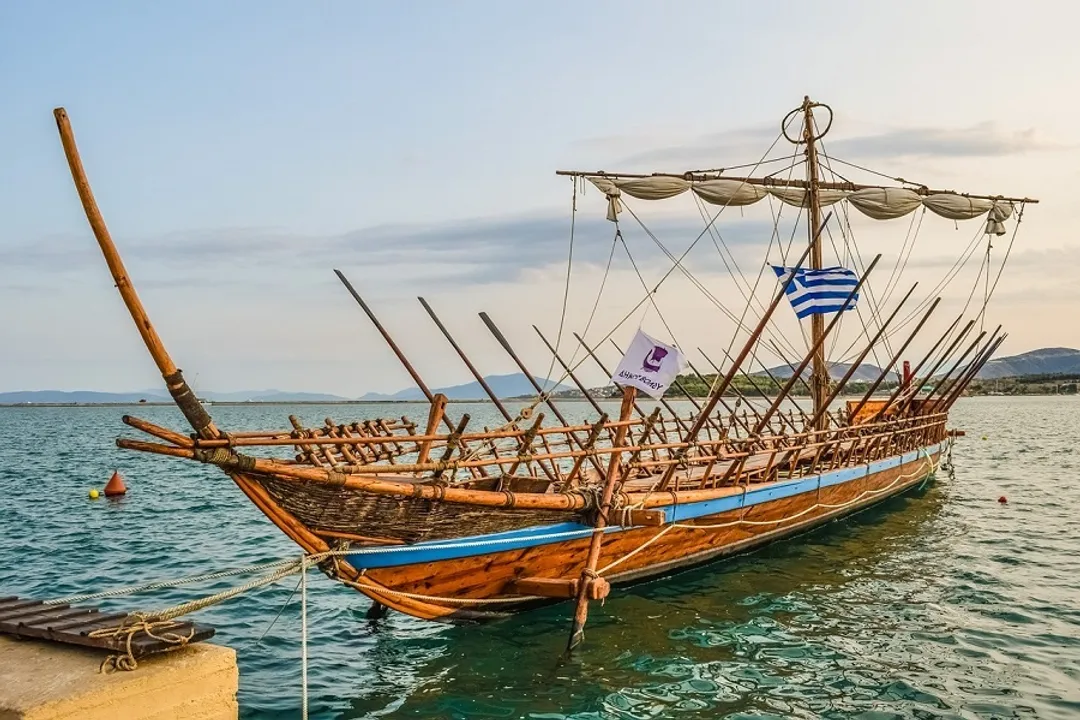
The shift from simple stone weights to dedicated, purpose-built anchors is tied directly to advancements in metallurgy. [7][8] The transition point appears to be around the fifth century BCE, with the historical record indicating that iron anchors began to see use during the era of classical Greece. [1][4][5]
The first true metal anchors moved away from pure weight toward incorporating a more effective holding mechanism. These early iron versions often consisted of a single, heavy piece of metal with one end fashioned into a point or hook, and the other end designed for rope attachment. [1] One account mentions that the Greeks used anchors made of iron, but their design was relatively simple, lacking some of the features that would later become standard. [4]
The Romans, building upon Greek naval tradition, refined these designs. They are credited with introducing the concept of the stock—a beam perpendicular to the shank—which helped ensure that one of the anchor's arms (the fluke) would dig into the seabed when dropped. [1][7] This addition represented a significant leap in effectiveness; an anchor was no longer just a heavy object dragging along the bottom, but a tool designed to set itself. [8] Without this strategic shape, the anchor would likely just lie flat, offering minimal resistance. [1]
| Material | Time Period (Approx.) | Key Feature | Holding Capability |
|---|---|---|---|
| Stone | Pre-500 BCE | Mass/Weight | Low (dragged easily) |
| Wood/Stone Composite | Early Antiquity | Wedged rope/shank | Moderate (better grip than stone alone) |
| Iron (Simple Hook) | ~500 BCE Onward | Single point of metal | Improved setting ability |
| Iron (With Stock) | Roman Era | Perpendicular stock | Designed to set the fluke |
If we examine the progression, the stone anchor solved the weight problem, while the introduction of the stock solved the setting problem. This distinction highlights that true anchoring is a mechanical, not just a gravitational, challenge. [1][8]
# Component Refinement
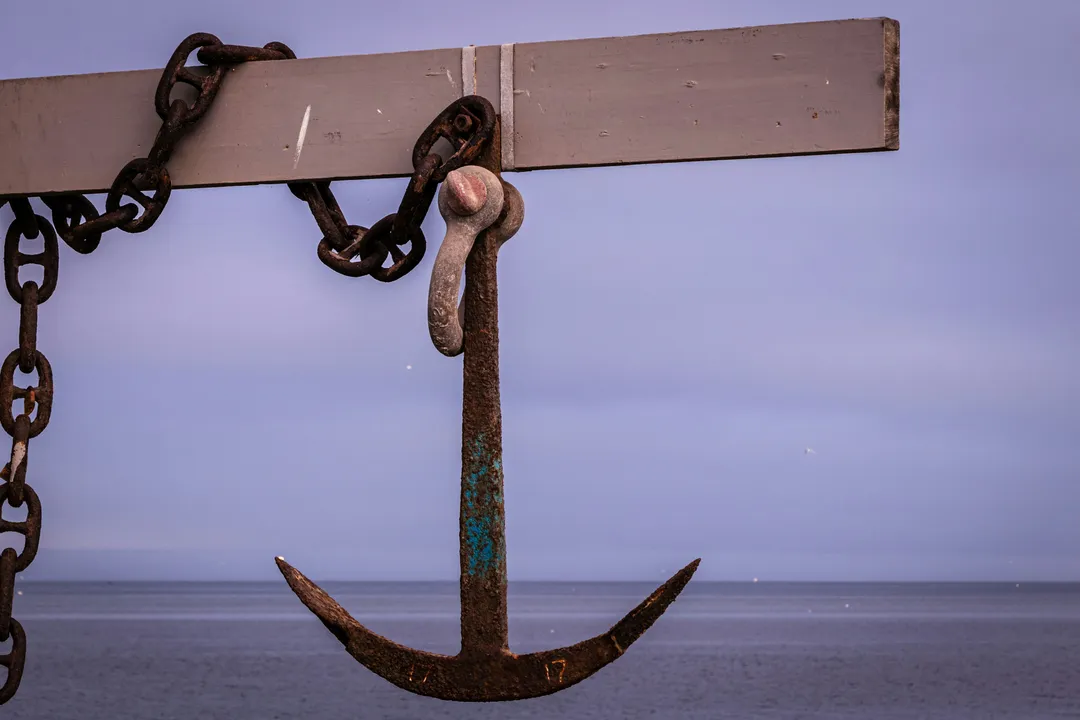
The anchor evolved over centuries as ship design and navigational needs became more demanding. [7] A critical development, possibly stemming from late Roman or early medieval adaptations, was the introduction of the second fluke, creating the distinct, symmetrical shape familiar today, known as the Admiralty pattern anchor. [1][8]
This standard design features several distinct parts:
- The Shank: The main shaft of the anchor. [2]
- The Stock: The crossbar, usually perpendicular to the shank, which dictates how the anchor falls and sets. [1]
- The Flukes: The pointed arms at the bottom that dig into the sea floor. [2]
The shape and angle of the fluke relative to the shank are what determine the anchor's ability to penetrate the bottom material—sand, mud, or clay. [2] Interestingly, even as materials changed, the core geometric principle established by the Romans—using the stock to orient the flukes—remained the gold standard for centuries, demonstrating an enduringly successful piece of naval engineering. [7]

# Symbolism and Hope
Beyond its practical, life-saving function on the water, the anchor quickly gained deep cultural and spiritual significance. [6] For ancient seafaring cultures, the ability to stop a vessel safely was synonymous with survival, transforming the tool into a powerful metaphor. [4]
In early Christianity, the anchor became an especially potent symbol. [9] Emerging in a time when explicitly displaying Christian symbols could be dangerous, the anchor offered a discreet, yet meaningful, representation of faith. [9] It was adopted because it physically represented the theological concept of hope. The writer of the Epistle to the Hebrews describes hope as an anchor for the soul, firm and secure. [9] Thus, the physical object that secured a ship in a storm symbolized the spiritual security found in belief, holding the soul fast against the turbulent "waves" of life. [6][9] This duality—physical utility and profound symbolism—is rare for such a utilitarian object.
# Modern Adaptations
While the basic principle of the stock-and-shank design held sway for a very long time, the rise of larger, faster vessels in the 19th and 20th centuries necessitated anchors that could be deployed and retrieved more quickly and hold much greater loads. [1][7] The weight of traditional anchors became a significant practical problem for rapidly moving ships.
This led to the design of anchors where the stock was eliminated in favor of shapes that relied on a clever fluke geometry to automatically orient themselves upon impact. Designs like the Fisherman anchor (the classic, two-fluke design) were eventually superseded by designs like the Hall's anchor (often used on larger vessels) and, later, lightweight, high-holding-power anchors such as the CQR or the Danforth. [1][7]
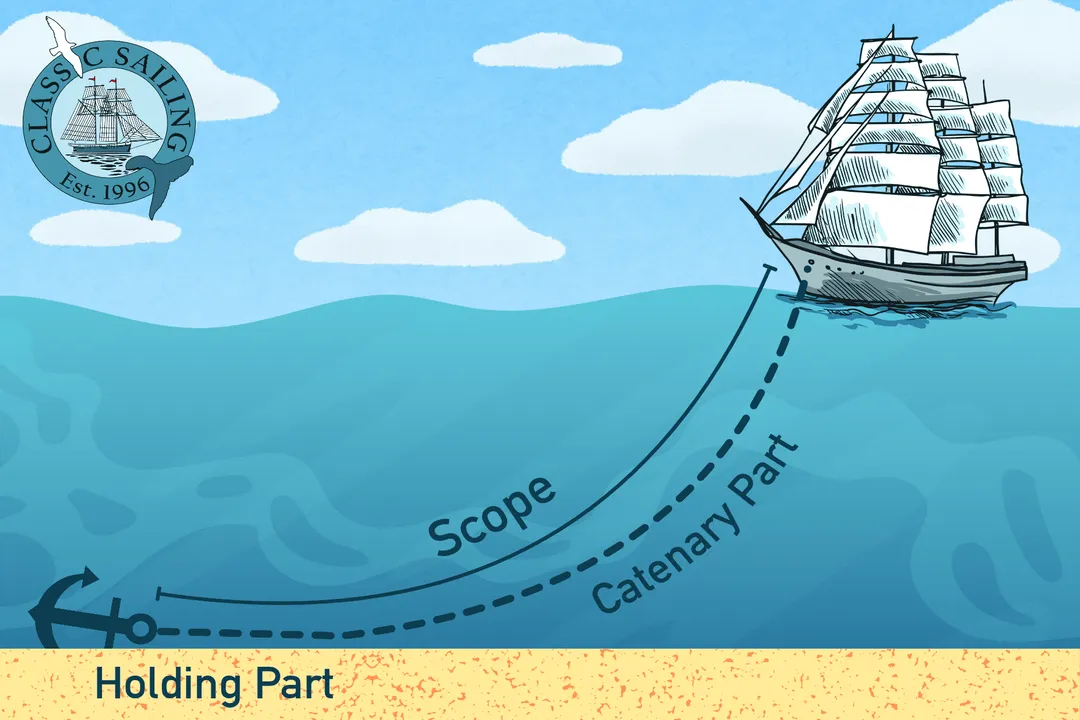
Consider the trade-off: a heavy, traditional Fisherman anchor might require significant deck machinery to lift, but it offers reliable holding in many conditions. [2] Modern designs, like some aluminum spade anchors, prioritize a much better strength-to-weight ratio, making them easier for a smaller crew to handle while maintaining excellent penetration in soft bottoms. [7] The evolution is a continuous balancing act between the necessary mass for holding power and the practical realities of handling the equipment on deck.
The origin of the anchor, therefore, is not a single moment of invention, but a slow, layered process: first, the realization of weight (stone), then the innovation of setting (the stock), followed by material improvement (iron), and finally, the refinement of geometry for efficiency (modern fluke shapes). [1][8] From a simple rock tied to a vine to the complex cast-steel shapes used today, the anchor remains one of humanity’s oldest and most essential pieces of applied physics and engineering, perpetually connecting the vessel to the earth beneath the waves. [1][7]
Related Questions
#Citations
History of the anchor - Wikipedia
Understanding Anchors - Classic Sailing
Anchor - Etymology, Origin & Meaning
How the Ancient Greeks Invented the Anchors for Boats
The Anchor Was Invented in Ancient Greece - Greek Boston
What does an anchor symbol mean? - Onecklace
A Brief History of Anchors
The history behind anchors: types, curiosities and their evolution
An Anchor—Potent Christian Symbol - EARLY CHURCH HISTORY