What is one thing made by a woman?
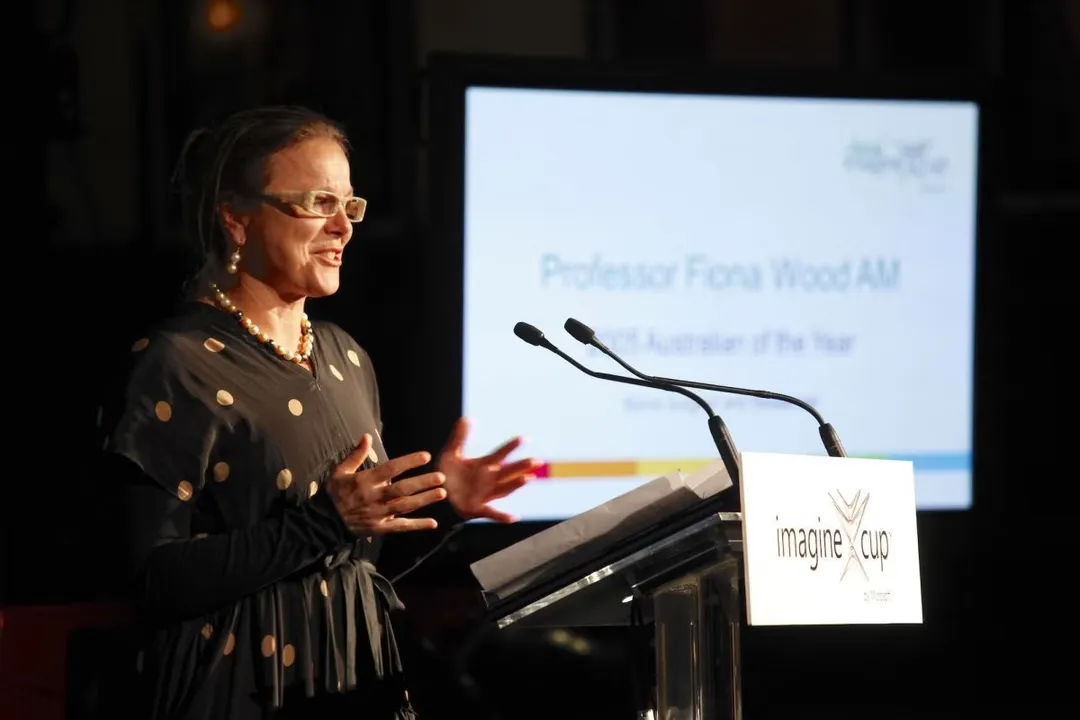
The story of innovation is often told through grand, monolithic narratives, yet beneath the surface of world-changing technologies lies a rich history of everyday brilliance brought forth by women whose names are frequently overlooked or whose contributions have been subtly sidelined in popular memory. From items we use every day without a second thought to foundational elements of modern computing, women have consistently engineered solutions to problems both personal and universal. [1][2][5] To ask what one thing was made by a woman is an impossible question because the answer is a sweeping catalog spanning centuries and every field of endeavor, suggesting that perhaps the true question is which major area of human progress hasn't benefited from female ingenuity. [4][6]
# Home Utilities

Many pivotal inventions stem directly from the practical necessity of managing domestic life, an area where women have historically held the primary responsibility, leading to innovations designed to reduce arduous, repetitive labor. [4][5] Consider the automated dishwashing machine. Before Josephine Cochrane patented her design in 1886, washing dishes was a time-consuming and often damaging process involving scrubbing by hand. [1][4][5] Cochrane, frustrated by the breakage of her fine china when washed by servants, engineered a system using water jets and a rotary mechanism powered by a hand crank—an early version of the system we still rely on today. [5] Her machine was so effective she famously debuted it at the 1893 World’s Columbian Exposition in Chicago. [1]
Another household staple, so ubiquitous that its absence is genuinely jarring, is the disposable diaper. Before 1949, the laborious cycle of washing cloth diapers was a defining feature of early parenthood. [1][5] Marion Donovan developed a waterproof cover, the Boater, to prevent leaks, and later conceived of the truly disposable diaper, utilizing absorbent materials inside a disposable covering, paving the way for modern convenience. [5][8]
It is compelling to note that many of these early domestic inventions, like the automatic washing machine or the dishwasher, were born from a desire to reclaim time from non-optional, time-intensive tasks. This contrasts sharply with many male-dominated inventions of the same era, which often focused on large-scale industrial production or warfare. This difference in originating necessity—the immediate, personal challenge versus the broad, external market—often dictates the initial reception and perceived importance of the innovation itself. [4]
# Safety Systems

Beyond the home, women have engineered crucial additions to public safety and personal protection, often responding to immediate dangers observed in daily life or high-stakes environments. [2][5]
Take, for example, the windshield wiper. In 1903, Mary Anderson, while riding a streetcar in New York, noticed the motorman constantly struggling to see through the rain and snow, having to stop to clear the glass manually. [1][5][8] She designed a lever-operated rubber blade system that could be controlled from inside the vehicle, fundamentally changing visibility and safety for all motorized transport. [5] It took years, but her invention eventually became standard equipment. [1]
In the realm of extreme safety, the creation of Kevlar stands out as a massive advancement in material science. Stephanie K. W. Kwolek, a chemist at DuPont, synthesized the incredibly strong, lightweight aramid fiber in 1965. [1][5] This material is five times stronger than steel by weight and is indispensable in body armor, aircraft components, and fiber optic cables. [1][5] It is a testament to methodical scientific inquiry, rather than an immediate domestic need, driving the innovation forward.

# Digital Beginnings
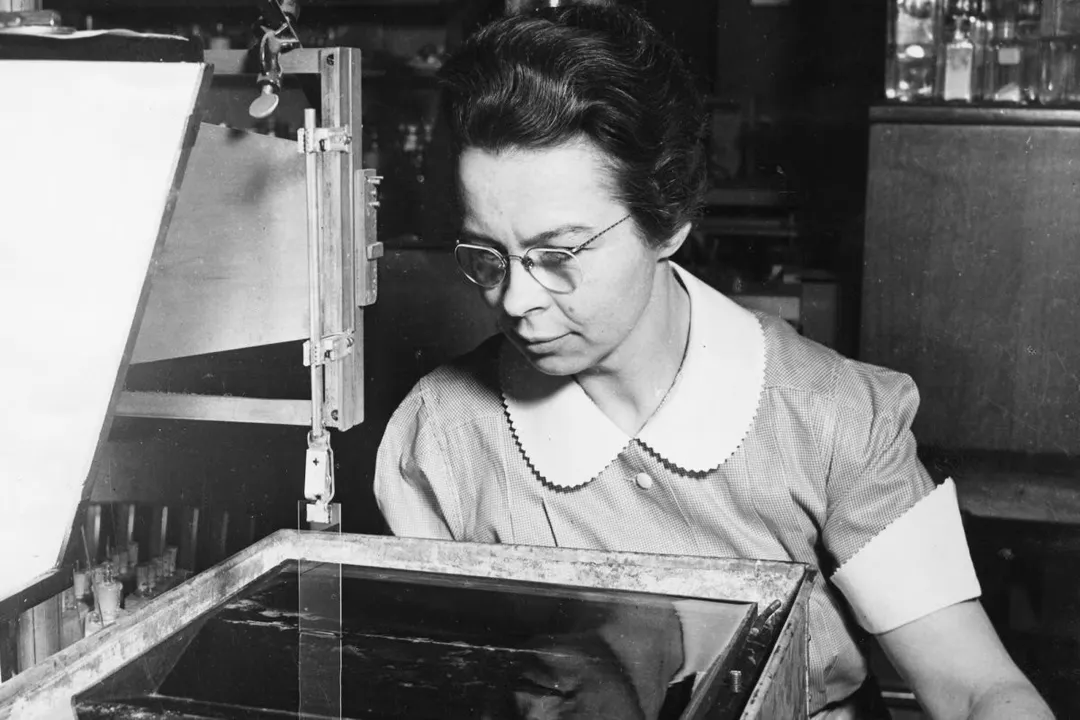
The entire digital age rests on theoretical and practical contributions made by women centuries before the first personal computer existed. [2] Perhaps the most frequently cited foundational figure is Ada Lovelace. Working with Charles Babbage's conceptual Analytical Engine in the mid-1800s, Lovelace is credited with creating what is considered the first algorithm intended to be processed by a machine, essentially writing the world's first computer program. [1][2] Her vision extended beyond mere calculation; she recognized the machine’s potential to manipulate symbols beyond pure numbers, predicting applications in music and art. [2]
Decades later, during World War II, women formed the core of the human computers responsible for complex calculations. [9] Grace Hopper, a brilliant mathematician and U.S. Navy rear admiral, was instrumental in developing early programming languages. [1][5] She is famous for pioneering the concept of machine-independent programming languages, leading to the development of COBOL, one of the first high-level programming languages. [5] Hopper also popularized the term "bug" to describe a computer glitch after a literal moth caused a malfunction in an early computer in 1947. [1] Without these foundational figures, the logic and structure underpinning everything from smartphones to complex scientific modeling would look radically different, if they existed at all. [5]
# Wellness Progress

Medical advancements have been significantly shaped by female inventors, addressing everything from temperature control to diagnostics. [2] Alice Parker, an African American inventor, developed a crucial component for modern climate control: the central heating thermostat in 1919. [1][5] Her design allowed for automatic regulation of the furnace, a massive step toward energy efficiency and consistent home comfort before widespread electrification. [5] While the exact lineage of modern digital thermostats is complex, Parker’s concept of automated feedback control is the bedrock of modern environmental regulation in buildings. [1]
In pharmaceutical and medical fields, the list is extensive. Dr. Marie Van Brittan Brown is recognized for inventing the first home security system in the 1960s, which used a camera, a monitor, and remote unlocking mechanisms—the clear precursor to modern CCTV and video doorbells. [1][5] Furthermore, many lesser-known contributions, such as the development of early syringes or sterilization techniques by various women, contribute daily to patient safety, even if specific documentation is harder to trace across every general source list. [2][4]
One area where context is particularly illuminating is the introduction of new medical diagnostic tools. For instance, while the specific inventor might vary across different summaries, the development of critical X-ray techniques and contrast agents often features female scientists who worked diligently in environments less welcoming to independent scientific pursuit. [2][4] It is worth noting that historical record-keeping often favored patent filings tied to established male-led institutions, meaning that many practical, necessary tools developed by women—especially those in collaborative research settings—are often attributed only to the supervising institution rather than the individual researcher who formulated the breakthrough concept. [7]

# Culinary Cornerstones
Not all necessary inventions involve machinery or complex algorithms; some simply make life more enjoyable. The world owes the Toll House Chocolate Chip Cookie to Ruth Graves Wakefield. [1][5] In the 1930s, while running the Toll House Inn in Whitman, Massachusetts, she ran out of baking chocolate and, instead, broke up a Nestlé semi-sweet chocolate bar into her dough, expecting the pieces to melt and blend. [1][5] They did not melt entirely; they softened, creating the now-iconic chocolate chip cookie. [5] This simple, delicious accident has spawned countless variations and remains a hallmark of American baking. [1]
# The Unseen Utility
The breadth of female innovation extends into materials science, agriculture, and media. For example, the process for making shatterproof glass, vital for automobiles and windows, owes much to the work of Margaret E. Knight in the late 1800s, though the history of glass patents is layered. [1][2] Another key example is the development of Monoprinting by Marion Cunningham. [1]
When reviewing these diverse contributions, a pattern emerges that is not always explicitly stated in lists: the impact is often cumulative. An invention like Mary Anderson’s windshield wiper made possible the mass adoption of automobiles by making them safer for everyone, including the women and families driving them. Similarly, Cochrane’s dishwasher, while initially a luxury, set the stage for standardizing kitchen workflows in commercial and eventually residential settings, raising the baseline expectation for cleanliness and efficiency. [5] The accumulated effect of these individual, often niche, inventions is the creation of a vastly more functional, safer, and comfortable modern world, a world built piece by piece by hands that historically received too little recognition for their structural contributions. [4][6] It’s important to remember that these listed items are merely the ones that successfully navigated the patent system or gained commercial traction; countless other refinements and minor inventions that made immediate, localized improvements were never documented with the permanence afforded to larger industrial achievements. [3]
# Comparative Impact
Comparing a few key inventions helps illustrate the range of impact.
| Invention | Inventor | Year (Approx.) | Primary Area of Impact | Type of Problem Solved |
|---|---|---|---|---|
| Analytical Engine Algorithm | Ada Lovelace | 1843 | Theoretical Computing | Logic/Symbolic Processing |
| Dishwashing Machine | Josephine Cochrane | 1886 | Domestic Labor | Time/Labor Reduction |
| Windshield Wiper | Mary Anderson | 1903 | Transportation Safety | Visibility/Hazard Mitigation |
| Central Heating Thermostat | Alice Parker | 1919 | Home Environment | Automation/Efficiency |
| Kevlar | Stephanie Kwolek | 1965 | Material Science | Strength/Weight Ratio |
| Disposable Diaper Concept | Marion Donovan | 1949 | Infant Care | Hygiene/Convenience |
| COBOL Language | Grace Hopper | c. 1959 | Commercial Computing | Accessibility/Portability |
This comparison reveals that while Lovelace and Hopper addressed abstract, high-level scientific challenges, Cochrane and Donovan solved concrete, recurring physical burdens. Yet, both categories of problem-solving are equally necessary for societal progression. The invention of Kevlar, being purely material science driven, demonstrates that women were not confined to fields related to care or domesticity but were also responsible for breakthroughs in defense and high-stress engineering contexts. [5]
Another perspective to consider is the timeline of acceptance. While Cochrane patented her dishwasher in the late 1800s, it was not widely adopted until well into the 20th century, even after the technology was refined. [1] This lag often affected female inventors disproportionately; their ideas might be technically sound and economically viable, but lacking the social capital or institutional backing required for rapid market penetration, forcing innovations to wait for a later generation—often male—to fully champion them. [4]
This rich history confirms that the answer to "What is one thing made by a woman?" is an ever-growing list that touches nearly every aspect of modern life, from the code running our devices to the material protecting first responders. [2][5] Recognizing these specific achievements moves the discussion from general acknowledgment to specific, demonstrable historical fact, ensuring that credit is accurately assigned where it belongs.
#Videos
10 Great Inventions by Women - YouTube
Related Questions
#Citations
Top 101 Female Inventions that Changed the World & Women's ...
List of inventions and discoveries by women - Wikipedia
"50 inventions made by women" | Let's play a game a d fact-check ...
9 Everyday Things You Probably Didn't Know Were Invented by ...
14 things you didn't know were invented by women
Things women have invented - Facebook
10 Great Inventions by Women - YouTube
11 Inventions You Didn't Know Women Had A Hand In Making
17 Everyday Items Invented by Women - MSN