Did Leonardo da Vinci invent the lock?
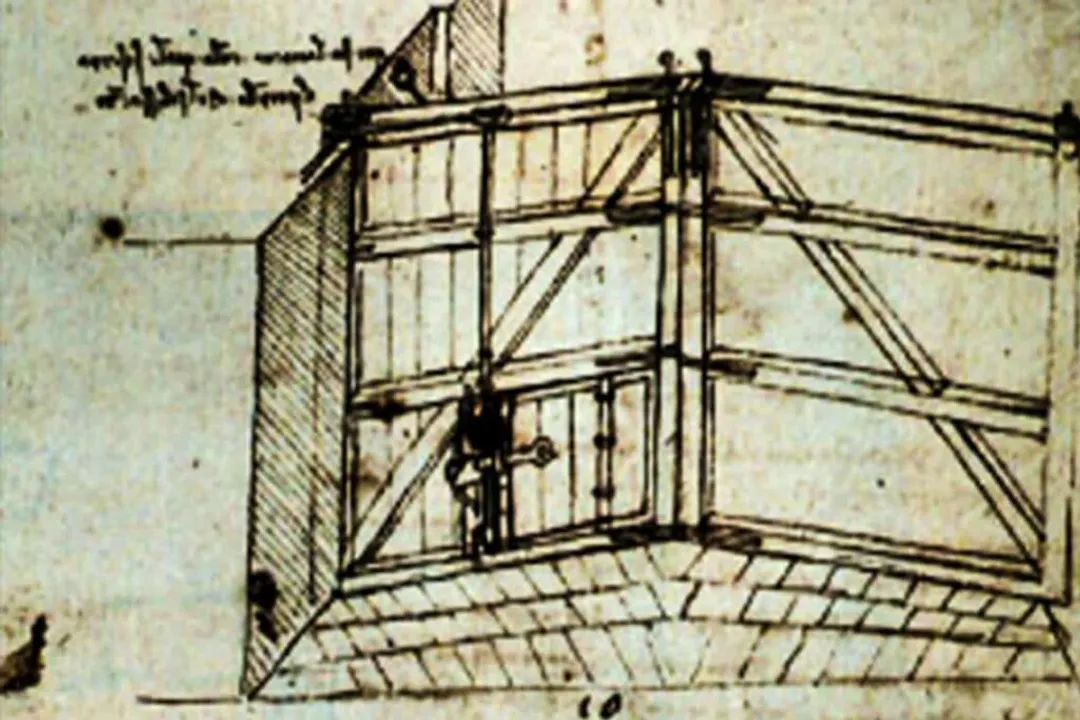
The name Leonardo da Vinci often conjures images of the Mona Lisa or anatomical sketches, yet his extensive notebooks reveal a mind deeply engaged in the practicalities of mechanics and civil engineering. [4][5] While the concept of raising and lowering boats via controlled water chambers—a canal lock—has roots stretching back into antiquity, [6][7] Da Vinci’s specific contribution centered on perfecting a crucial component of this system. He is strongly associated with the design of the miter lock, a mechanism so mechanically sound that elements of it persist in major global infrastructure even today. [2][3]
# Water Control

A water lock functions as a bypass around obstacles in a waterway, allowing vessels to transition between sections of water held at different elevations. [7] To achieve this, the lock creates a temporary, watertight chamber. Water is either added to raise the vessel or drained to lower it, matching the level of the destination channel before the gates open. [7] This technology was revolutionary for commerce and travel, allowing navigation through areas that previously presented insurmountable elevation changes. [5] The historical record suggests that some form of lock technology predated the Renaissance master, as indicated by references to ancient canal locks being attributed to him in historical reporting. [6]
# Miter Lock Design
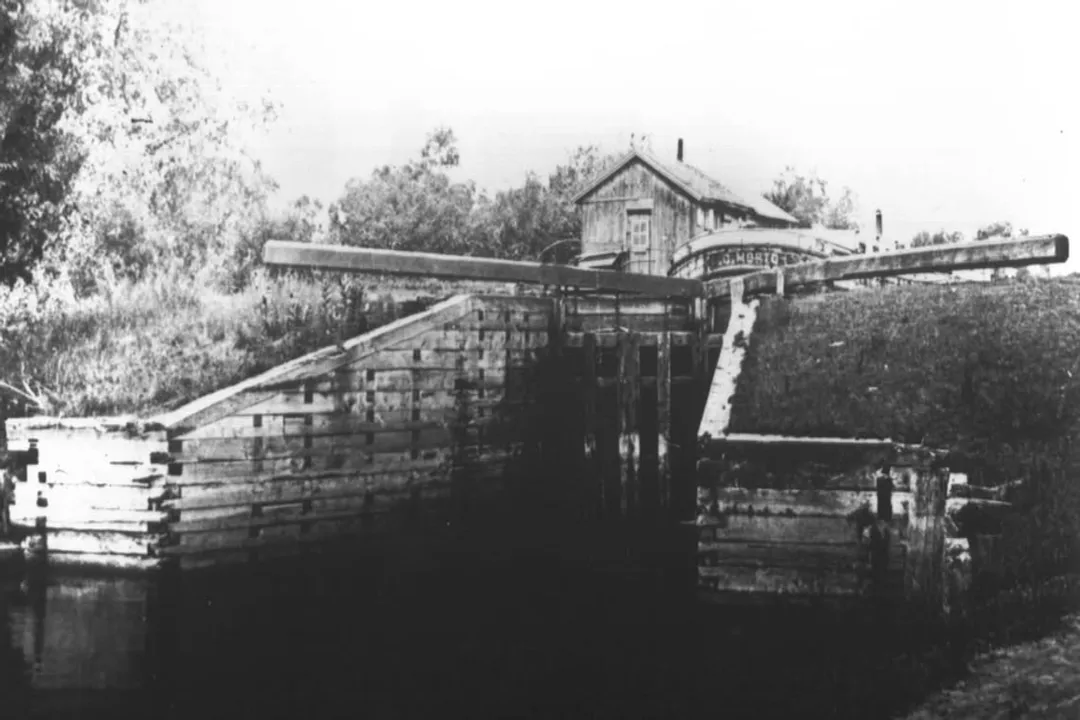
The innovation most frequently tied to Leonardo is the design of the miter lock gate system. [2][3] Unlike simpler gates that might rely on a single flat barrier pushed or pulled across the opening, the miter design employs two separate doors that meet in the center, forming an angle or a ‘V’ shape. [2] Crucially, this ‘V’ points toward the higher body of water. [2]
This specific geometry provides an elegant solution to the challenge of maintaining a seal against immense water pressure. When the water level is high on one side, the hydrostatic force does not just strain the structure; it actively pushes the two doors inward against each other and against their frame seats. [2] This means that the very force the lock must resist is what aids in keeping it closed. This geometric application—using hydrostatic pressure to assist in closure rather than fighting it—represents a profound understanding of applied physics, turning the locking force into an integral part of the gate itself, an elegance often seen in his mechanical sketches. [4] While others may have used simple sluice gates, Da Vinci’s articulation of the angled, self-sealing miter gate provided a more dependable and structurally sound method for high-head canals. [2]

# Hydraulic Projects
Da Vinci was deeply involved in hydraulic studies, which were critical for the expanding needs of Italian city-states and their surrounding territories. [4][9] His theoretical work was often immediately translated into practical proposals for civic improvement. [5] For instance, his designs were applied to the lock intended for the San Marco basin, demonstrating his involvement in solving real-world navigation challenges within the Venetian sphere of influence. [4] This period of the Renaissance saw an intense focus on civil engineering, where figures like Da Vinci were applying new mathematical and mechanical theories to ancient problems of water management. [1][8]
It is worth considering that Da Vinci was not just a theorist; he was constantly documenting and iterating on mechanisms. For a 15th-century engineer, designing a set of gates that could reliably manage a significant height difference required anticipating failure points—like warping wood or metal fatigue—and building redundancy into the geometry itself. The miter system essentially uses the water's weight to reinforce the structure, a concept that minimizes the required mechanical strength in the hinges and frames compared to a single, massive flat gate trying to resist the entire lateral force alone.
# Enduring Application
What sets Da Vinci’s miter lock concept apart from many of his other, more theoretical mechanical sketches is its remarkable staying power in large-scale engineering. [2][3] The design he laid out is foundational to the locks used in some of the world's most significant modern waterways. Specifically, the miter gate design is still in use for the lock systems in both the Panama Canal and the Suez Canal. [2][3]
When one considers the sheer volume of water and the frequency of operation at these massive global choke points, the continued reliance on this Renaissance-era geometry is remarkable. [2] It speaks to the near-perfection of the original mechanical principle Da Vinci established. While the materials have changed—steel replacing wood and sophisticated machinery replacing manual operation—the core principle of the angled, water-sealing gates remains the same. [2] It is fascinating to note that while Da Vinci sketched countless flying machines and weapons that never materialized into widespread application during his lifetime, the miter lock is one of the few complex mechanical systems attributed to him that achieved near-perfect, timeless execution in the real world, often overshadowed by his celebrated artistic output. [2][3][4]
#Videos
Leonardo da Vinci's GENIUS invention - Miter Locks - YouTube
Leonardo da Vinci Inventions - The Miter Lock - YouTube
Related Questions
#Citations
Leonardo da Vinci's GENIUS invention - Miter Locks - YouTube
Leonardo da Vinci Created the Design for the Miter Lock, Which Is ...
TIL that Leonardo da Vinci invented the Miter Lock in 1497 ... - Reddit
Design for a Lock at San Marco - COVE
Erie Canal Museum - Facebook
ANCIENT CANAL LOCK WAS BUILT BY LEONARDO DA VINCI
Lock (water navigation) - Wikipedia
01. Canals - Linda Hall Library