Why is Guglielmo Marconi important?
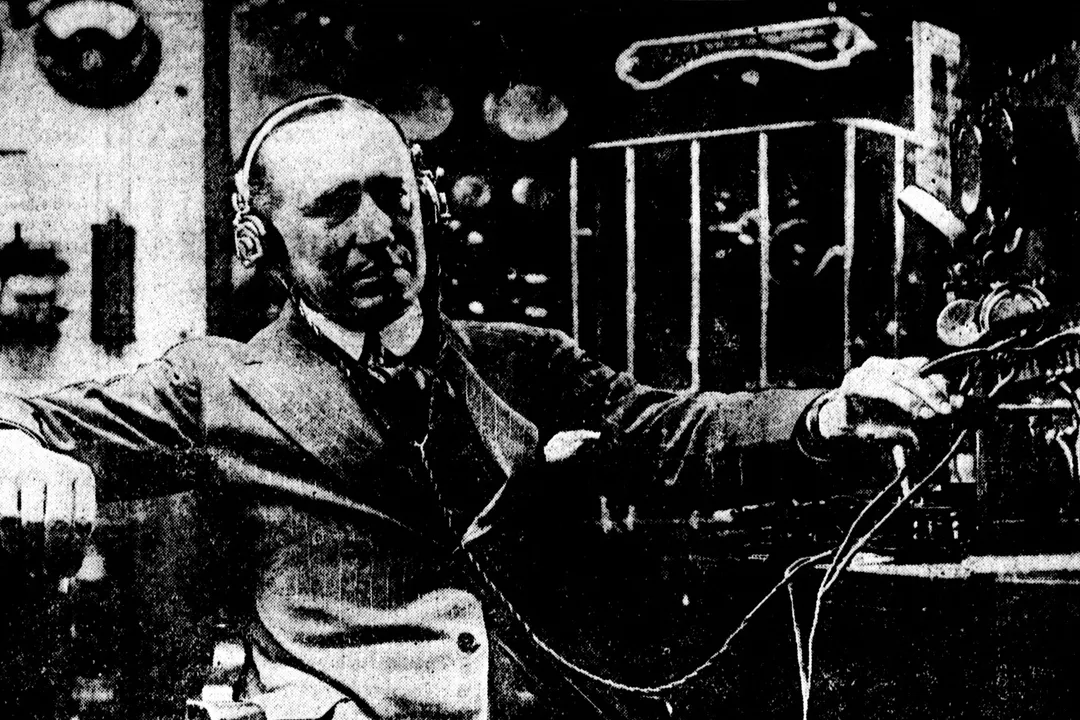
Guglielmo Marconi’s name is synonymous with the birth of wireless communication, fundamentally reshaping how humanity connects across distances. While often credited as the sole inventor of the radio, his true importance lies in transforming laboratory curiosities—the electromagnetic waves described by James Clerk Maxwell and demonstrated by Heinrich Hertz—into a reliable, practical, and commercially viable system for transmitting messages through the air. [2][7] His persistence turned theoretical possibility into everyday reality, laying the groundwork for nearly every form of modern wireless technology. [5][6]
# Italian Roots
Born in Bologna, Italy, in 1874, Marconi was the son of an Italian father and an Irish mother, Margaret O'Shea. [1][2][8] His initial education was somewhat informal, but he developed a keen interest in physics and electrical phenomena, particularly after reading Heinrich Hertz’s findings on electromagnetic waves in the late 1880s. [2][6][7] At his family estate in Pontecchio, he began conducting experiments, working to improve upon the rudimentary setups others had built. [2][6] He realized that by grounding the transmitting antenna and connecting the receiving antenna to an elevated point, he could significantly increase the distance over which signals could be sent. [2][7]
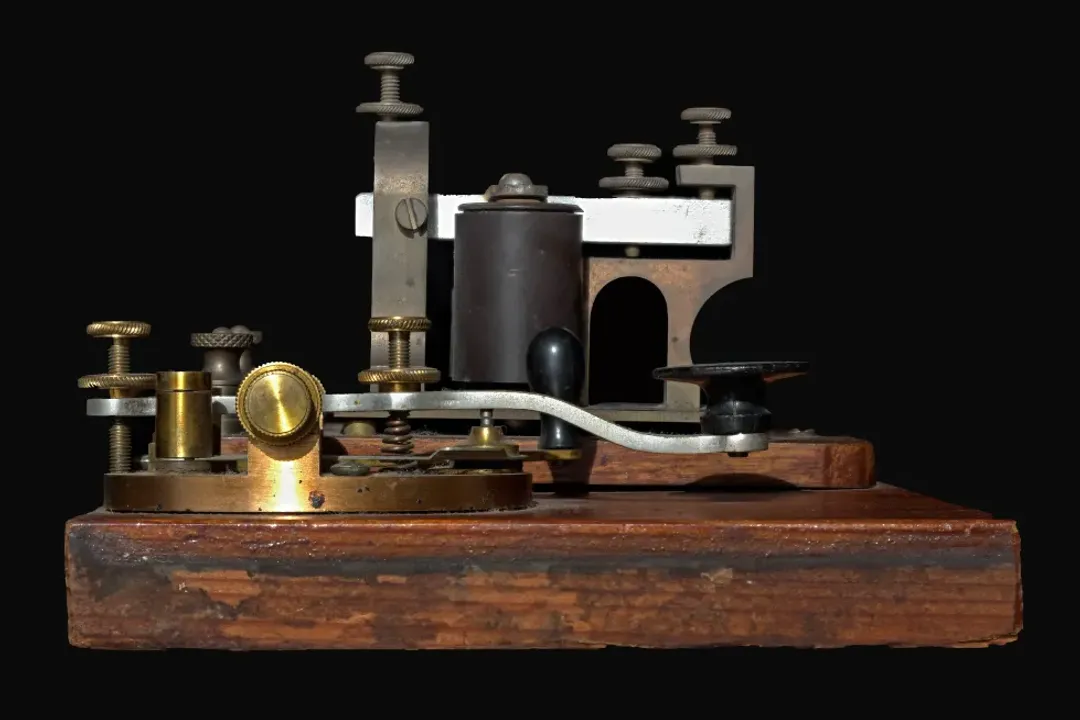
This early setup was essentially a primitive, spark-gap wireless telegraphy system, using Morse code to transmit signals. [6] By 1895, he could transmit signals across his family’s property, and by 1896, he managed to send signals over a distance of several kilometers. [1][2][7] The problem, however, was that the Italian government showed little interest in his invention, failing to recognize its massive potential. [2][7]
# First Patents
Recognizing the need for support and a path to commercialization, Marconi moved to England in 1896 at the age of 22. [1][2][7] In the United Kingdom, he found the environment much more receptive to his ideas. [2] He quickly filed for a patent for the system of wireless telegraphy in June 1896, a move that is a cornerstone of his legacy. [1][2][7] Shortly thereafter, he demonstrated his apparatus to officials from the British Post Office. [2] He continued refining the technology, moving from simple spark-gap transmissions to more sophisticated methods involving tuning circuits, which helped differentiate his signals from electrical noise. [1][5]
The establishment of the Wireless Telegraph and Signal Company in 1897, later known as the Marconi Company, marked his transition from inventor to industrialist. [2] This company was crucial because it was tasked not just with perfecting the hardware, but with creating a reliable service based on the technology. [2]
# Atlantic Leap
The achievement that cemented Marconi’s place in history, and which stunned the scientific world, was the successful transmission of the first transatlantic wireless signal in December 1901. [1][2][5][7] The signal, a simple three-dot Morse code transmission representing the letter 'S', was sent from Poldhu, Cornwall, in England, and successfully received at Signal Hill in St. John’s, Newfoundland, over a distance of approximately 3,500 kilometers (about 2,175 miles). [1][2][4][7]
What made this feat particularly significant—and perhaps even an accident of good fortune initially—was that the transmission seemingly ignored the conventional understanding of radio wave propagation. At the time, it was believed that radio waves traveled in straight lines, meaning the curvature of the Earth should have blocked any signal traveling this far. [7] Marconi’s success proved that the waves were somehow bending or propagating along the ionosphere, a phenomenon that was not fully understood until later. [6] His experimental success forced a complete rethinking of how radio waves behave over long distances, paving the way for high-frequency, long-range communication that we now rely upon. [7]
| Milestone | Date | Location Details | Significance |
|---|---|---|---|
| First Patent Filed | 1896 | United Kingdom | Established legal basis for his system. [1][7] |
| Commercial Company Formed | 1897 | London | Transitioned invention to industry. [2] |
| Transatlantic Transmission | 1901 | Cornwall to Newfoundland | Proved long-distance wireless potential. [1][4] |
| Nobel Prize Awarded | 1909 | Shared with Karl Ferdinand Braun | Recognized contributions to wireless development. [1][2] |
# Maritime Safety
Marconi’s most immediate and tangible humanitarian impact stemmed from applying his technology to maritime communications. [4] Before Marconi, ships at sea were effectively isolated once out of sight of land, a fact that tragically highlighted the dangers of sea travel during emergencies. [2] Marconi realized that reliable, two-way wireless contact with ships would revolutionize safety. [4]
He aggressively pursued contracts with shipping lines, demonstrating the system’s capability to send and receive distress signals and routine messages regardless of weather conditions or distance from shore. [2] This led to the requirement that many passenger and larger commercial vessels carry wireless apparatus and operators, dramatically improving the response time to shipwrecks and accidents at sea. [2][4] This shift from an experimental curiosity to an essential piece of safety equipment demonstrates a critical aspect of Marconi’s importance: he was arguably the first person to build an entire, functional communication infrastructure around an electrical principle. [2] This focus on building an end-to-end reliable service, rather than just demonstrating a phenomenon, is often what separates a laboratory discovery from a world-changing technology.
# Scientific Context
Marconi's work was built upon the foundations laid by others, which leads to necessary context when evaluating his contributions. [5][6] While he took Hertz’s discovery and made it useful, others like Oliver Lodge and Alexander Popov were also developing similar wireless transmission methods simultaneously. [2][6] Lodge, for instance, demonstrated the principle of tuning circuits, which Marconi later incorporated and patented, leading to significant legal disputes. [1][5]
The most famous intellectual dispute involved Nikola Tesla, who had demonstrated many of the same principles for radio transmission earlier, leading to a complex patent battle in the United States. [1][2][5] Although the US Supreme Court initially invalidated some of Marconi’s key patents in 1943, ruling in favor of Tesla’s earlier filings, the ruling was largely administrative, aimed at avoiding the payment of royalties during wartime. [1][2] In practical terms for the development of radio during the critical early 20th century, it was Marconi’s company that secured the contracts, built the infrastructure, and established the global standard for wireless communication, earning him the 1909 Nobel Prize in Physics, shared with Karl Ferdinand Braun. [1][2]
# Lasting Influence
Guglielmo Marconi’s importance is rooted not only in the invention of wireless telegraphy but in his tenacious drive to commercialize and standardize a global system. He was the system builder in an age of individual inventors. [6] He forced the world to accept that communication did not require wires, thereby launching the electronic age of instantaneous global contact. [5]
It is easy to look at modern cell phones and Wi-Fi and attribute their origin purely to digital advances, but those systems are direct descendants of the foundational principles Marconi proved possible: radiating energy through the air and creating a receiver sensitive enough to capture it reliably over distance. [7] His early work on directional antennas and high-frequency propagation, even if not fully understood in 1901, provided the initial roadmap that later scientists and engineers would follow to develop voice radio, shortwave broadcasting, and eventually, radar and satellite communications. [6] In essence, Marconi took the spark and turned it into the invisible thread that weaves the modern world together. [5][7]


Related Questions
#Citations
Guglielmo Marconi - Wikipedia
Guglielmo Marconi | Biography, Inventions, Radio, & Facts - Britannica
Marconi History
Moments in Radio History: The Legacy of Guglielmo Marconi
Guglielmo Marconi - National Inventors Hall of Fame®
MARCONI AND HIS INTUITIONS
Guglielmo Marconi - Lemelson-MIT
Guglielmo Marconi at 150: a legacy of connection and innovation
Guglielmo Marconi: Topics in Chronicling America