What is the origin of the lock and key?

The drive to secure property and valuables is as old as settled human civilization, marking a crucial separation from purely nomadic existence. The very first devices designed to restrict access emerged over six millennia ago. The earliest tangible evidence of this security evolution was unearthed in the ruins of Nineveh, the capital of ancient Assyria, located near modern-day Mosul in Iraq. This foundational device, often referred to as the Egyptian lock or the Nineveh lock, was constructed primarily of wood.
# Ancient Beginnings
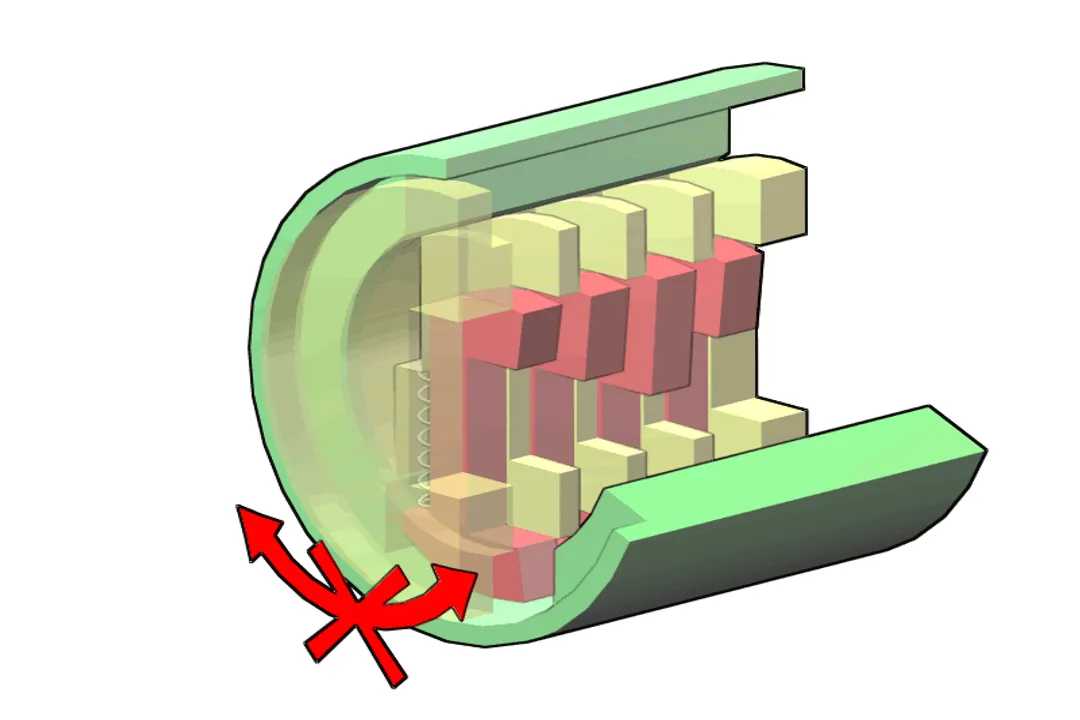
This initial locking system operated on the pin-tumbler principle. Structurally, it comprised a bolt, a fixture attached to the door, and a corresponding key. In its most rudimentary form, a large opening in the door allowed a human hand to reach in and manually operate the locking bar or bolt. The key, which was essentially a long wooden bar—sometimes measuring 14 inches for interior doors, or even 30 inches for main gates—had a series of upright pegs. When inserted, these pegs lifted corresponding pins within the lock mechanism out of drilled holes in the bolt, permitting the bolt to slide free. Upon key removal, the pins dropped partially into the bolt, effectively blocking movement. The Egyptians refined this design by adding wooden pegs that would fall into the bolt’s holes when locked, increasing security against simple manipulation.
# Roman Metalwork

The next great advancement came with the Roman Empire, which transitioned the technology from wood to durable metal, usually iron for the lock body and bronze for the keys, starting between 870 and 900 AD. Bronze was favored for keys because it resisted corrosion better than iron, which explains why more Roman keys survive excavations today. The Romans adapted the Egyptian pin-tumbler concept but added another layer of complexity: wards—internal obstructions and projections that required the key to have corresponding notches to pass through unhindered. This created the warded lock, a design that required a specific key, eliminating the previous issue where any similar-sized wooden key might work. Roman locksmiths also developed portable padlocks featuring a U-shaped bolt, a design also independently created by the Chinese.
What is particularly telling about this era is the adaptation of the lock for personal, rather than purely structural, use. Affluent Romans would keep valuables in locked chests and wear the corresponding keys as rings on their fingers. This practice served a dual purpose: the key was always immediately accessible, and, more subtly, wearing the key signaled to others that the individual possessed enough wealth and valuables to warrant such security measures. The sheer size of the mechanism shrank from a hand-sized apparatus to a wearable piece of jewelry, shifting the meaning of the key from a cumbersome tool of necessity to an item of portable status.

# Medieval Ornamentation
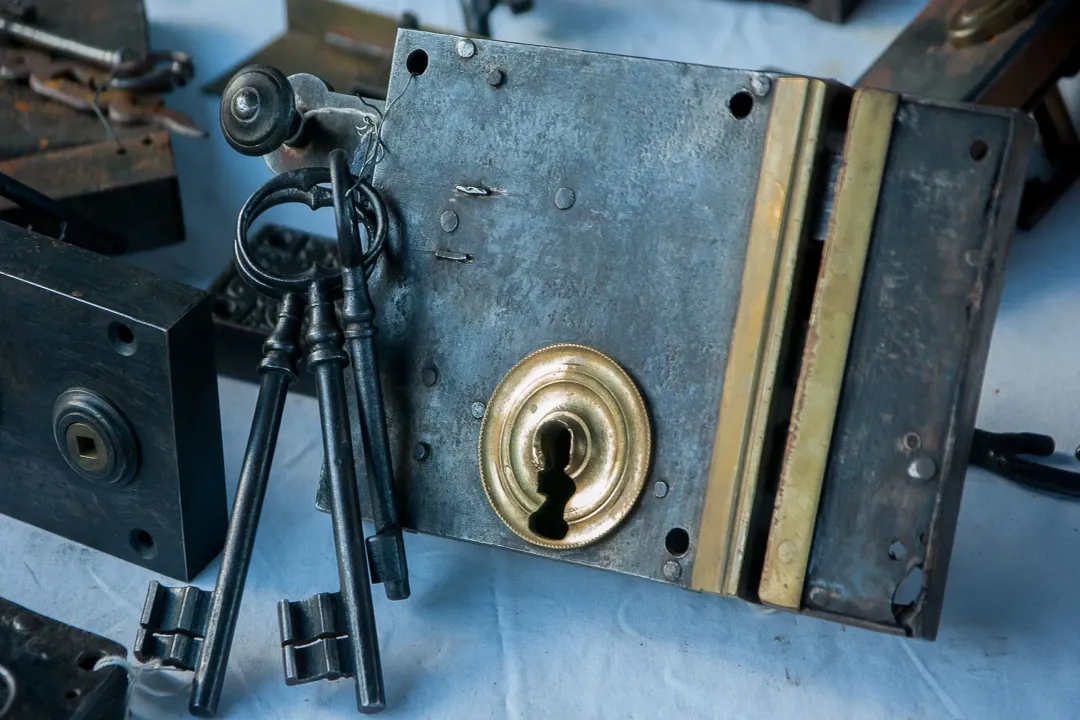
During the Medieval Age, lock making evolved into an established trade, but the progression focused heavily on craft over pure mechanical innovation. Locksmiths continued to improve the warding systems and incorporated increasingly complex, sometimes utilizing embedded pivoted tumblers. This era is renowned for the lavish design and embellishment applied to both locks and keys, a trend that continued well into the Renaissance period, particularly in France, Germany, and England. These highly decorative pieces, often made of iron, are well-represented in museum collections across Europe.
A notable example from the 17th or 18th century, though possibly dating back to the 14th century, is the Gothic lock, often found in places like the Beguinage of Lier, Belgium. These locks were frequently adorned with foliage, often in a distinct V-shape surrounding the keyhole. They gained the nickname "drunk man's lock," supposedly because the pronounced ornamentation allowed a person to locate the keyhole even in darkness. However, while the craftsmanship was stunning, the primary focus on aesthetics often meant that security was secondary. The elaborated warding systems, while visually impressive, were susceptible to picking by skilled thieves who found these mechanisms easier to defeat than one might assume. For nearly a thousand years after the Romans, fundamental security mechanisms stagnated, relying almost entirely on the complexity of the wards.
# Eighteenth Century Leap

The lock saw its next major mechanical leap in the late 18th century, fueled by the nascent Industrial Revolution and the concurrent development of precision engineering and component standardization. This technological shift allowed for the creation of locks with far greater sophistication and complexity than previous skill-based craftsmanship allowed.
The catalyst for this change came in England:
- Robert Barron (1778): He patented the first double-acting lever tumbler lock. This design required a set of levers to be lifted to a precise height—too high or too low, and the lock would not open—to allow the bolt to move.
- Joseph Bramah (1784): An engineer, Bramah developed an alternative, highly secure cylinder lock based loosely on the Egyptian model. His key featured specific notches that aligned internal metal slides, which, when perfectly positioned, allowed the bolt to turn. Bramah’s system was so advanced that he publicly challenged anyone to pick it for a £200 reward, a challenge that stood for over 67 years. Bramah's need for precision parts led him to partner with Henry Maudslay to develop early machine tools for mass production—a necessary step for high-precision lock making to become economically viable.
The weaknesses in Barron's system were addressed by Jeremiah Chubb in 1818. Prompted by a government competition for a truly secure lock, Chubb introduced the Chubb detector lock. This lock incorporated an integral security feature: a special lever that would jam the mechanism and signal to the owner if any tumbler had been raised incorrectly by a picker. Chubb was awarded £100 after a professional lock-picker failed to open it over a three-month period.
It is an interesting historical footnote that while Bramah was developing unpickable mechanical locks, and Chubb was perfecting tamper indication, the very concept of standardized, reproducible mechanical security was being cemented by the need for precision manufacturing. The craftsmanship that decorated Gothic locks was beautiful but fragile; the emerging need was for repeatable tolerances that only machinery could guarantee, enabling the creation of Bramah’s intricate slides and later, the highly refined pins of the Yale system.

# The Pin Solution
While the warded lock dominated for centuries, and the lever lock offered significant improvement, the modern standard ultimately circled back to the earliest design—the pin tumbler—but executed with 19th-century precision.
Abraham O. Stansbury secured the first patent for a double-acting pin tumbler lock in England in 1805. However, the version that became the global standard was refined by the Yale family:
- Linus Yale Sr. (1848): Patented the modern pin tumbler lock, which utilized a series of key pins and driver pins of varying lengths to align precisely at the shear line, allowing the cylinder to rotate. This was a mechanical rebirth of the ancient Egyptian idea.
- Linus Yale Jr. (1861): Inspired by his father’s mechanism, he patented a smaller, flat key featuring serrated edges that corresponded with the varying pin lengths within the lock. This design remains fundamentally the basis for the vast majority of mechanical locks used today.
Yale’s success was twofold: he re-implemented a time-tested mechanism and, crucially, manufactured them using the mass-production capabilities that Bramah and Maudslay had helped pioneer. This combination yielded a lock that offered high security, durability, and ease of service and replacement.
# Lasting Impact
From the large wooden bar keys of Assyria meant to secure a palace against raiding tribes, to the delicate, notched metal rings worn by Roman senators, and finally to the precise, pin-and-lever systems perfected by British and American inventors, the lock and key have tracked humanity’s changing needs for both safety and signaling status.
Even with the advent of digital access control—using keycards, codes, or biometrics like fingerprints—the core concepts established over millennia persist. While electronic systems avoid picking entirely, the mechanics of the modern front door often rely on refined variants of the inventions by Bramah, Chubb, or the ubiquitous pin-tumbler principle perfected by the Yales. The history of the lock is, therefore, not a history of replacement, but one of continuous refinement built upon the foundational ingenuity discovered in the ruins of ancient Mesopotamia.
Related Questions
#Citations
Lock and key - Wikipedia
A brief history of locks and keys - City Security Magazine
Security: The Long History of the Lock and Key | Ancient Origins
A Brief History of Locks - From Catacombs to Modern Homes
The History of Keys and Locks - Keycafe Blog