How was the Spinning Jenny revolutionary?
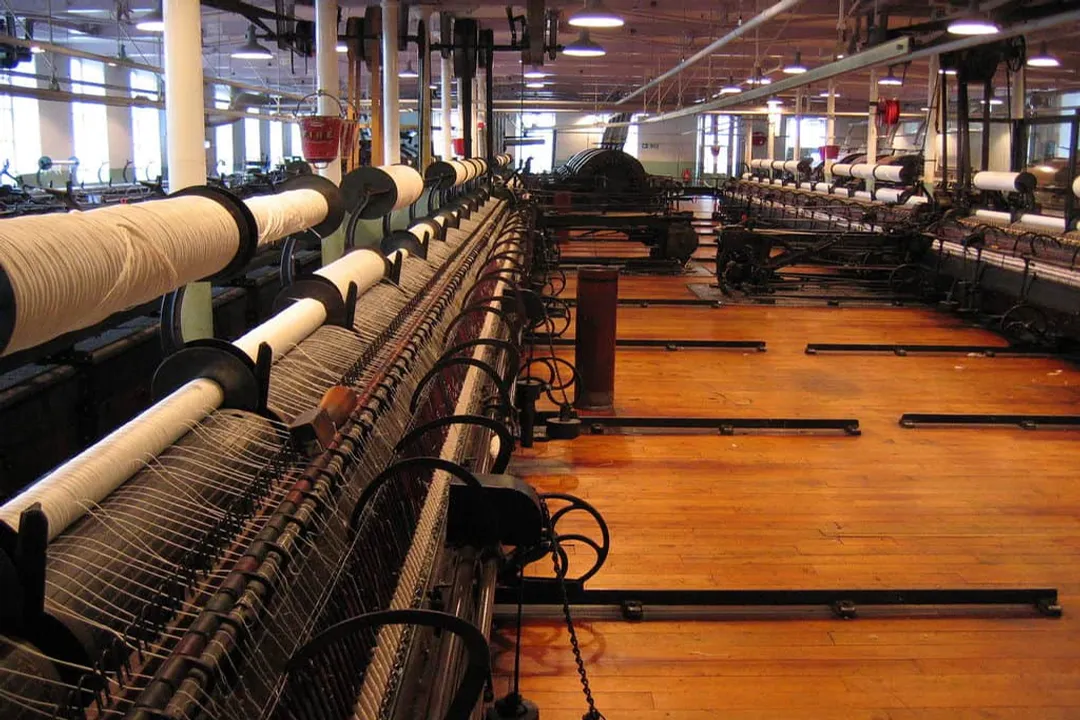
The arrival of the Spinning Jenny in the mid-1760s was not merely an improvement in textile production; it was the sound of centuries of tradition shattering, heralding an entirely new era for labor, geography, and economics. This humble, hand-powered machine, devised by James Hargreaves, acted as the essential catalyst that propelled Britain out of the domestic system and into the factory age, fundamentally altering the pace of life for nearly everyone. To truly grasp its revolutionary character, one must first understand the severe bottleneck it was created to solve.
# The Loom's Hunger
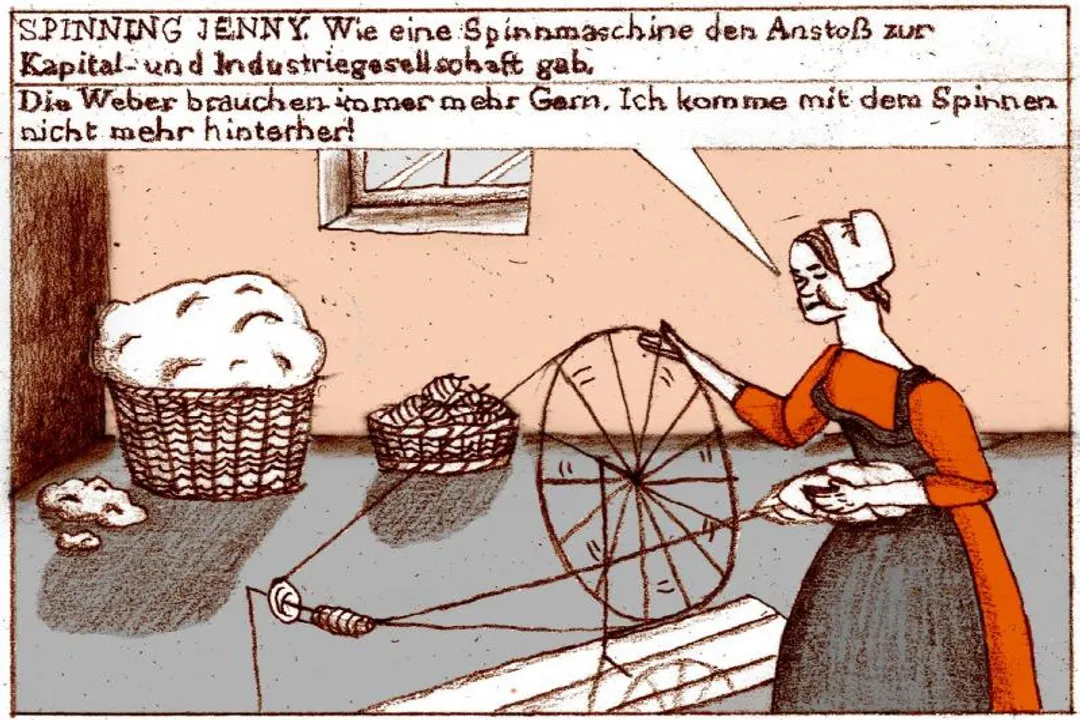
Before the Jenny, the textile world operated under immense strain. By the 1730s and 40s, advancements in weaving technology, most notably John Kay’s Flying Shuttle invented back in 1733, had already allowed a single weaver to double their output. The weaver could now throw the weft across the warp much faster than ever before. However, this increased speed simply meant the weavers were demanding yarn at a rate the traditional system could never match.
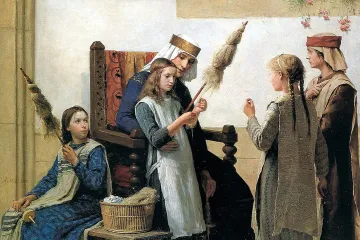
In the established cottage industry, which centered production in the homes of workers across Lancashire, the labor was highly segregated. Men often focused on weaving, while women and children were tasked with the laborious work of carding raw fiber and then spinning it into thread using a single-spindle spinning wheel or a drop spindle. The entire process was slow; it famously took up to three spinners just to keep one weaver supplied with the necessary yarn. This imbalance created a huge chasm between the supply of finished cloth and the demand from merchants, stagnating the economy. The Jenny was born directly from this pressing need to accelerate the slowest part of the production chain: spinning.
# Inspiration and Engine
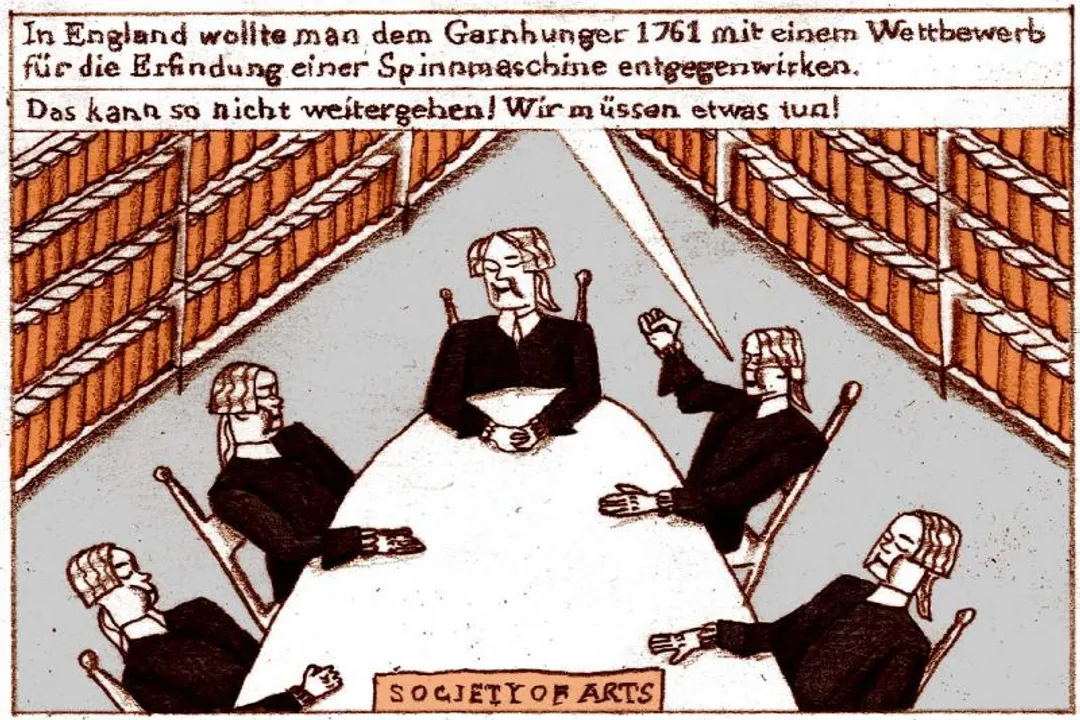
James Hargreaves, a weaver and carpenter from Stan Hill near Blackburn, Lancashire, was situated right at the heart of this textile hub. The specific moment of inspiration is often recounted as a domestic accident: his daughter, perhaps named Jenny, accidentally knocked over a spinning wheel, leaving the spindle pointing upright. Hargreaves observed that the machine continued to operate, leading him to the realization that spindles did not have to be horizontal and that he could conceivably align several of them vertically to work simultaneously.
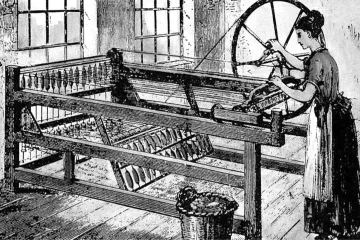
The machine he engineered, first appearing around 1764 or 1765, was essentially a multi-spindle spinning frame. While the traditional spinning wheel worked one thread at a time, the original Spinning Jenny utilized eight spindles mounted on a frame, all driven by a single, hand-turned wheel. This configuration allowed a single operator to manage eight spools of thread at once. It is important to note that the name "Jenny" is often rumored to be linked to his daughter or wife, but a more plausible origin suggests it was derived from the common slang term for an engine—a clear indication of its mechanical intent. Hargreaves refined this initial concept over three years, eventually obtaining a patent in 1770 for a 16-spindle version, though by then, many copies were already in circulation.
# Capacity Versus Quality
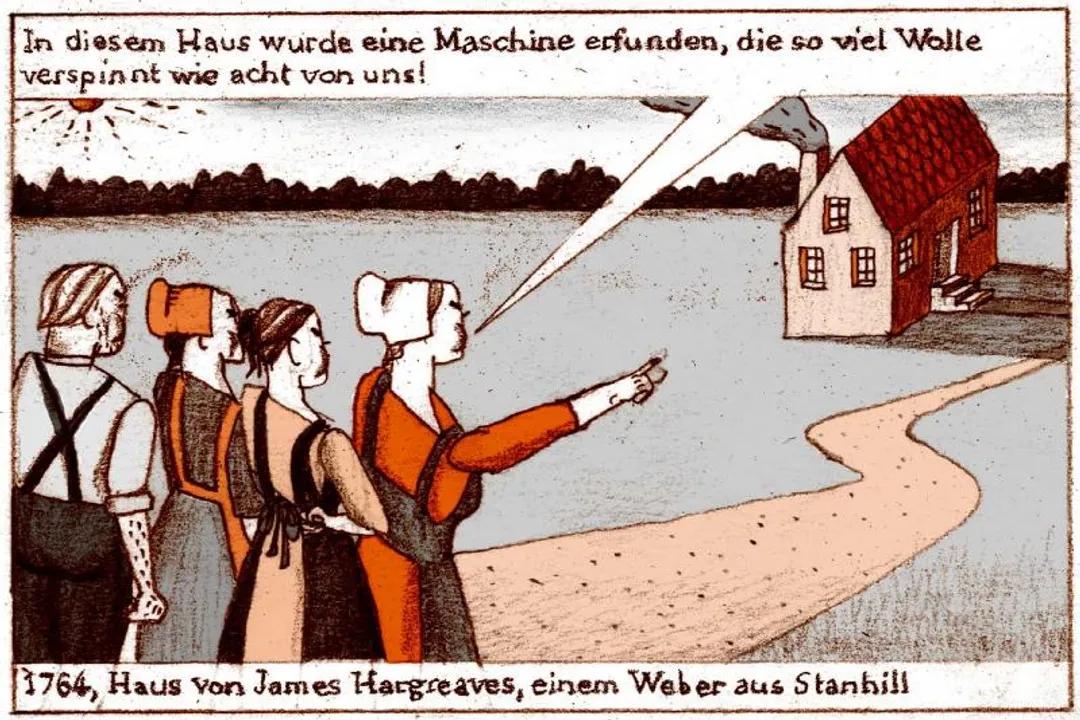
The immediate revolutionary impact came from sheer volume. Where a skilled spinster could produce one thread, Hargreaves’ initial machine allowed one person to spin eight threads at the same time, achieving an eightfold increase in immediate output. This efficiency was staggering for the era.
However, the Jenny was not a perfect solution for all textile needs, which is a crucial point when considering its role in the process of industrialization. The technology was based on the drop spindle principle, meaning it produced a thread that was rather thin, weak, and coarse. This limitation meant the yarn it created was suitable only for the weft—the crosswise threads in woven cloth—but it could not be used for the stronger warp threads that run lengthwise on the loom. This created a new imbalance: weavers now had plenty of weft yarn, but still lacked the high-quality, strong yarn required for the warp. If we look closely at the logistics, the Spinning Jenny solved the weft problem, but in doing so, it intensified the demand for strong warp yarn, paving the way for the next major invention, Richard Arkwright's water-powered Water Frame, which produced a much stronger thread. The Jenny, therefore, wasn't the end of the process; it was the crucial middle step that revealed the next technological need.
# Size Dictates Location
The initial 8-spindle Jenny could theoretically be operated within a home setting, allowing a family unit to increase its output without immediately abandoning their residence. This aligns with the historical context where entire families were engaged in textile work. Yet, the economic pressure was too great for such restraint. To maximize profit, owners and operators quickly scaled the machine up. Versions soon appeared with 16, 24, and eventually as many as 120 spindles.
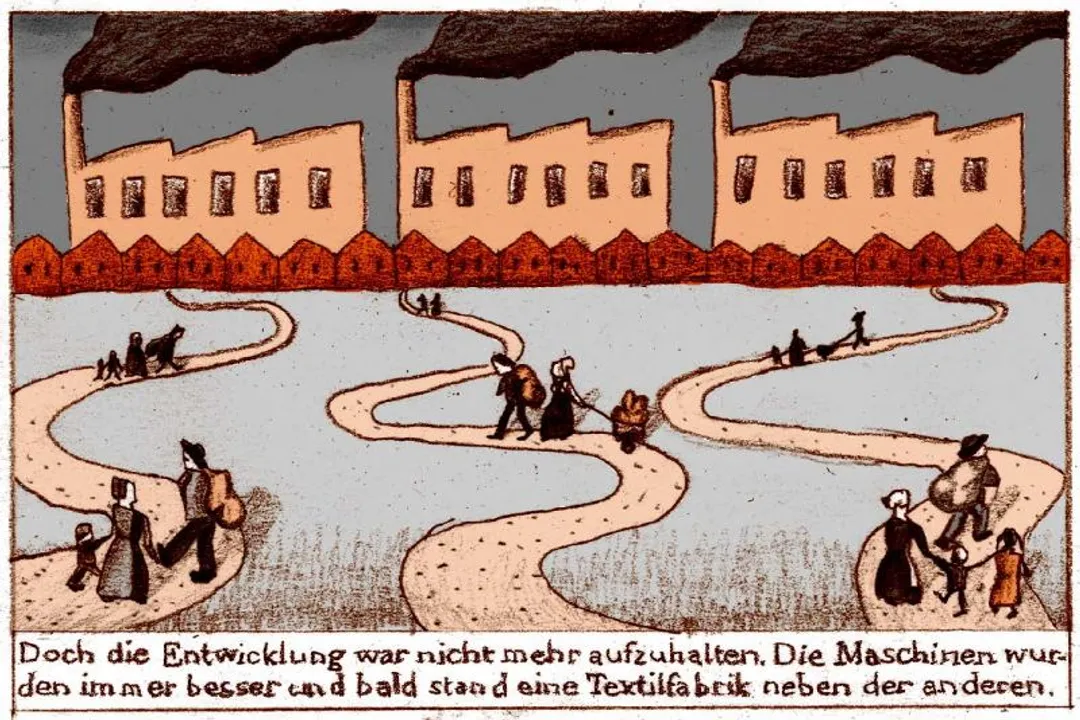
Machines of that size were simply too large and impractical for a domestic environment. This scaling necessitated centralizing both the machinery and the labor force under one roof—the birth of the factory. With workers and machines concentrated in a single building, factory owners gained significant control over the labor process and saw immediate savings in the expensive logistics of transporting raw materials back and forth to dozens of separate cottages. This shift—the physical removal of production from the countryside dwelling to the urban mill—is arguably the most profound revolutionary aspect of the Jenny’s success, fully establishing the factory system in cotton manufacturing.
# Social Upheaval and Fear
The speed of this change terrified the established workforce. For generations, spinning had provided an income, often for women and children, within the structure of home life. When Hargreaves began selling his machines, he was effectively pitting one machine against the work of eight people. This perceived threat to livelihoods led to violent opposition. Groups of enraged hand spinners rioted, breaking into Hargreaves’ home in Blackburn around 1768 to destroy his creations. This local hostility forced Hargreaves to flee Lancashire for Nottingham, a city with a more established hosiery industry, where he could produce and sell his machines with a degree of relative safety.
The long-term social consequence of this migration was a massive demographic shift. As spinning centralized, the eighty percent of the population previously spread across the countryside was compelled to move to rapidly expanding towns and cities for work. These cities were ill-equipped for the influx, leading to inhumane living conditions, overcrowding, disease (like cholera and typhus), and inadequate sanitation. While the machines created mass production capability, the profits were not evenly distributed. As one source illustrates, the factory owner prospered while the worker, laboring for 12 to 14 hours daily, saw little increase in their already meager wages.
# Spreading the Concept
A fascinating element of the Jenny's revolution lies in its inventor’s inability to strictly control its spread. Hargreaves sold machines locally before he secured his 1770 patent. Even after obtaining the patent, when he attempted to sue copyists, the case faltered because it was proven he had already sold several machines himself. This failure to enforce exclusivity, while financially damaging to Hargreaves, actually served to accelerate the textile revolution across Britain and later into America in the 1820s. Because the technology diffused rapidly, other manufacturers could immediately adopt and improve upon the concept without waiting for licensing, keeping the momentum of mechanization high.
This open-source effect, accidental as it may have been, contrasts sharply with later inventors who often guarded their designs more fiercely. Hargreaves’ commercial misstep, in a historical sense, ensured that the technological leap forward was instantaneous and widespread rather than incremental and monopolized.

# Economic Results and Obsolescence
The cumulative effect of the Jenny, combined with the Flying Shuttle and later the Water Frame, was transformative for the market. By increasing the availability of yarn, the overall cost of producing fabric plummeted. Textiles, once relatively expensive commodities, became accessible to a much broader segment of the population. This massive deflation in the price of cloth fueled further expansion, encouraging a similar mechanization in other domestic industries like knitting and weaving.
Despite its success in breaking the initial spinning bottleneck, the Spinning Jenny was eventually superseded. Its weakness in producing high-quality warp yarn meant it could not sustain the increasing demands for finer fabrics. By approximately 1810, the invention that started the factory system began to fade, replaced by the Spinning Mule, a hybrid machine that combined the best features of the Jenny and the Water Frame to produce superior yarn efficiently. Yet, the Jenny’s legacy remains clear: it was the invention that demonstrated the immense, untapped potential of replacing human hands with synchronized machine power, marking the unmistakable beginning of the Industrial Age.
Related Questions
#Citations
The Spinning Jenny: A Woolen Revolution - Faribault Mill
Spinning jenny - Wikipedia
Spinning Jenny | Facts, Invention, Industrial Revolution & How It Works
The Spinning Jenny | Environment & Society Portal
spinning jenny - Students | Britannica Kids | Homework Help
James Hargreaves and the Invention of the Spinning Jenny