Who discovered the QWERTY keyboard?
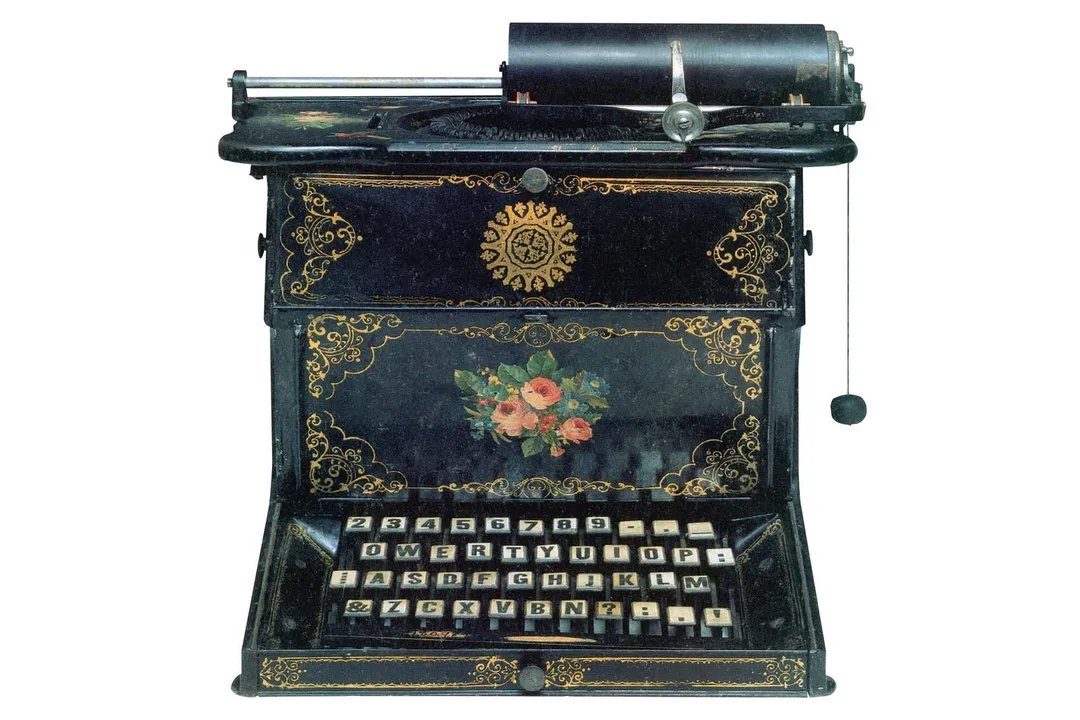
The layout that defines how we interact with digital and physical text across the globe—the familiar QWERTY arrangement—is more than just a sequence of letters; it is a legacy of mechanical engineering friction. While billions of people type on it daily, the identity of the person most responsible for this arrangement often gets lost in the mythos surrounding the machine it was born from: the typewriter. The man most frequently credited with developing the keyboard layout we use today is Christopher Latham Sholes. [2][5]
Sholes was a newspaper editor, printer, and inventor hailing from Milwaukee, Wisconsin. [2][5] His work on developing a functional writing machine began in the late 1860s, marking the starting point for the eventual standardization of input devices. [2] He wasn't aiming to create the QWERTY standard initially; he was simply trying to build a reliable machine that could mechanically print characters faster than a human could write them by hand.
# Early Designs
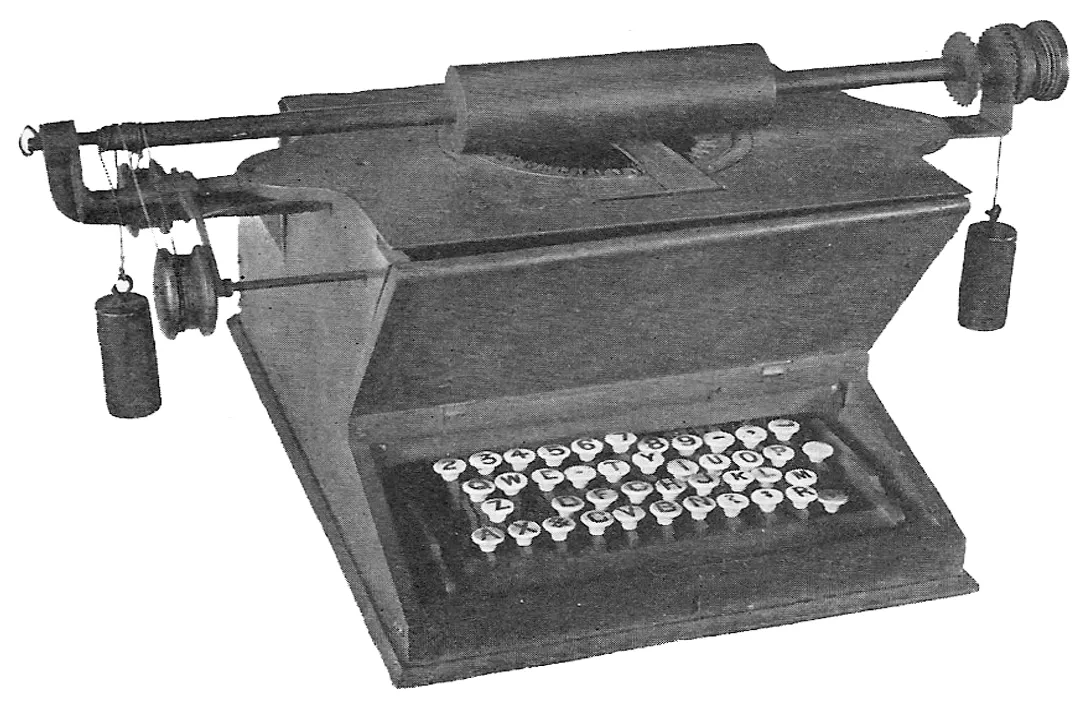
Sholes did not invent the concept of the typewriter entirely on his own, having collaborated with others, including Carlos Glidden and Samuel W. Soulé, in the initial stages. [2] His first prototypes were far from the sleek devices we recognize today. [5] These early machines often utilized a two-row keyboard arrangement that was largely alphabetical. [5] This alphabetical grouping, logical as it might seem from a pure language perspective, introduced a critical, frustrating mechanical flaw: the type bars frequently clashed and jammed when a typist struck adjacent keys in rapid succession, especially when using letters that appeared frequently together in the English language. [3][5]
Consider this mechanical bottleneck: every key press on those early machines caused a type bar—a metal arm holding the character mold—to swing up and strike an inked ribbon against the paper. [3] If the two bars needed to strike the paper at nearly the exact same instant, they would collide before they could reset, bringing the entire typing process to a screeching halt. [3] This constant jamming rendered the machine impractical for any sort of sustained office work or rapid correspondence.
# Solving the Jamming Issue
The necessity of overcoming this mechanical limitation drove the redesign that resulted in QWERTY. The goal shifted from placing letters in alphabetical order to strategically spacing out commonly used letter pairs to give the type bars sufficient time to fall back into place after striking the paper. [3][4] Sholes, working with his partners, began experimenting with different arrangements to minimize these jams. [2][5]
The final arrangement, finalized around the early 1870s, was the result of this trial-and-error engineering process designed to optimize the machine, not necessarily the operator. [3] This is a crucial distinction. The QWERTY layout is, fundamentally, an anti-jamming sequence. [4] The letters 'Q', 'W', 'E', 'R', 'T', and 'Y' found themselves positioned on the top row because they represented letters that, when typed sequentially, were less likely to cause a mechanical collision in the preceding design stages. [3]
An interesting consideration when examining Sholes's work is the influence of telegraphy. Sholes had connections to telegraph operators, and one theory suggests that the layout might have been slightly adjusted to benefit those who transcribed Morse code, placing the letters most frequently used in Morse notation near the top for quicker access. [6] While the primary driver cited by historians remains the mechanical separation of common letter pairs to prevent jamming, the environment in which Sholes worked certainly provided context for efficiency improvements related to rapid transcription. [6]
If we were to map the efficiency based purely on the modern need to separate letters, we could envision an optimized layout today, but Sholes was constrained by physical constraints that have long since vanished with electronic keyboards. In effect, the QWERTY configuration is a fossilized solution to a problem no longer relevant to solid-state electronics.
# Remington Standardization
The crucial step that cemented QWERTY’s dominance was its commercial adoption. Sholes sold the manufacturing rights to his improved design to E. Remington and Sons in 1873. [2][5] Remington, already famous for manufacturing firearms and sewing machines, had the industrial capability to mass-produce the device reliably. [2]
The resulting machine, the Sholes & Glidden Type-Writer (sometimes called the Remington No. 1), was the first commercially successful typewriter. [2] Remington, with its established marketing reach, began aggressively promoting the machine. This commercial push, combined with the establishment of typing schools, meant that future generations of office workers were trained specifically on the QWERTY interface. [4]
This created a powerful network effect. As more businesses bought Remington machines, more operators learned to use them, and the demand for new machines required them to have the familiar QWERTY layout. [4] Competitors entering the market after Remington had already established dominance found it economically safer to replicate the existing, known standard rather than introduce a potentially superior, but unfamiliar, layout. [4]
# Layout Persistence
The longevity of QWERTY is a classic example of path dependence in technology adoption. Once an installed base becomes large enough, the cost of switching to a theoretically better alternative—in terms of retraining, retooling, and customer familiarity—becomes prohibitively high, even if the original reason for the design (type bar jamming) no longer exists. [4]
Today, on a modern computer or smartphone, the letters that cause the type bars to clash on a 19th-century machine are functionally identical in speed to any other key press. Yet, we remain bound by the mechanical compromises of that era. For instance, the letters 'S' and 'T', common in words like "the" or "that," are separated, but many other common bigrams are still awkward under the most efficient touch-typing systems, though they are manageable because the physical limitations are gone. [3]
What is fascinating from a teaching perspective is the disconnect between how we learned and why the layout exists. New typists are taught intricate finger movements based on home row positioning ('ASDF JKL;'), yet this entire instructional methodology is layered on top of an arrangement born not from human ergonomic study, but from metal fatigue avoidance. [3] Learning QWERTY is mastering a historically significant, yet functionally arbitrary, map of the alphabet.
We can see this path dependence by examining the fate of alternative layouts, such as Dvorak, which was scientifically designed for ergonomic efficiency and faster typing speeds by placing the most common letters on the home row. [1] While Dvorak users often report less strain and potentially higher speeds after acclimatization, the market share remains minuscule because the training apparatus and institutional inertia favor Sholes’s original design. [1] The inventor of the QWERTY keyboard, Christopher Latham Sholes, inadvertently created a layout so successful commercially that it outlasted the very mechanical failures it was designed to prevent, becoming the universal standard by sheer force of business momentum rather than absolute superiority. Christopher Latham Sholes, therefore, didn't just invent a keyboard; he invented an industry standard that proved incredibly sticky. [5]
#Videos
Fact or Fiction? The Legend of the QWERTY Keyboard - YouTube
Related Questions
#Citations
TIL That the inventor of the QWERTY keyboard, Christopher ... - Reddit
Christopher Latham Sholes - Wikipedia
A brief history of the QWERTY keyboard - CNET
NIHF Inductee and Typewriter Inventor Christopher Sholes
Origins of the QWERTY Keyboard - Wisconsin 101
Where Did the QWERTY Keyboard Come From?
What is the QWERTY keyboard? – TechTarget Definition
Fact or Fiction? The Legend of the QWERTY Keyboard - YouTube