Which specific French folk song was captured in the oldest surviving sound recording from April 9, 1860?
Answer
"Au clair de la lune"
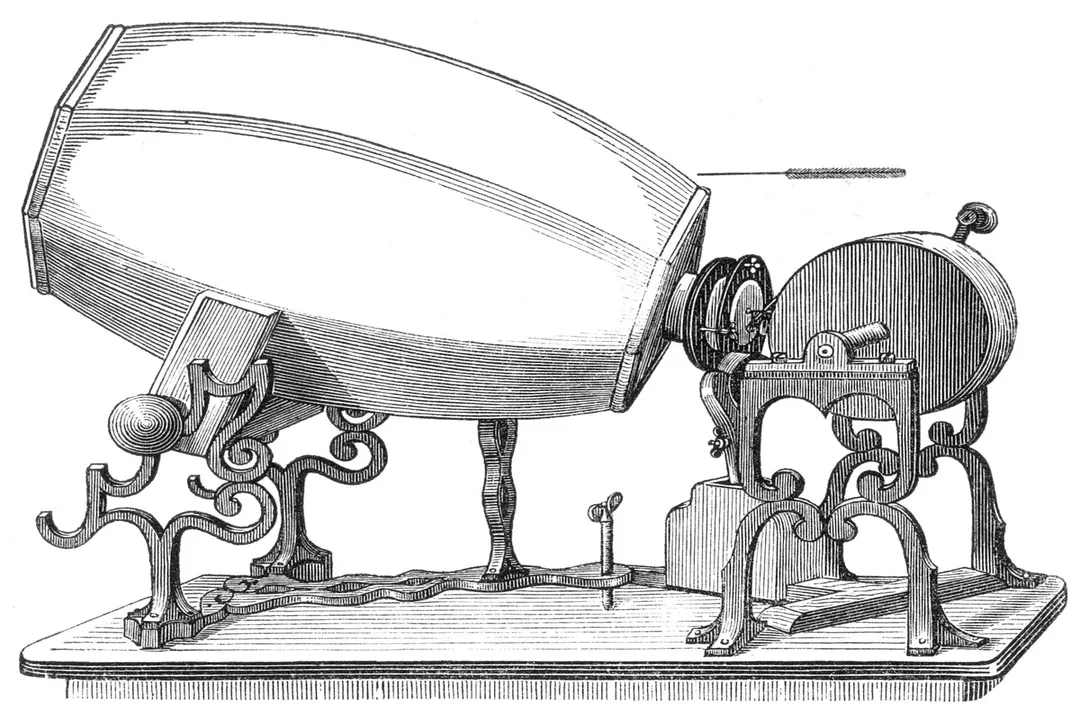
The most significant artifact surviving from Scott’s experiments is a recording made on April 9, 1860. This recording features the initial few seconds of an unidentified woman singing the French folk song titled "Au clair de la lune." Although Scott never achieved playback, this specific recording was successfully converted back into audible sound in 2008 through modern digital scanning methods, making it the oldest known recording of the human voice.
Related Questions
What was the primary goal when the phonautograph was created by Scott de Martinville in 1857?What is the technical name for the graphical trace or wavy line etched by the phonautograph onto the recording surface?How many years did the phonautograph, invented in 1857, predate Thomas Edison's phonograph?Which essential component of the phonautograph transmitted the vibrations from the incoming sound to the stylus via a thin membrane?What was the historical context or motivation behind Édouard-Léon Scott de Martinville's inventive streak?What material was used to coat the recording surface, such as paper or parchment, used by the phonautograph?Which specific French folk song was captured in the oldest surviving sound recording from April 9, 1860?According to the comparison chart, what was the recording medium used by Edison’s phonograph in 1877?What acoustic property did the relative thickness or depth of the line in a phonautogram visually demonstrate?When was the capability to hear historical sounds from phonautograms finally realized using digital technology?