What is the phonautograph?
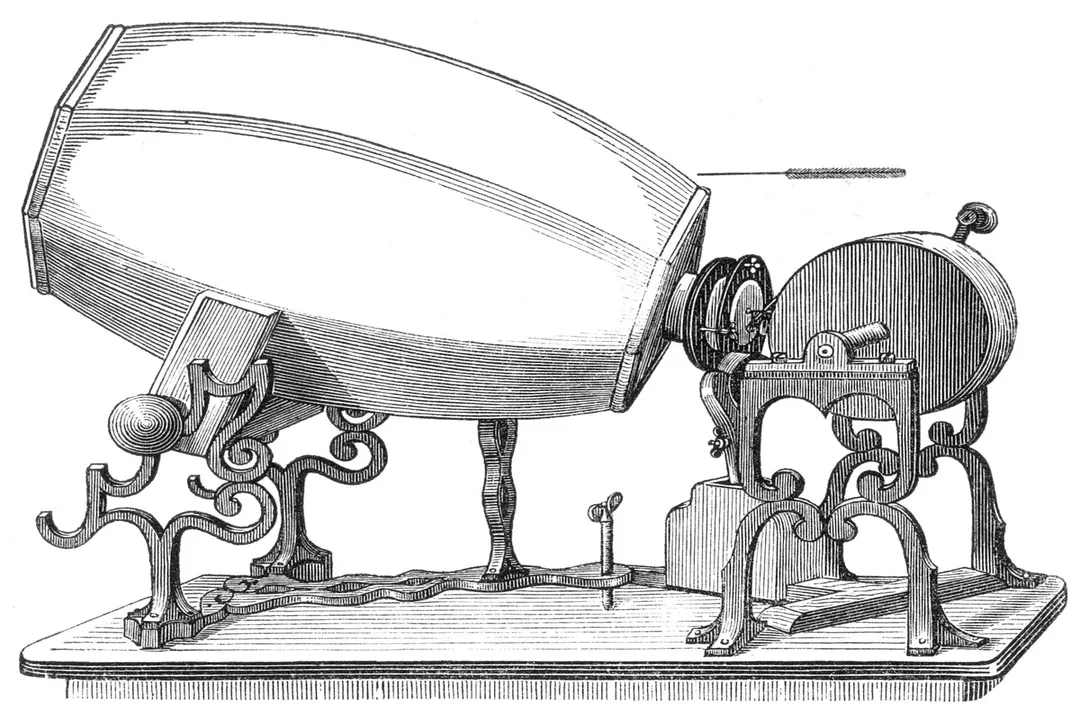
The earliest known device capable of capturing sound vibrations mechanically was not built with the intention of hearing the sound again, but rather with the goal of making those vibrations visible. This remarkable invention, known as the phonautograph, predates Thomas Edison's famous phonograph by twenty years. [8][9] Created by the French inventor Édouard-Léon Scott de Martinville in 1857, the phonautograph captured sound as a graphical representation, creating the first-ever visual record of sound waves. [4][7][10] It was a scientific instrument born from curiosity, not commercial ambition, intended for the study of acoustics. [5][7]
# Sound Visualization
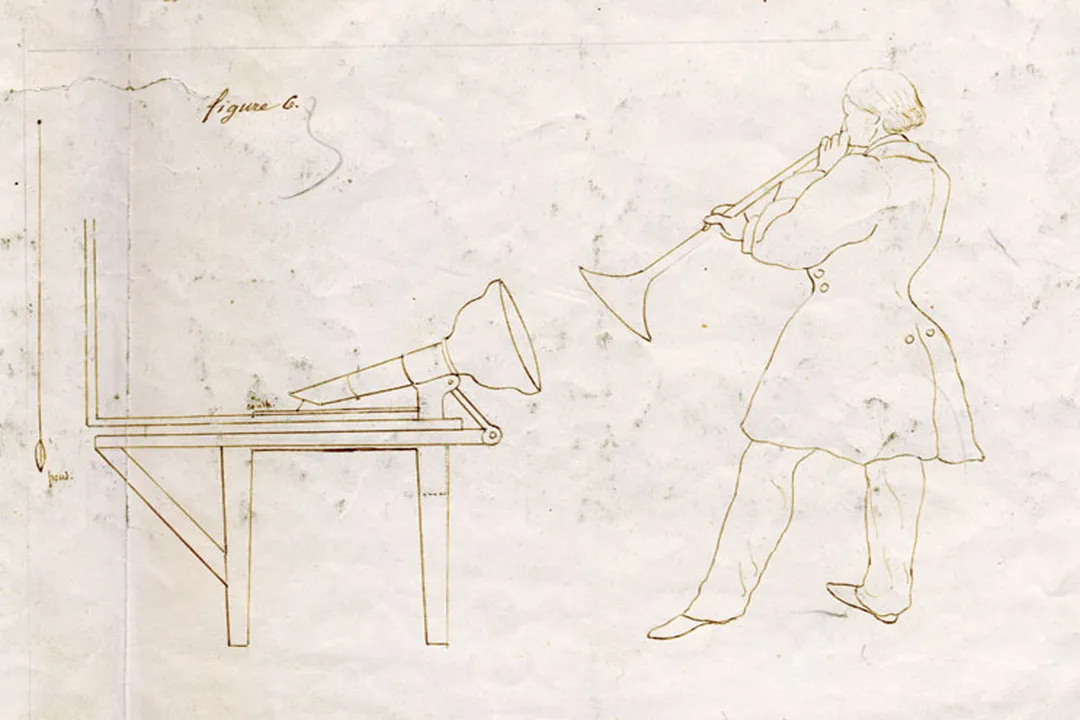
The central, defining characteristic of the phonautograph was its function: it drew sound waves. [2][5] Scott de Martinville was deeply interested in acoustics and was looking for a way to study the way sound moves through the air, much like a seismograph studied earth movements. [5][10] The resulting trace, a wavy line etched onto a surface, is called a phonautogram. [1][7] This output was essentially an analog image of a sound event. [5] While we associate the birth of recorded sound with playback, the phonautograph’s singular focus was on visually analyzing the structure of the acoustic event itself. [2]
# The Inventor Scott
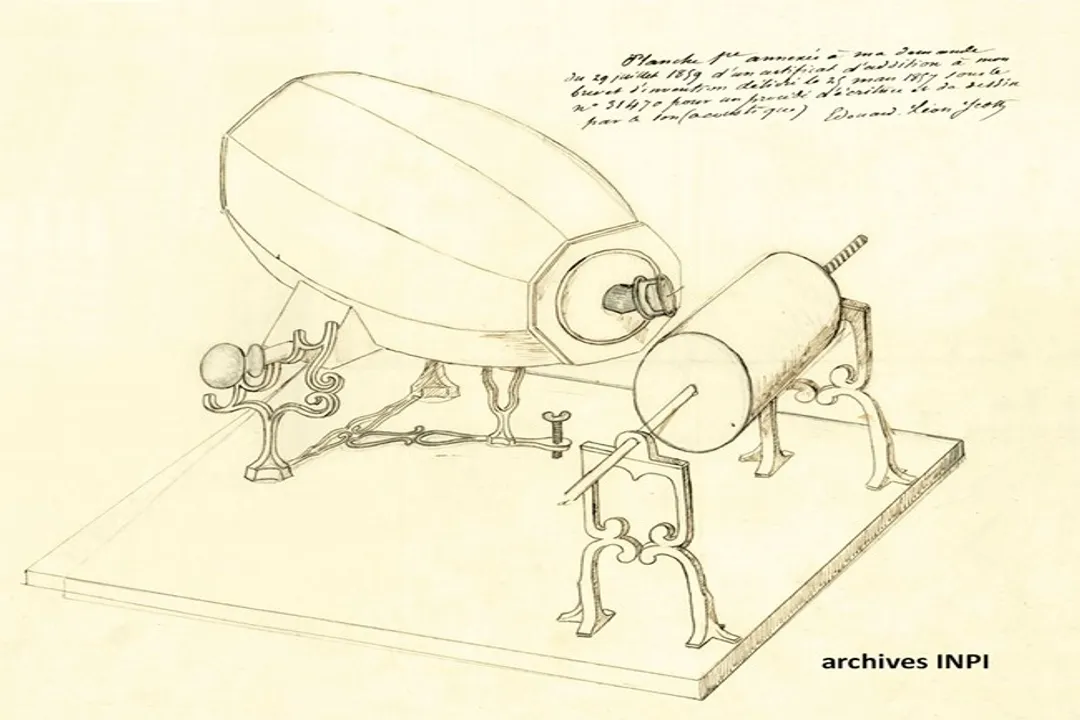
Édouard-Léon Scott de Martinville was a French printer and publisher who possessed a significant inventive streak. [4][9] He filed the patent for the phonautograph in France in 1857. [4][7] His work was situated within a period of intense scientific exploration into physical phenomena, where turning the invisible forces of nature into visible data was highly prized. [5] His motivation seems rooted in the scientific pursuit of knowledge regarding sound phenomena, rather than the commercial or artistic aims that would later drive Edison. [7] Scott never developed a method to convert the lines back into audible sound waves, operating under the assumption that sound, once recorded, could not be perfectly reproduced. [2][5]
# Mechanism Traced
The operational structure of the phonautograph was elegantly mechanical, relying on direct physical response to atmospheric pressure changes. [7] The core components included a sound collector, a diaphragm, and a stylus. [1]
The process followed these fundamental steps:
- Sound waves entered the device, usually through a horn or funnel, concentrating the vibrations. [1][7]
- These vibrations struck a taut, thin membrane—the diaphragm—causing it to vibrate in sympathy with the incoming sound. [1][7]
- Attached to the center of this diaphragm was a lightweight stylus, sometimes described as a hog bristle or pen. [1][2][4]
- As the stylus moved in response to the diaphragm’s vibrations, it inscribed a continuous line onto a recording surface that was moving horizontally, often paper or parchment coated with a layer of dark soot or lampblack. [1][2][5]
The resulting image was a recording of the pressure fluctuations in the air over time, visually demonstrating amplitude (loudness) through the width or depth of the line, and frequency (pitch) through the closeness of the waves. [1][7] Analyzing the physical marks on the soot provides insights into the materials used. For instance, the relative thickness or the nature of the carbon deposit (lampblack vs. charcoal dust) could indicate the recording environment's humidity or the stability of the tracing needle itself, offering a secondary layer of data beyond the acoustic information. [5] The resulting phonautograms were stored and studied as visual artifacts of sound. [1]
# Playback Achieved
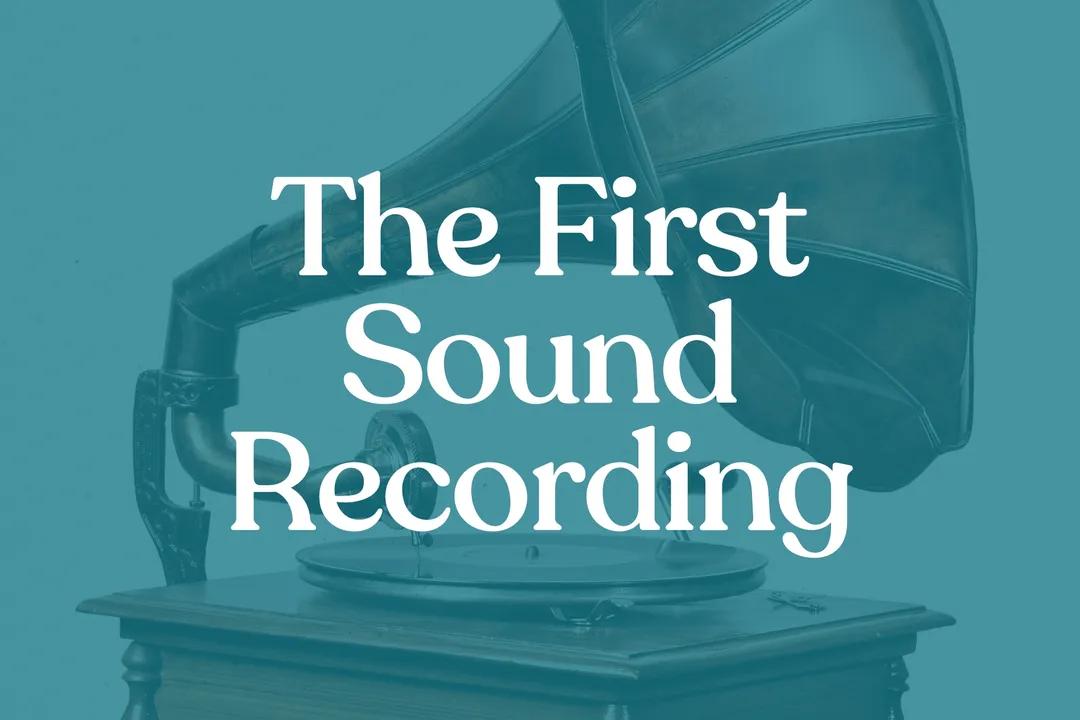
For nearly 150 years, the phonautograms remained silent images, intriguing objects of scientific history but incapable of producing sound. [8] The ability to hear these historical sounds only arrived in the 21st century through digital technology. [2] Researchers, notably those involved in the First Sounds project, developed sophisticated methods to convert the physical traces back into audio signals. [8] This process involves scanning the soot-covered surface at extremely high resolution to map the exact coordinates of the stylus’s trace. [2] Specialized software then translates these spatial coordinates back into time-domain wave data, effectively making the needle "play" the recorded groove virtually. [8]
The most significant surviving artifact from Scott's experiments is a recording captured on April 9, 1860. [8][9] This recording features an unidentified woman singing the first few seconds of the French folk song "Au clair de la lune". [2][8] Its rediscovery and successful playback in 2008 marked a profound moment, realizing a capability Scott himself believed impossible. [2][8] Other surviving recordings include vocalizations, the sound of footsteps, and even the sound of wind chimes. [5] These spectral images exist in archives such as the Library of Congress and the Smithsonian’s National Museum of American History. [1][5]
# Acoustic Science
The phonautograph firmly places Scott de Martinville in the lineage of early acoustic science, alongside figures interested in optics and wave theory. [5] While later inventions focused on mass communication and entertainment, Scott's device functioned as a laboratory tool. [7] Imagine the context: in the mid-19th century, many scientific concepts regarding sound propagation and frequency were still theoretical or relied solely on mathematical models. [5] The phonautograph provided direct, empirical evidence of how sound physically manifested, allowing scientists to study complex vocal patterns or musical tones visually. [10] It represented a significant step in making the physics of sound tangible and measurable, separating the record of a sound event from the reproduction of it. [7]
# Phonograph Versus
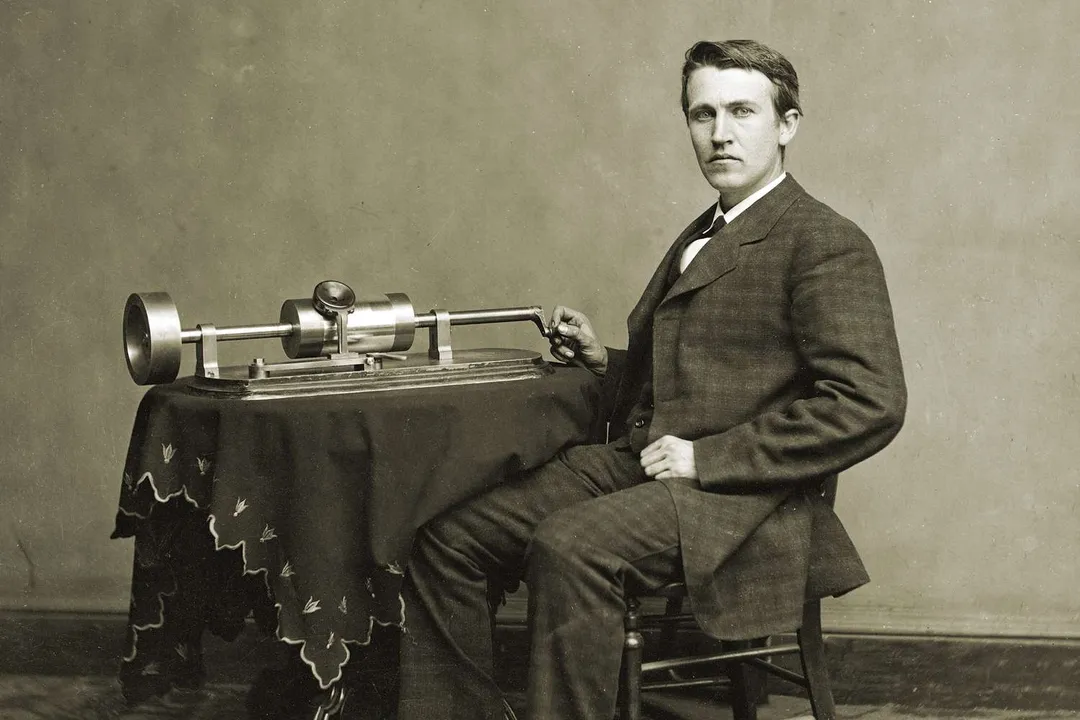
The primary point of historical differentiation for the phonautograph is its relationship with Thomas Edison’s phonograph, patented in 1877. [9] While both devices captured sound, their endpoints were diametrically opposed. [2]
| Feature | Phonautograph (Scott, 1857) | Phonograph (Edison, 1877) |
|---|---|---|
| Primary Goal | Visualization and scientific analysis of sound waves. [7] | Auditory recording and immediate playback. [9] |
| Recording Medium | Soot-coated paper or parchment. [1][5] | Tinfoil wrapped around a cylinder. [9] |
| Playback Capability | None (visual record only). [2][5] | Direct, mechanical playback. [9] |
| Historical Impact | Scientific curiosity; ancestor of sound visualization. | Commercial revolution; birth of recorded music industry. |
While Edison’s 1877 phonograph is rightly credited as the first device to record and play back sound, the phonautograph’s legacy rests on preserving the form of the sound wave, making it a form of visual phonetics or analog data storage, whereas the phonograph was purely a device for auditory reproduction and dissemination. One captured the light wave, the other captured the sound wave for the ear. [5] The phonautograph effectively captured the data but lacked the necessary mechanism for decoding that data back into its original auditory form until modern computers could interpret the graphic data. [2][8]
# Lasting Relevance
Today, the phonautograph serves as a powerful reminder that invention often progresses in stages, with early breakthroughs focusing on data capture rather than immediate accessibility. [9] The fact that Scott’s device, deemed a scientific curiosity in its time, ultimately yielded the oldest known recording of the human voice gives it a unique place in history. [8] It underscores the importance of preserving all forms of data, even those that seem mute or incomplete upon creation. [5] The technical challenges Scott faced—creating a light stylus, ensuring diaphragm sensitivity, and managing the speed of the recording surface—laid foundational groundwork for all subsequent acoustic recording technologies, whether they aimed to draw lines or cut grooves. [1][7] The surviving phonautograms offer a unique, almost ghost-like window into the actual soundscape of the mid-19th century, allowing us to hear voices long silent, simply by reading the scratches left in the dark dust. [8]
Related Questions
#Citations
Phonautograph - Wikipedia
The Phonautograph and Precursors to Edison's Phonograph
Phonautograph - Engineering and Technology History Wiki
The phonautographe - Napoleon.org
Picturing Sound - National Museum of American History
a look back at the first sound recording - EverPresent
Phonautograph | recording device - Britannica
1860 'Phonautograph' Is Earliest Known Recording - NPR
The Complicated Origins of Recorded Sound: Phonograph vs ...
Origins of Sound Recording: Edouard-Léon Scott de Martinville