What was the primary goal when the phonautograph was created by Scott de Martinville in 1857?
Answer
To make sound vibrations visible for acoustic study
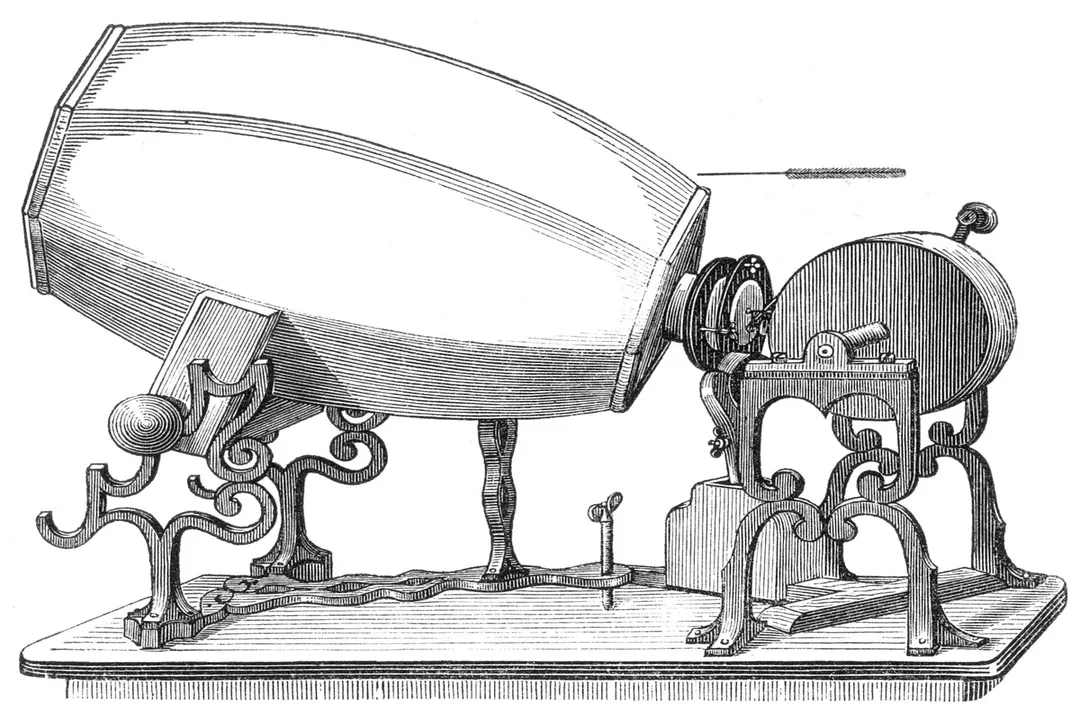
The phonautograph was fundamentally a scientific instrument born out of curiosity regarding acoustics, not commercial ambition. Its central defining characteristic was its function to draw sound waves, creating a graphical representation. Édouard-Léon Scott de Martinville was interested in studying how sound moves through the air, drawing an analogy to how a seismograph studies earth movements. The resulting trace, called a phonautogram, was intended as an analog image of a sound event for visual analysis of its structure, explicitly separating the act of recording the form of the sound from the reproduction of the sound itself.
Related Questions
What was the primary goal when the phonautograph was created by Scott de Martinville in 1857?What is the technical name for the graphical trace or wavy line etched by the phonautograph onto the recording surface?How many years did the phonautograph, invented in 1857, predate Thomas Edison's phonograph?Which essential component of the phonautograph transmitted the vibrations from the incoming sound to the stylus via a thin membrane?What was the historical context or motivation behind Édouard-Léon Scott de Martinville's inventive streak?What material was used to coat the recording surface, such as paper or parchment, used by the phonautograph?Which specific French folk song was captured in the oldest surviving sound recording from April 9, 1860?According to the comparison chart, what was the recording medium used by Edison’s phonograph in 1877?What acoustic property did the relative thickness or depth of the line in a phonautogram visually demonstrate?When was the capability to hear historical sounds from phonautograms finally realized using digital technology?