In what year was the polygraph introduced into the computer age?
The movement of the polygraph from a mechanical instrument dependent on ink and smoked paper into the digital realm marks one of the most significant shifts in its century-long history. While the apparatus for measuring physiological deception has evolved since the late 1800s, the period defining its official introduction into the computer age centers squarely on the early 1990s. Specifically, sources indicate that the polygraph made its official entrance into the computer age around 1992. This transition was not sudden but the culmination of decades of research exploring how electronic computation could remove human subjectivity from chart analysis.
# Algorithmic Foundations
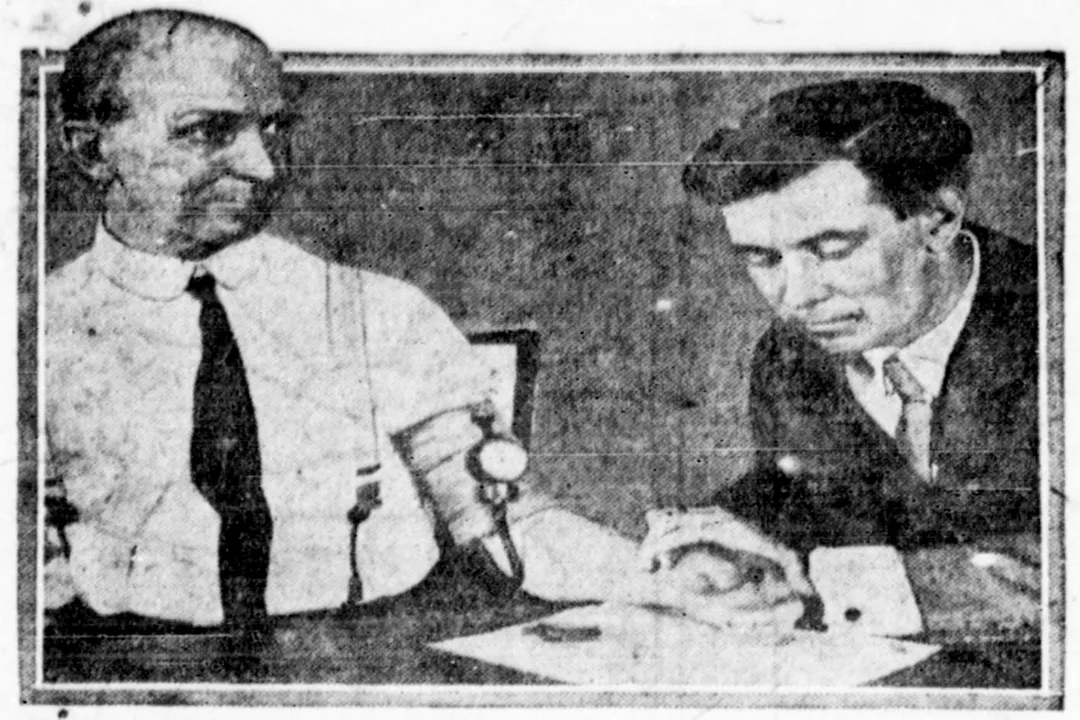
The groundwork for this digital leap was laid in the preceding decade. Research into computerized polygraph systems began as early as the late 1970s, with Dr. Joseph F. Kubis of Fordham University pioneering the use of potential computer applications for analyzing polygraph charts. The tangible development of this computational potential soon followed. During the 1980s, research at the University of Utah by Drs. John C. Kircher and David C. Raskin led to the creation of the Computer Assisted Polygraph System (CAPS) in 1988. CAPS represented a watershed moment, as it incorporated the first algorithm designed specifically for evaluating the collected physiological data for diagnostic purposes. This meant that for the first time, the interpretation of the physical traces—the peaks and valleys recorded by ink pens—was being subjected to a formalized, programmed mathematical process, even if that process was still undergoing refinement.
# Software Realization
The year 1993 saw the concept mature into more sophisticated, deployable software. Statisticians at the Johns Hopkins University Applied Physics Laboratory in Maryland completed a program named PolyScore. This software moved beyond simple electronic recording, employing a sophisticated mathematical algorithm to analyze the polygraph data with the goal of estimating a probability level for a subject's lying or sincerity. The development of PolyScore was significant because it was based on analyzing data from hundreds of real criminal cases, involving hundreds of suspects whose deception status was known. This provided a dataset for developing a predictive model, directly connecting machine learning principles to the age-old practice of lie detection.
# Mechanical Past
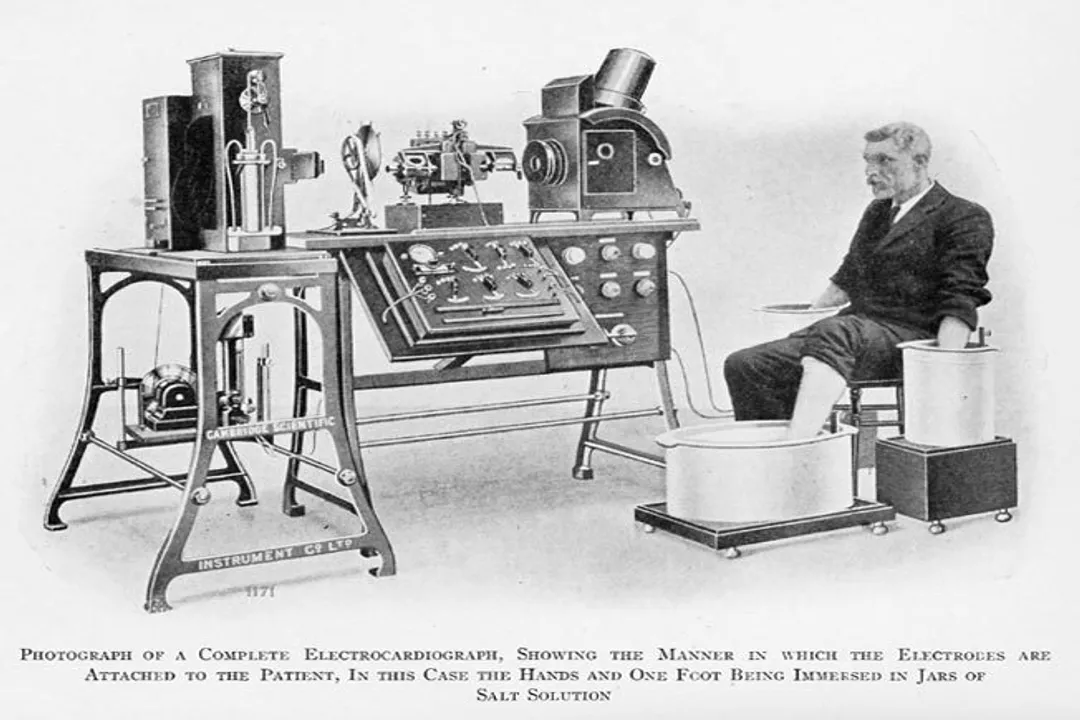
To fully appreciate the "computer age" introduction, it is essential to recognize what the digital systems replaced. The polygraph began as a purely mechanical endeavor rooted in documenting physiology. Early ancestors include Angelo Mosso's plethysmograph from 1878, measuring blood pressure changes. Sir James Mackenzie constructed the first clinical polygraph in 1892, which recorded traces on smoked paper using a stylus. The device that became the prototype for the modern machine, credited to Leonarde Keeler in 1939, added the Galvanic Skin Response (GSR) to the existing measurements of blood pressure and respiration, all still recorded via mechanical means onto paper. John A. Larson, who coined the term polygraph in 1921, was the first to continuously record these three variables simultaneously on a revolving drum of smoked paper. The shift from this manual, visual interpretation of ink traces to digitized data streams is the very essence of entering the computer age.
# Methodology Versus Automation
The transition in instrumentation coincided with, and was perhaps necessitated by, a deep-seated methodological conflict within the practice itself: the contest between the Control Question Technique (CQT) and the Concealed Information Test (CIT).
The CQT, formalized by John E. Reid in the late 1940s, relies on evoking fear or stress associated with deception relative to control questions. For decades, evaluation of CQT results was highly subjective, relying on the examiner to manually score charts and set the cut-off points indicating deception or truthfulness.
The introduction of computerized scoring systems like CAPS and PolyScore created a fascinating tension here. CAPS, developed in 1988, was designed to evaluate data. PolyScore, developed in 1993, explicitly aimed to analyze data without being dependent on the a priori psychophysiological assumptions underpinning techniques like the CQT. This is a critical distinction. The digital shift allowed practitioners to explore purely statistical pattern recognition, potentially sidelining the psychological theory that suggests an innocent person worries more about comparison questions than relevant ones. In essence, while the analog era required the examiner to believe the theory to interpret the charts, the digital era offered a path for the algorithm to simply find mathematical correlations in the data itself.
The CIT, by contrast, is grounded in Orienting Response Theory, focusing on recognizing specific crime-related details rather than emotional arousal. While the CIT is considered academically superior by some researchers, its practicality is limited by the need for investigators to possess crime details unknown to the public. The computerized scoring systems, especially those like PolyScore developed using broad criminal datasets, offered a way to move past the limitations of the CQT’s theoretical underpinnings, even if the quality of the underlying research data remained a persistent academic concern.

# Legal Climate in the Nineties
The entry into the computer age in the 1990s was also entangled with evolving legal standards in the United States. The era saw legal decisions that alternately accepted and then largely rejected polygraph results in courtrooms.
- 1991: President George H. W. Bush promulgated Military Rule of Evidence 707(a), effectively making lie detector reports inadmissible in military courts.
- 1993: The landmark case of Daubert v. Merrell Dow Pharmaceuticals, Inc. established a new standard for evidence admissibility that required scientific validity, peer review, and a minimal error rate, superseding the older Frye standard.
- 1998: The U.S. Supreme Court, in United States v. Scheffer, overturned earlier high court rulings on the Military Rule of Evidence, resulting in polygraph results becoming default inadmissible unless stipulated by both parties.
This legal volatility meant that as the technology was getting substantially better—moving from analog paper to real-time digital analysis—its standing in the courtroom was actually becoming more tenuous. The computerization of the analysis process, which sought to enhance accuracy and minimize examiner bias, was happening concurrently with a general judicial skepticism regarding the underlying science.
# Analyzing the Digital Impact
The move to digital systems brought about several immediate, practical benefits beyond the potential for algorithmic analysis. Digital hardware, utilizing computer algorithms, tracks reactions in real time, significantly cutting down the time needed to compile a final report compared to older manual review processes. This efficiency gain is subtle but important for operational environments like federal security screening.
When an examiner reviewed a smoked-paper chart, they were looking at a relatively static, complex visual artifact. The process was slow, dependent on penmanship, and open to fatigue and the examiner's subjective weighting of various channels. A digital system, however, immediately converts raw physiological signals into quantifiable data points. This standardization is key. For instance, modern systems often utilize empirically proven techniques like the Empirical Scoring System (ESS), which allows for numerical evaluation of chart data, leading to consistent interpretations across different examiners and agencies.
One significant analytical consequence of this digital integration is the ability to easily monitor for countermeasures. While analog systems could detect movement via ancillary sensors, digital platforms better integrate these inputs with the primary channels. The capability to analyze data over time, easily flagging inconsistent patterns or movement spikes captured by activity sensors in the chair or footrests, becomes much cleaner when all data is synchronized digitally. For example, one can readily observe if a sudden spike in electrodermal activity (GSR) aligns precisely with an examiner’s question timing, or if it correlates with a conscious attempt by the subject to tense a muscle in their foot, which might be recorded by a seat pad.
While many sources agree that the apparatus for measuring the core channels—cardiovascular activity, respiration, and GSR—has remained fundamentally unchanged since Keeler’s era, the computer's impact lies in data processing, storage, and analysis objectivity. The digital framework allows for an accumulation of data for longitudinal study, and for the use of standardized, repeatable scoring systems that are arguably less susceptible to inter-rater bias than purely manual chart reading. The very structure of digital output, as opposed to ink on paper, supports rigorous statistical scrutiny which is difficult to achieve when data is recorded on a fragile smoked drum or a roll of ink-marked paper.
It is worth noting that while the hardware for monitoring the traditional three channels is largely the same, the computer age has also allowed for the integration of additional channels, such as specialized movement sensors, which feed directly into the same digitized system for comprehensive analysis. This expansion of input is entirely contingent upon digital processing capabilities.

# The Computer Age Benchmark
The question of the exact year the polygraph was introduced into the computer age is best answered by the year it was officially recognized as crossing that threshold, which is cited as 1992. However, the technological transition was a process that began in the late 1970s with conceptual computer applications and solidified with the first algorithmic test (CAPS) in 1988. The 1990s, therefore, represent the decade where the industry shifted from exploring computer assistance to implementing validated, algorithm-driven software that could reliably score results. This technological arrival coincided with a significant legal re-evaluation in the U.S., forcing practitioners to defend the scientific footing of their techniques as they simultaneously adopted more powerful, objective analysis tools. The evolution continues today, with advancements focused on using empirical data, such as the Department of Defense Polygraph Institute’s Empirical Scoring System (ESS), to further standardize interpretation beyond the subjective leaning of the operator.
Related Questions
#Citations
Brief history of the polygraph
History of Polygraph
Polygraph - Wikipedia
A review of the polygraph: history, methodology and current status
Polygraph Tech: 1990s vs. Today's Innovations Compared