Who started adaptive cruise control?
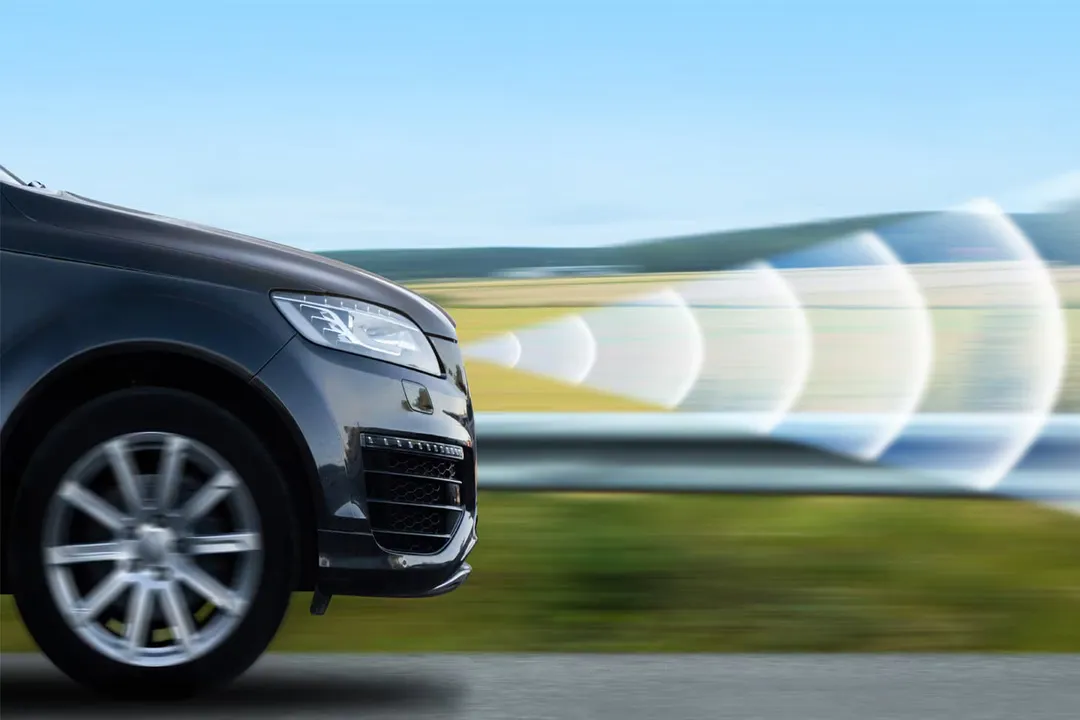
The history of letting a car manage its own speed on the open road is a fascinating study in automotive evolution, but the story of adaptive cruise control (ACC) isn't just about setting a number—it’s about the introduction of electronic awareness. While many drivers today experience ACC as a standard, even expected feature, its path from concept to commonality was paved by incremental, sometimes parallel, technological breakthroughs across several major manufacturers, primarily in Japan and Germany, during the 1990s.
# Precursor Technology
Before a vehicle could react to what was ahead, it first needed the ability to maintain a steady pace without driver input. This foundational technology, conventional cruise control, has roots stretching back to the early 1900s, appearing first in a Wilson-Pilcher car, which used a steering column lever to set speed. However, the system recognized today as "modern" cruise control was the brainchild of American engineer Ralph Teetor in 1948. Teetor, who was completely blind, developed his invention, initially named the 'Speedostat,' which was first offered as a luxury option on a Chrysler vehicle. The concept gained traction, and when General Motors began incorporating it into their Cadillac line, the term 'cruise control' became official. This invention set the stage, proving that electronic speed management was feasible, but it lacked the critical element that would define ACC: sensing the environment.
# Early Sensing Attempts
The transition from static speed maintenance to dynamic adjustment required sensor technology, and the race to integrate this was notably led by an Asian manufacturer. The very first iteration of what would become adaptive cruise control appeared on the Japanese market in 1992. Mitsubishi Motors was the originator, fitting a lidar-based distance detection system to their Debonair model. This system, marketed simply as "distance warning," was a significant conceptual leap because it could sense how close an object was getting.
However, this 1992 system was passive. It would alert the driver if they were following too closely, but it possessed no physical means to intervene in the vehicle's operation—it could not influence the throttle, brakes, or gearshifting. This placed the responsibility squarely on the human driver to heed the warning and act accordingly.

# Speed Control Arrives
Just three years after the initial warning system, the technology matured enough to take physical control over the vehicle’s velocity. In 1995, Mitsubishi introduced an upgraded system on the Diamante called 'Preview Distance Control'. This laser-powered system was capable of modulating speed by controlling the throttle or downshifting the transmission when necessary. This marked the first time a vehicle could actively manage its speed relative to another car without direct driver pedal input. Yet, even this advancement still required the driver to handle the actual stopping; the system lacked the ability to apply the brakes.
This early reliance on laser technology—Lidar (Light Detection and Ranging)—offered good accuracy and detection distance, but it had inherent limitations that would soon steer development toward other technologies. Laser light is prone to being absorbed or scattered by atmospheric particles, meaning fog, heavy rain, or even dust could significantly impair the system's function. Furthermore, dirty or non-reflective vehicles were harder for these early laser sensors to track consistently.
# The Radar Breakthrough
The next major evolutionary step, which truly brought the concept of modern ACC into focus, involved the adoption of radar, primarily spearheaded by a German luxury automaker. In 1999, Mercedes-Benz unveiled "Distronic," the first radar-assisted ACC system. This debuted on the high-end Mercedes-Benz S-Class (W220) and the CL-Class.
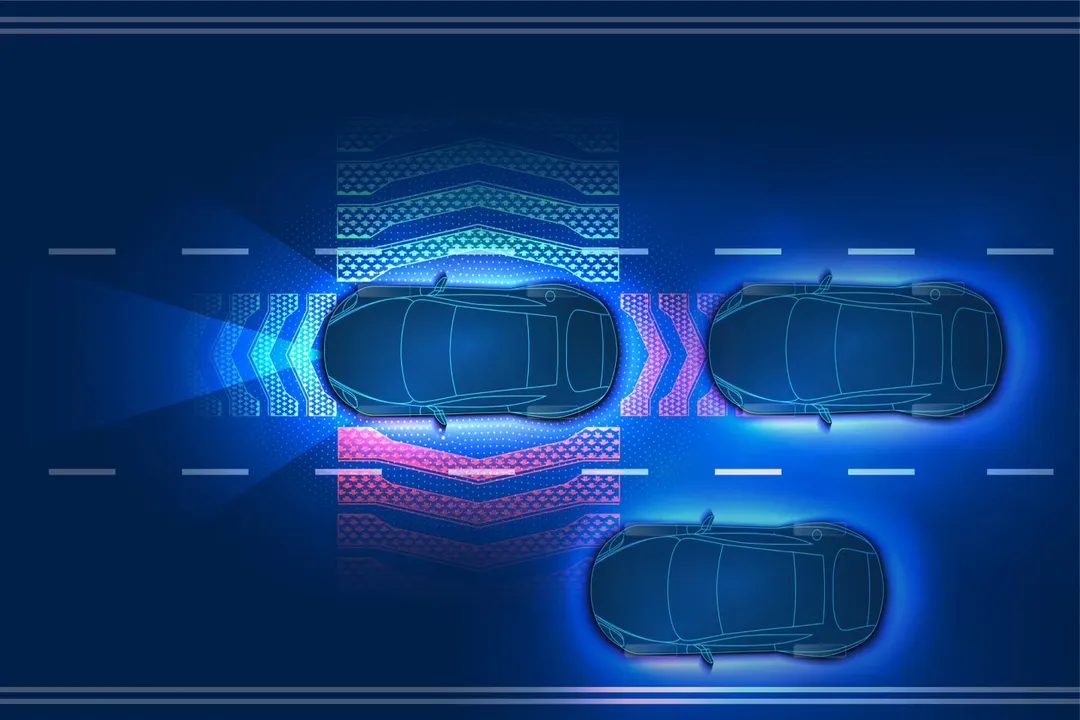
The shift to radar was important. While laser focused a tight beam, radar systems emit radio waves (typically at 24GHz or 77GHz) that spread out more widely. This provided a wider field of view, enabling accurate distance measurements over significant distances (160 meters or more). Crucially, radar signals are far less susceptible to degradation from common weather conditions like rain and fog compared to early laser systems. This robustness allowed the system to transition from a novelty into a genuinely dependable driver aid, as the vehicle could now apply the brakes automatically based on radar readings.
It is noteworthy that in the same year, 1999, the industry saw diversification in sensor choice, with Subaru introducing the world's first camera-based ACC system on the Japanese-market Legacy Lancaster. This indicated that no single sensor solution was universally agreed upon as the best path forward; manufacturers were experimenting with different inputs—laser, radar, and camera vision—to achieve similar goals.
The state of ACC around the turn of the millennium can be summarized by sensor type:
| Year | Manufacturer | Market Focus | Technology | Key Capability |
|---|---|---|---|---|
| 1992 | Mitsubishi | Japan | Lidar | Warning only (Distance Detection) |
| 1995 | Mitsubishi | Japan | Laser | Speed control via throttle/downshift (No braking) |
| 1999 | Mercedes-Benz | Global/Europe | Radar | Speed control with automatic braking (Distronic) |
| 1999 | Subaru | Japan | Camera | Speed control capability (first optical attempt) |
The early focus on the Japanese market for the very first iterations of ACC—from Mitsubishi's warning system in 1992 to Toyota's laser ACC on the Celsior in 1997—suggests that traffic density and consumer appetite for convenience technologies may have been more advanced there compared to the US or European markets at that specific time. While Mercedes introduced radar to the world stage in 1999, the groundwork had been laid years earlier on vehicles that never made a major splash in Western showrooms. This geographical split in early adoption is a classic case study in how regional traffic patterns can accelerate specific safety and convenience features.
# Moving to Full Control
While Distronic was a major achievement in 1999, it was largely a high-speed system that often disengaged below certain city speeds, or it relied on the driver to take over completely when traffic stopped. The full potential of ACC was realized when it could manage stop-and-go traffic.
This final piece of the puzzle—the ability to bring the vehicle to a complete stop—was introduced by Mercedes-Benz again in 2005. They upgraded their system to "Distronic Plus" on the S-Class (W221), making it the first system capable of completely halting the car when traffic ahead stopped. Although the system would deactivate or require driver intervention to resume after a full stop, this represented the foundation of what we now call Full Speed Range ACC.
The early 2000s saw a rapid influx of competition building upon these foundational technologies. Toyota brought its laser ACC to the US in late 2000, and by 2003, they had shifted their focus to radar systems, mirroring the industry trend away from the weather-vulnerable laser systems. By 2006, systems like the one on the Lexus LS 460 introduced an "all-speed tracking function," designed to work in stop/go congestion, maintaining control from 0 to 100 km/h (0 to 62 mph). This ability to handle the slow crawl of highway backups is perhaps the most appreciated benefit for commuters today.
The underlying competition between sensor types—laser, radar, and camera vision—was a significant driver of early development. For instance, early laser systems were often cited for their accuracy over distance, but the inability to see reliably in bad weather was a major drawback. Radar provided better environmental penetration but sometimes sacrificed object classification detail, while camera systems, as seen with Subaru's 1999 entry, offered the advantage of recognizing the shape of objects, allowing for better discrimination between vehicles and other roadside clutter, though they too faced issues with lighting and contrast. The realization that no single sensor was perfect led to the development of multi-sensor systems, which fuse data from radar, cameras, and sometimes GPS to create a more complete operational picture.
When evaluating the genesis of ACC, it's helpful to consider that the technology's introduction was not instantaneous but rather a staggered achievement of different functions:
- Detection: Mitsubishi (1992).
- Speed Modulation: Mitsubishi (1995).
- Automatic Braking: Mercedes-Benz (1999).
- Full Stop/Start: Mercedes-Benz (2005).
The fact that Mercedes-Benz is credited with the first radar-assisted system in 1999 that could brake, and later with the first system capable of a full stop, positions them as the starting point for what most drivers today recognize as functional ACC, despite Mitsubishi's earlier, less capable pioneering steps.
# Modern Context and Driver Reliance
Today, ACC is so prevalent that it is often grouped with other advanced driver-assistance systems (ADAS) and is classified under SAE International standards as a Level 1 autonomous car. When paired with systems like lane centering, the vehicle steps up to Level 2. This progression highlights how ACC served as the fundamental building block for more complex automation.
However, this technological advancement introduces a subtle danger that developers and users must constantly manage. While ACC systems significantly enhance safety—one study cited a roughly 20% lower crash rate in vehicles equipped with Distronic Plus compared to those without—they are not a substitute for attention. The driver remains responsible for safe operation. It is a crucial safety distinction: ACC assists, it does not drive. Yet, as systems become smoother and more capable, like those incorporating predictive analysis that anticipate lane changes, the temptation for drivers to over-rely on the technology grows. This is a modern challenge that the original inventors, even those who couldn't see the road themselves, could only have theorized about. They gave us the tool; understanding its precise limitations—especially regarding adverse weather or tunnels that confuse the sensors—is now the driver's ongoing responsibility.
Related Questions
#Citations
Adaptive cruise control - Wikipedia
History of Cruise Control System | TomTom Newsroom
What Is Adaptive Cruise Control? - Car and Driver