What was the most popular brand of typewriter?
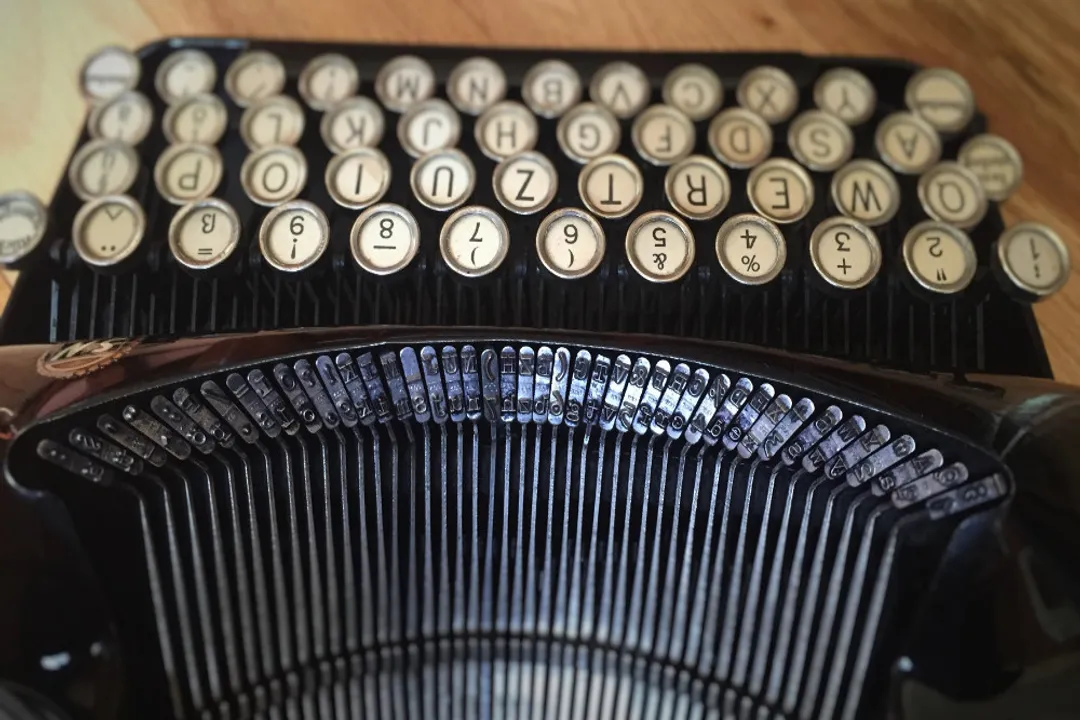
Determining the single most popular brand of typewriter across its entire history is a task complicated by geography, era, and how one defines "popular"—was it the one sold in the highest volume, the one most used by famous authors, or the one most frequently sought by today's collectors? The landscape shifts dramatically depending on whether you are looking at early office machines, mid-century portable writers, or later electronic models. However, by synthesizing sales data observations, collector frequency, and noted writer preference, a handful of manufacturers consistently rise to the top tier of widespread use and recognition.
# Market Dominance
When examining sheer ubiquity, particularly within North American contexts, the brands that flooded offices and homes during the typewriter's peak decades—the 1930s through the 1960s—naturally dominate the discussion. In many casual surveys or observations of available machines, two American titans frequently claim the top spots: Smith Corona and Royal.
A user tallying the most frequently encountered brands notes Smith Corona at the very top of their availability list, closely followed by Royal. This sheer frequency of appearance suggests massive production runs, making them household names. The Royal Quiet Deluxe of the 1950s, often cited for its peak post-war style and light key action, is the single most logged model in one major database, boasting nearly 600 entries in collector galleries. This machine, known for its versatility and vibrant color options, often exemplifies the mainstream appeal of the era.
Royal's success seemed rooted in a combination of style and dependable mechanics for the general user, though one analyst noted that typing too hard could cause the lid's pop-open button to activate, requiring an improvised fix like duct tape—a very writerly solution to an engineering hiccup. Meanwhile, Smith Corona positioned itself as the speed specialist. Their Sterling and Silent models, especially those predating the 1960s quality dip, were known as "American speedsters". Their design philosophy favored simplicity and swift output, using a floating shift mechanism that allowed for rapid typing, even if the machine sometimes lacked the tight, over-engineered feel of its German counterparts. The sheer volume these two companies produced solidifies their claim as giants of the industry based on market presence.
# European Workhorses
While Smith Corona and Royal may have dominated the accessibility charts in the US and Canada, the European market tells a story dominated by different, equally respected names. Olympia and Olivetti consistently rank high both in general popularity and, crucially, in critical acclaim from working writers and restorers.
The German-made Olympias, particularly the SM3, SM4, and later the SM9, are frequently described as the "epitome of longevity and reliability". Woody Allen, for instance, famously relied on his Olympia SM3, calling it a "tank" that served him throughout his career. The fact that these machines are repeatedly praised for their ability to handle years of heavy work—smooth carriage glides and easy key presses being hallmarks—suggests a popularity based not just on volume, but on unmatched mechanical integrity in the semi-portable class. The SM9, in particular, is lauded for its light basket-shifting mechanism, representing a high point in manual typewriter engineering before cost-cutting measures took hold post-1970.
Similarly, Italian manufacturer Olivetti carved out immense popularity, especially with their portables. The Lettera 32 is singled out as the "laptop of typewriters," renowned for its slim profile, speed, and comfortable basket shift. Its historical significance is undeniable; it is regarded as one of the most widely used and produced typewriters ever, exemplified by Cormac McCarthy using his battered Lettera 32 to pen millions of words, including Pulitzer Prize-winning novels. Furthermore, the Lettera DL gained fame for its use by Francis Ford Coppola for The Godfather screenplays. This combination of high-profile usage and massive production suggests a popularity in terms of cultural impact that few others can match.
This divergence in design philosophy between the American and German/Italian heavy hitters offers an interesting point of comparison. Where American brands like Smith Corona prioritized lightness and speed through simplification, often resulting in a feeling described by one restorer as an "echoing emptiness," German engineering favored over-engineering for durability and precision. If a writer needed a tank for a basement office, an Olympia was the choice; if a journalist needed a fast, relatively light machine for the road, the Smith Corona Sterling might fit the bill better.

# Collector Sightings
The Typewriter Database, which tracks models logged by collectors globally, offers a different metric for popularity: which machines survive and are valued enough to be documented. This list heavily skews toward desirable portables and high-quality standards from the mid-century golden age.
| Rank (by Gallery Count) | Brand | Model | Gallery Count | Primary Strength |
|---|---|---|---|---|
| 1 | Royal | Quiet De Luxe | 592 | Widespread American Appeal |
| 2 | Smith Corona | Sterling | 387 | Speed and Availability |
| 3 | Olympia | SM3 | 366 | German Engineering/Reliability |
| 4 | Hermes | 3000 | 357 | Swiss Precision |
| 5 | Olympia | SM9 | 323 | Refined Workhorse |
| 6 | Underwood | 5 | 299 | Classic Standard |
| 7 | Olivetti | Lettera 32 | 258 | Iconic Portable |
This data confirms the dominance of Royal and Smith Corona in sheer numbers found among enthusiasts. However, it also pushes Hermes, the Swiss entry known for its "precision like a Swiss watch" and soft, confident key-feel, high up the list of collector desirability, something perhaps less emphasized in general availability lists. Conversely, earlier, more groundbreaking designs, like the Sholes & Glidden (the "granddaddy" of American machines) or the electrically advanced, typewheel-printing Blickensderfer Electric, while historically significant, are listed among the "Ten Most Wanted" machines by a noted collector precisely because they are rare, not because they were the most popular in terms of market share.
# Regional Nuances
It is vital to remember that popularity is rarely monolithic across the globe, a point highlighted when comparing regional sightings. While North American markets are heavily skewed toward the American brands, European markets show a different distribution. In one European context, the order of commonality shifted significantly, with Triumph and Erika appearing frequently, sometimes even more so than the ubiquitously American Smith Corona. This is partially explained by historical market penetration and currency considerations; for example, an American Smith Corona from 1950 might feature a dollar sign ($) that made it less appealing in Australia before their decimalization, where British models bearing the pound sign (£) had an advantage. Furthermore, postwar politics influenced brand perception; in the Netherlands, the Adler name was reportedly less popular than its sister brand Triumph due to historical associations with WWII occupation.
The sheer variety of brands shows that for every major player, there were dozens of regionally successful or specialized manufacturers, such as Torpedo in Germany or the various Japanese portables sold under house brands in places like the Netherlands.

# The Enduring Modern List
Even as the market transitioned from manual mechanisms to electronics, some brands maintained relevance, showing a sustained level of popularity among business users for decades. For instance, while manual Royal and Smith Corona were strong sellers, the later electronic market segment sees IBM Wheelwriters vying for top sales spots alongside modern Nakajima portables. This demonstrates that enduring popularity requires adaptation—the successful legacy brands either maintained their quality in portables (like Olympia or Olivetti in the eyes of enthusiasts) or transitioned successfully into the electric/electronic office sphere (like IBM).
If we were to synthesize a current "most popular" list based on today's collector and working market, it becomes a balance sheet of legendary performance versus sheer historical volume. Smith Corona and Royal win on volume and historical footprint, evidenced by their high gallery counts in databases. Olympia wins on critical opinion for durability, and Olivetti wins for cultural impact and revolutionary portability. The Hermes 3000 secures its place as the aspirational machine—the perfection of the portable form, even if it didn't sell in the vast quantities of the big American sellers.
Ultimately, the title of "most popular typewriter brand" is best awarded to the one that achieved the broadest reach and highest saturation across the widest number of households over the longest period of time. Based on the evidence pointing to massive unit sales and widespread availability across North America—the largest historical typewriter market—the crown rests most comfortably, if perhaps somewhat controversially among European enthusiasts, upon Smith Corona. Its massive production runs, especially of its portable lines, ensured that it was the brand the most people either owned or encountered, setting the baseline for what a typewriter was for millions of users. However, for a truly quality experience, the sheer number of expertly restored and highly regarded Olympias and Olivettis suggests they were arguably the most beloved by those who typed on them for a living.
#Videos
Tested 100s of heavy desk typewriters, Here is the top 5 ...
Related Questions
#Citations
My top 10 of the most popular typewriter brands.
Top 10 Typewriters for Writers
What are the Best typewriters for writers & novelists
3333 most popular Typewriter Models
Ten Most Wanted Typewriters
Tested 100s of heavy desk typewriters, Here is the top 5 ...
Typewriters.com - Your #1 Place For Typewriters and ...