What is the ancient word for camera?
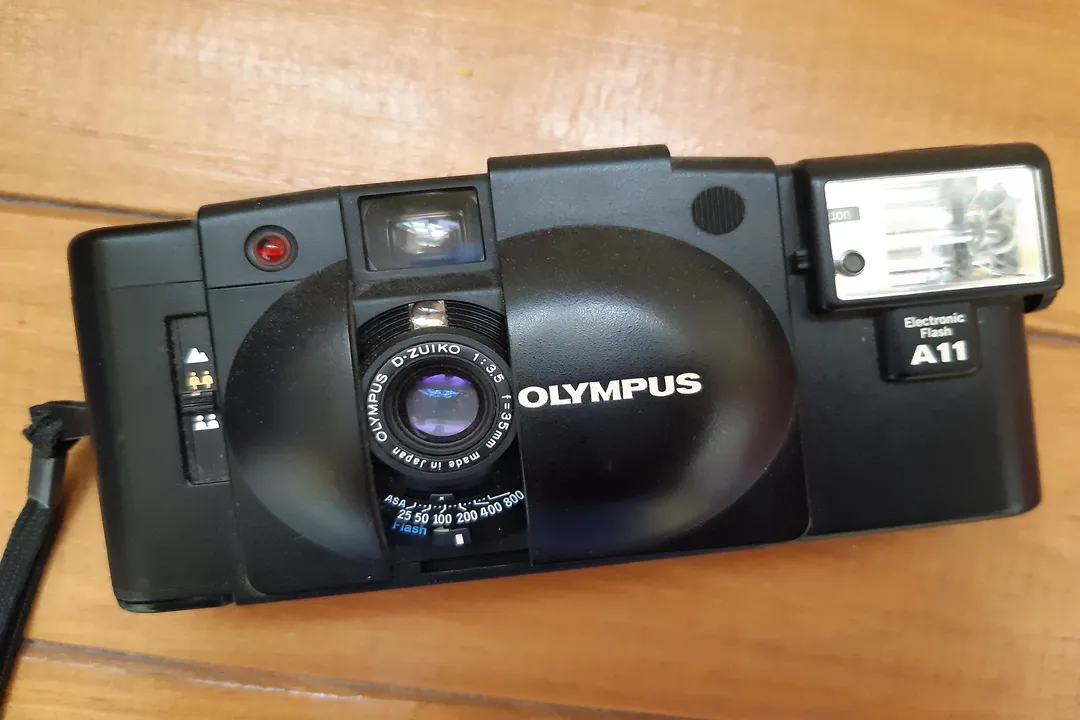
The word we use today to describe the apparatus for capturing light—the camera—carries a history far older and more literal than one might initially suspect, pointing back not to mechanics or film, but to architecture itself. The term is not a modern invention springing from the industrial age, but rather a direct descendant of ancient terminology describing a space, a room, or a vault.
# The Latin Root
To trace the lineage of the modern camera, one must go back to the Latin phrase camera obscura. This phrase literally translates to "dark chamber" or "dark room". The initial component, camera, is derived from the Greek word kamara, meaning a vaulted chamber or a simple arch. This connection establishes that the very first concept associated with the name was a controlled, dark space designed to manipulate light, rather than a box used for recording.
The physical reality of the camera obscura in its earliest forms was often just that—a darkened room with a small aperture or pinhole in one wall. Light passing through this hole projected an inverted, real-time image of the outside scene onto the opposite surface. This phenomenon was known and documented well before anyone conceived of fixing that image permanently. It is a fascinating aspect of this etymological path that the name initially described the environment where the viewing occurred, implying that the first "camera" was an entire space, not a portable tool. This stands in stark contrast to our modern association of the word with a compact, handheld device.
# Dark Chamber Theory
The conceptual leap from a dark room to a dark box is crucial for understanding the evolution of the word’s usage. While the principles of the camera obscura were understood in antiquity, the term solidified in Latin to describe this viewing aid. It wasn't until the apparatus began to shrink—moving from a whole room to a portable wooden box equipped with lenses to brighten and focus the projected image—that the shortening of the name began to feel natural.
By the 1830s, as chemical processes were being developed to actually record the light hitting the surface inside the chamber, the public and the scientific community began to drop the descriptive Latin qualifier, obscura, and simply referred to the recording device as the camera. Think of it like shortening "refrigerator" to "fridge"; the core, descriptive part of the name fades away as the object becomes ubiquitous and its function is understood through context. The standardization of the term to just camera signals a transition from describing what it is (a dark chamber) to labeling what it does (capture an image).
| Term | Language | Literal Meaning | Context |
|---|---|---|---|
| Kamara | Greek | Vaulted chamber, arch | Root word for physical structure |
| Camera Obscura | Latin | Dark chamber | The viewing device principle |
| Camera | English | (Shortened term) | The modern imaging apparatus |

# Private Proceedings
It is important to recognize that the word camera existed in English usage prior to its adoption for photography, though often in a very different context. The phrase in camera remains in legal and procedural vocabulary. In this context, in camera means that a proceeding, a hearing, or a judicial discussion is held privately, away from the public eye, essentially "in chambers". This usage directly reflects the original meaning of camera as a private room or vault.
While the photographic term implies light and image capture, the legal term implies secrecy and exclusion. This dual existence shows the strength of the Latin root; the word was already established as meaning a contained, private space before Daguerre and Talbot were perfecting their light-sensitive plates. When the photographic box arrived, its name was already half-formed and perfectly descriptive of its interior: a dark, enclosed space. Had the device been named something else entirely, the legal phrase in camera might not have had such an easily recognizable Latin echo in the public lexicon when photography took off.
# Naming Shift
The adoption of the single word camera is a classic example of linguistic economy—speakers naturally gravitate toward the shortest usable form of a phrase. However, the choice of camera over another potential shortened form highlights an interesting detail about the apparatus itself. Early photographic inventions, like the Daguerreotype or Calotype processes, required the light-sensitive material to be placed inside the box, which was essentially a miniature, sophisticated camera obscura. The very design dictated that the name camera was appropriate, as the obscura (the darkness) was still the fundamental requirement for the chemical reaction to occur successfully, even if the room itself was replaced by a box.
When examining historical records, one notices that the transition wasn't instantaneous. For a time, you might see references to "the photographic camera obscura" or simply "the camera" used interchangeably when describing the apparatus. The final victory of the shortened form suggests that by the mid-19th century, the function of the box was so apparent—capturing an image—that people no longer needed the qualifier obscura to understand what kind of "chamber" they were dealing with. It’s a testament to the effectiveness of the optical principle: if you can see the projected image, you know you are looking at a derivative of the dark chamber.
Even today, when we look at the intricate digital sensors and processing chips inside a modern phone camera, the concept remains rooted in that ancient necessity: creating a controlled, dark environment where light can be managed precisely before being registered. The word for the device has shed its descriptive adjective, but the fundamental architectural concept it describes remains the foundation of optics.
Related Questions
#Citations
Camera - Etymology, Origin & Meaning
The word "Camera" comes from Latin "Camera Obscura" (darkened ...
History of the camera - Wikipedia
The Obscure Word History of “In Camera” Court Proceedings
camera - Wiktionary, the free dictionary
Facts about camera history and technology - Facebook
camera - Kids | Britannica Kids | Homework Help
Camera is Persian? #persia #persian #farsi #dari #iran ... - Instagram
What is the origin of the name 'camera' for the device used ... - Quora