What are some interesting facts about the gramophone?
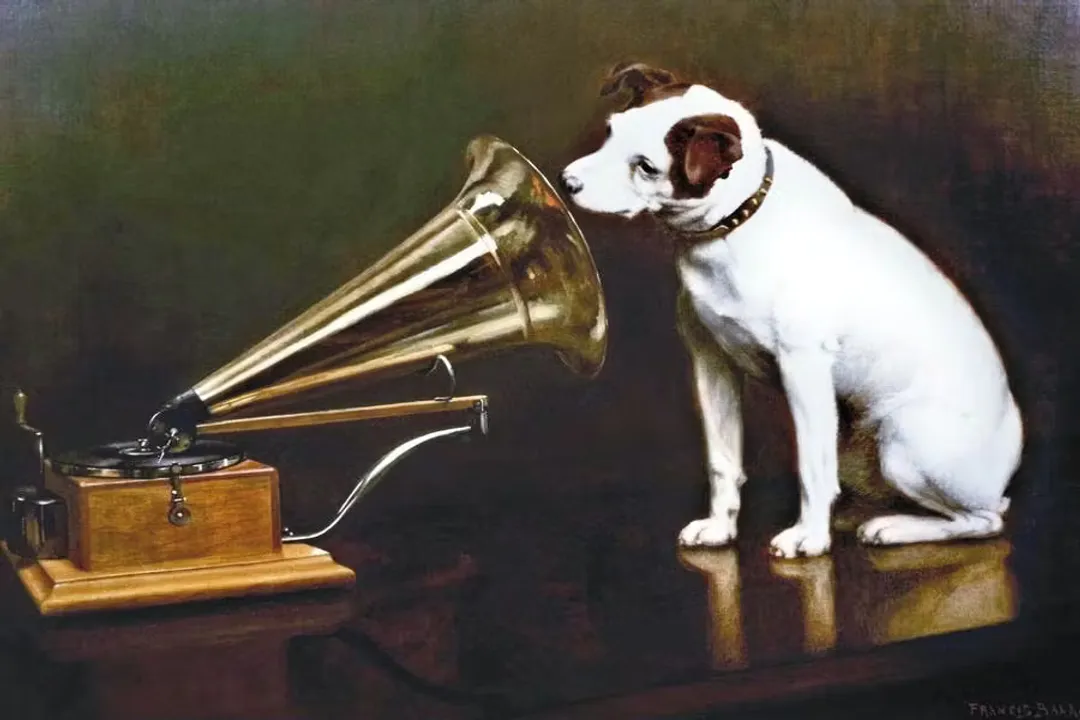
The sight of an antique gramophone, with its magnificent flared horn and winding handle, immediately conjures images of a bygone era of formal entertainment. It represents the very first mass-market technology capable of capturing and reproducing the human voice and instrumental music within the home. Yet, beyond the iconic aesthetics, the machine itself is a marvel of purely mechanical engineering, a testament to inventive minds grappling with the physics of sound reproduction nearly a century and a half ago.
# Disc vs Cylinder
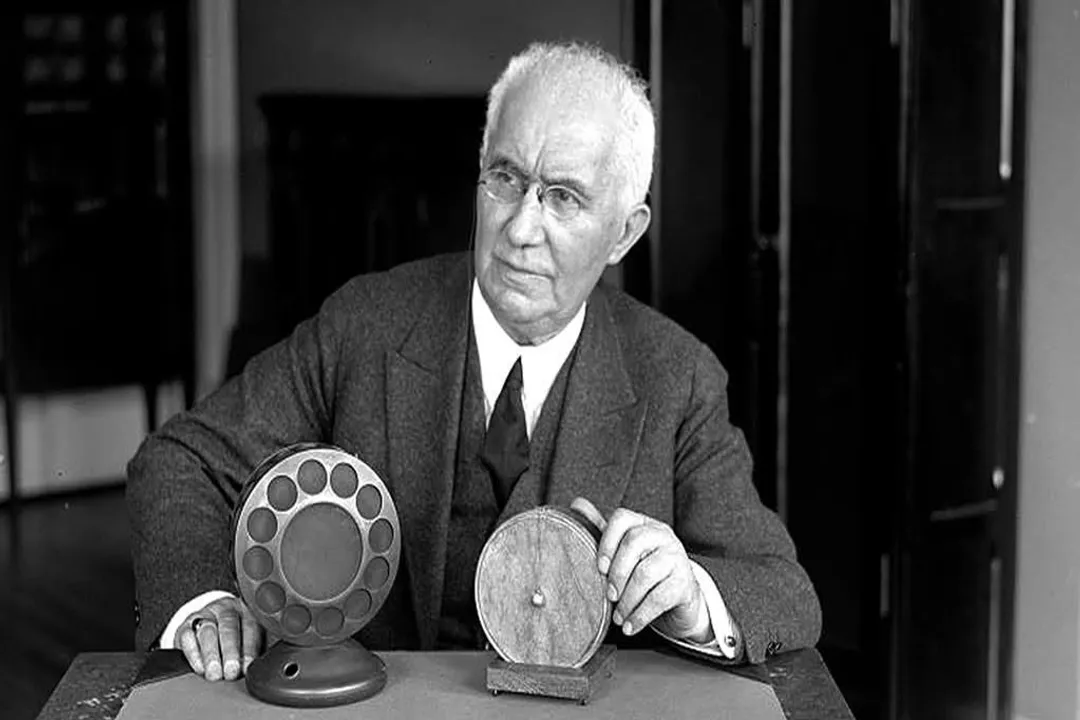
The history of recorded sound is often muddled by the early rivalry between two recording formats, which explains why the term "gramophone" is sometimes used loosely. Technically, the gramophone, as patented by Emile Berliner in 1887, specifically refers to a device that plays music from a flat, rotating disc. This was distinct from Thomas Edison’s earlier invention, the phonograph, which used a fragile, tinfoil-wrapped cylinder. Berliner’s innovation was to record sound sideways onto a flat surface, allowing for easier duplication and much more durable playback media than the cylinder format initially offered.
Berliner's first successful patent application utilized discs made of zinc. He initially envisioned the device being used for voice recording for dictation, but it quickly found its true calling in music reproduction. The early records were small, often around seven inches in diameter. While Edison’s cylinder could only be copied with difficulty, Berliner’s flat discs could be stamped or pressed, making mass production feasible right from the start.
# Sound Mechanics
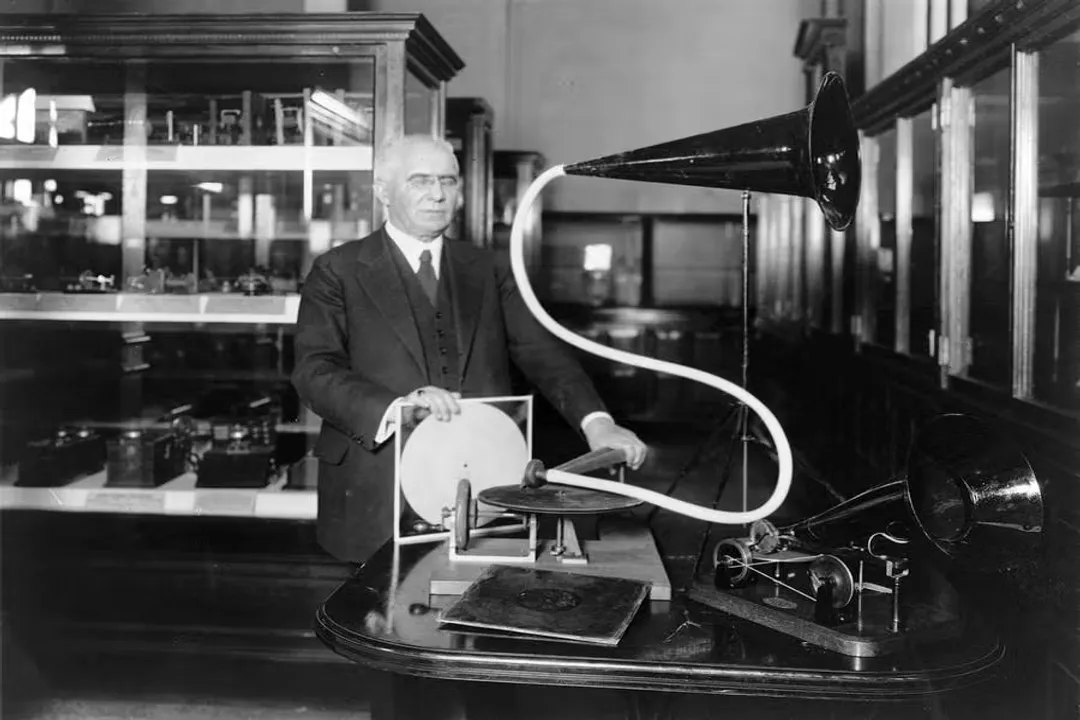
The operation of the gramophone is elegantly simple, relying entirely on physical vibration without the need for any external electricity. The process begins with the stylus, often a sharpened steel or fiber needle, resting in the continuous spiral groove etched onto the shellac disc. As the disc rotates, usually at a speed of 78 revolutions per minute (rpm) for commercial records, the stylus vibrates in sympathy with the microscopic hills and valleys of the groove walls.
These minute vibrations are transferred from the stylus to the reproducer or sound box, which contains a delicate diaphragm. The diaphragm acts like the drum skin of a tiny speaker, vibrating in response to the stylus movements. This movement is then mechanically amplified by the attached horn, which couples the energy from the diaphragm to the much larger volume of air in the room, making the sound audible to listeners. It is quite remarkable that such small, precise mechanical movements could create enough sustained acoustic energy to fill a room before electronic amplification became standard. The entire mechanism, including the rotating platter, was typically powered by a clockwork motor wound up by a crank.
# Horn Appearance
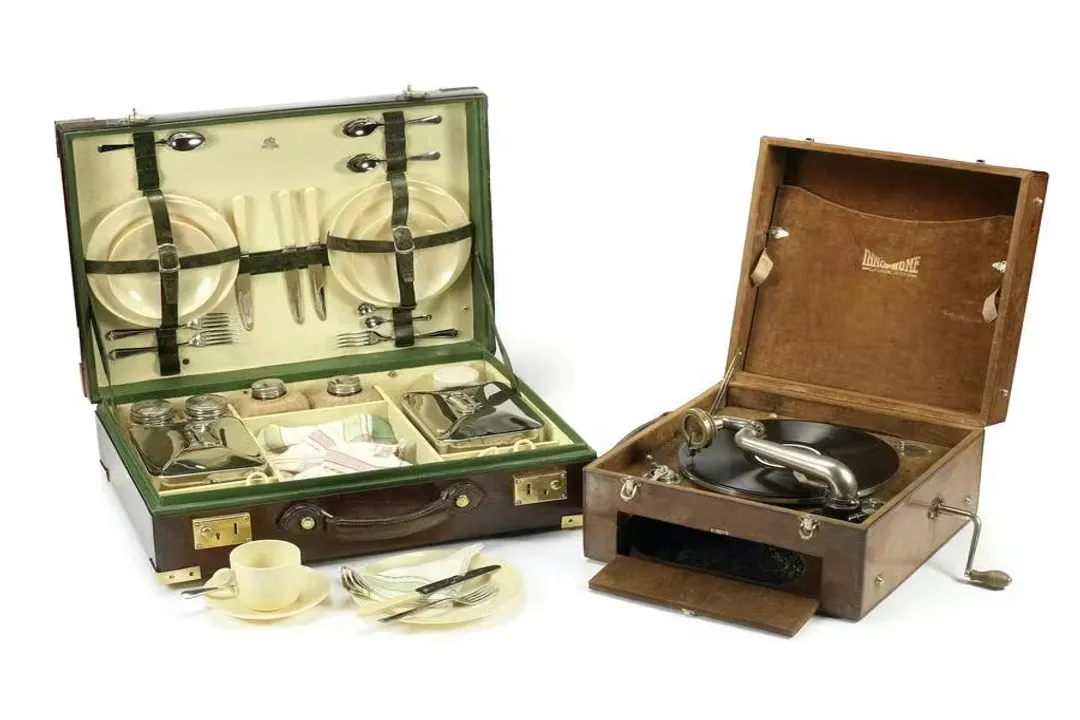
Perhaps the most recognizable feature of the early gramophone is the large, external horn. This horn was not merely decorative; it was a critical acoustic component. Because the vibrations produced by the diaphragm were too faint to be heard clearly on their own, the horn served as a carefully shaped acoustic impedance matching device and amplifier, efficiently directing sound waves toward the listener. Early models, like those produced by the Berliner Gramophone Company, prominently displayed these horns, often crafted from metal or even papier-mâché.
As the technology matured, manufacturers sought ways to integrate the machine more smoothly into home furnishings. This led to designs where the horn was placed inside the cabinet, often draped or coiled around itself to save space while still utilizing the principles of acoustic amplification. These cabinet models, popular in the early 20th century, transformed the gramophone from a specialized piece of equipment into an accepted piece of domestic furniture, blending technical function with domestic décor.
# Recording Medium
The choice of material used to create the master and consumer recordings evolved significantly in the early days of the technology. While Berliner’s initial patents involved zinc, these were not ideal for mass market durability. Before the widespread adoption of the more durable shellac compound, other temporary materials were tested, including wax and tinfoil.
Shellac became the standard material for commercial records throughout the 78 rpm era, valued because it offered a decent balance of hardness and plasticity needed to capture fine groove details while resisting excessive wear during playback. A fascinating detail of this era is that early recordings, especially of the human voice, were sometimes technically poor because singers had to stand very close to the large recording horn, leading to distortion or sound peaks that overwhelmed the diaphragm. Often, the first commercially successful recordings were instrumental pieces where volume dynamics were more controllable.

# Company Lineage
The success of the disc format prompted rapid commercial development and legal wrangling. After Emile Berliner’s initial success, Eldridge Johnson acquired the US rights to the gramophone patents. Johnson refined the machine, most notably by improving the motor mechanism, and established the Victor Talking Machine Company. The iconic dog trademark, His Master's Voice (HMV), featuring the dog Nipper listening to a phonograph, would eventually be associated with this lineage.
Meanwhile, Berliner’s interests in Europe continued under the name Berliner Gramophone Company, which eventually evolved into EMI (Electric and Musical Industries) in the UK. This split in early commercialization highlights how quickly a singular invention spawned distinct, powerful international business entities.
# Collector Notes
For those interested in the mechanics of these machines today, understanding the winding process is key. These devices are entirely mechanical; if the spring motor runs down, the platter speed drops, causing the pitch of the music to flatten dramatically—a clear audible indication that the machine needs more energy wound into its spring. A collection of 78 rpm shellac records presents a unique preservation challenge compared to vinyl LPs. Shellac, while harder than early wax, is brittle and highly susceptible to temperature fluctuations and physical shock. Unlike vinyl, which relies on a plastic base, shellac records can literally crumble if mishandled or stored in damp, hot conditions.
When assessing the audio quality of a restored machine, one often hears a distinct, scratchy surface noise inherent to the medium itself. While electronic devices attempt to filter this out, listening to a restored, purely acoustic gramophone reveals that a portion of the listening experience was always tied to that underlying mechanical hiss and crackle—it was part of the sonic signature of recorded music for decades. This fundamental difference from modern digital audio underscores the massive leap in fidelity that electronic amplification eventually provided, even while we admire the raw ingenuity of the mechanical predecessor.
Related Questions
#Citations
10 Fun Facts About Gramophone - The Handmade Store
The Gramophone | Articles and Essays | Emile Berliner and the Birth ...
Gramophone Facts for Kids
Making gramophone records | National Science and Media Museum
The Gramophone: A History | Barnebys Magazine
A Short History of the Gramophone
Gramophone - What Makes it Special? - Robotime
May 20, 1851 – August 3, 1929 Emile Berliner developer ... - Facebook