Who is Sarah Goode?
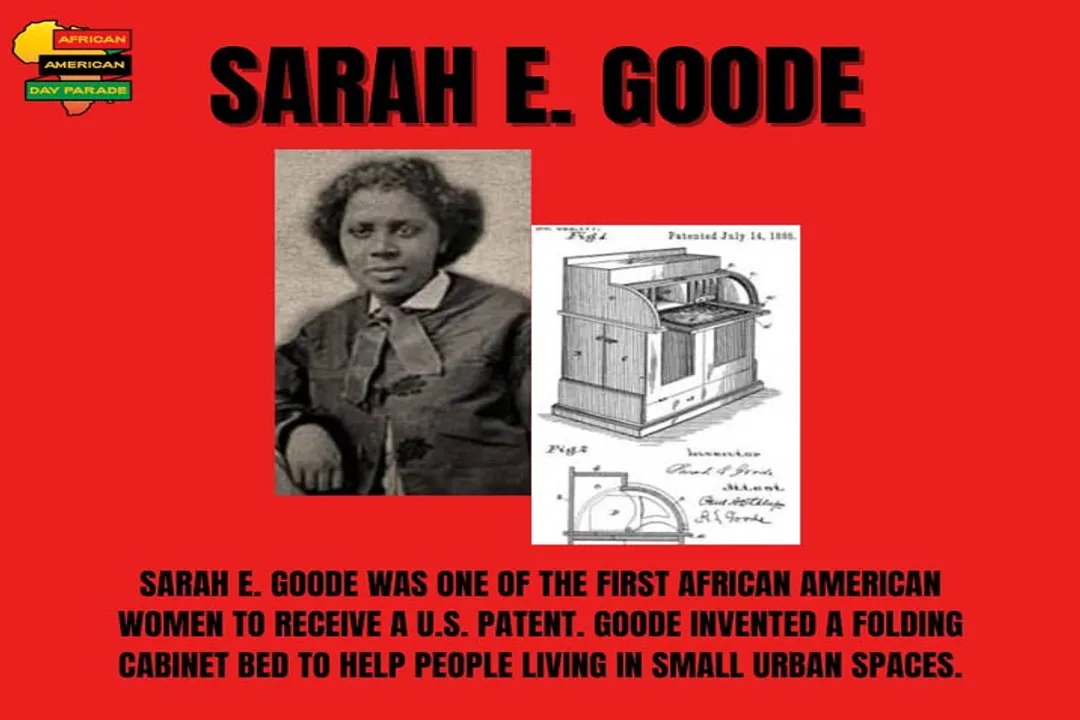
The story of Sarah E. Goode is one of ingenuity meeting necessity, cementing her place in history as a pioneering African American woman inventor. Her contribution, a clever piece of furniture designed to maximize small living spaces, speaks volumes about the resourcefulness required during the late 19th century. [1][2] She is recognized as one of the first African American women to ever receive a U.S. patent, marking a significant, albeit often overlooked, moment in both American innovation and civil rights history. [2][6]
# Early Life
Details surrounding Sarah E. Goode’s early life are somewhat sparse, which is common for many figures from this era, particularly women and minorities whose lives were not extensively documented by mainstream historical record keepers. [2] What is known is that she was born in or around 1850. [2] She eventually settled in Chicago, Illinois, where she would live and work for the remainder of her life. [2] In Chicago, a rapidly expanding industrial hub in the post-Civil War era, the need for practical, space-saving solutions in crowded housing situations was acute. [2] This environment likely provided the direct inspiration for her landmark invention, illustrating how social and economic pressures can directly fuel technical creativity. [2]
# The Invention
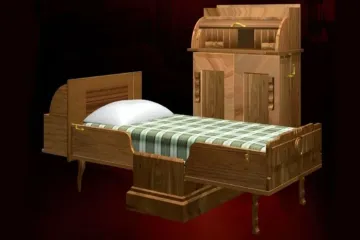
Goode’s recognized invention addresses a fundamental challenge: how to fit essential home functions—sleeping and working—into a limited physical footprint. Her patented item was a folding cabinet bed that transformed into a writing desk. [1][2] Imagine a scenario common in tenement housing or smaller urban dwellings: a single room often needed to serve as a bedroom, a workspace, and a general living area. A full-sized bed occupies space twenty-four hours a day, severely restricting daytime utility. [1]
Sarah Goode’s design provided an elegant solution. When not in use for sleeping, the bed mechanism folded upward and concealed itself within a cabinet structure. [1] Crucially, the underside of the folded bed frame, or perhaps an integrated surface, became a functional writing desk. [1][2] This dual functionality meant that one piece of furniture accomplished what previously required two separate, bulky items, effectively liberating floor space for other activities during the day. [1] This approach to furniture design foreshadows modern multi-functional, transforming furniture popularized by contemporary makers of micro-apartment solutions. [5] It demonstrates an understanding of spatial economics that was ahead of its time, especially considering the limited documentation of African American inventors at that time. [2][8]
# Securing the Patent
The culmination of Sarah Goode’s inventive efforts arrived in 1885 when she was officially granted a United States Patent for her folding cabinet bed/desk. [1][2] Receiving a patent in the late 19th century was itself an extraordinary achievement for anyone, but for an African American woman, it was a powerful statement of legal and intellectual ownership. [2][6] The patent process required detailed drawings and clear documentation of the mechanism, suggesting a high level of technical comprehension on her part. [1]
While the specific patent number and the full text of the application might require deeper archival research, the issuance date of March 3, 1885, is a significant marker. [1][2] This places her invention firmly in the post-Reconstruction era, a time when systemic barriers to legal and economic advancement for Black Americans were still rigidly in place. [8] Securing this intellectual property right established her as an entrepreneur as well as an inventor, giving her the legal standing to license or sell her design. [6] It is an important distinction that this patent was granted directly to her, Sarah E. Goode, which speaks to her individual agency in navigating the legal system. [8]
| Feature | Description | Utility Gain |
|---|---|---|
| Primary Form | Cabinet Bed | Overnight space saving |
| Secondary Form | Writing Desk | Daytime functional workspace |
| Patent Year | 1885 | Legal protection of intellectual property |
| Inventor Status | African American Woman | Historical pioneering achievement |
| [1][2][6] |
# Historical Significance and Legacy
Sarah E. Goode’s legacy is multifaceted. It resides not just in the cleverness of her folding desk, but in the fact of her patent itself. She is cited as one of the very first African American women to hold a U.S. patent, preceding many other notable figures in the patent registry. [2][6] This places her alongside other pioneering women who carved out space for themselves in fields dominated by white men. [8]
The success of acquiring this patent, even if the commercial success of the product itself remains less documented, represents an act of economic self-determination. In an era where African Americans were often blocked from formal credit, land ownership, and institutional support, asserting intellectual property was a direct move toward building independent wealth and recognition. [2] Had the full scope of her business activities been as well-documented as those of her white male contemporaries, we might see her listed as a major furniture innovator of the time. [5] The very act of having the government officially recognize her creation is a powerful testament to her determination.
Considering the context of 1880s Chicago, where rapid industrialization led to overcrowding and cramped living conditions, her invention wasn't a luxury; it was a practical necessity for maximizing livable square footage. In a modern sense, one can view her cabinet bed as the 19th-century equivalent of a Murphy Bed combined with a standing desk workstation—a high-density living solution tailored for the working class or those residing in smaller rented properties where every inch counted toward comfort and productivity. [1][5]
# Documenting the Path
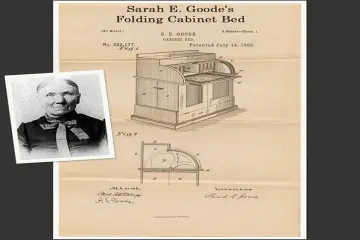
The challenges faced by early inventors like Goode often mean that their stories are pieced together from official records, such as patent office documents or city directories, rather than personal memoirs. [8] For readers interested in the experience of being an inventor during that time, understanding the procedural hurdles is key. The patent application itself serves as a primary source, detailing not only what the invention does but how it functions mechanically. It requires precise language to describe the hinges, locking mechanisms, and the transition from bed to desk—a demonstration of mastery over both mechanics and legal articulation. [1]
It is insightful to note that while many historical accounts focus on what she invented, the true measure of her achievement might lie in the administrative pathway she navigated. In the late 1800s, applying for and successfully securing a patent required navigating bureaucracy that was often actively hostile or dismissive toward Black applicants. [8] Her success suggests an individual with strong organizational skills and perseverance, capable of dealing with administrative challenges that would deter less resolute individuals. This administrative resilience is just as much a part of her inventive spirit as the mechanical design of the folding furniture itself.
# Public Awareness Today
While Sarah E. Goode was recognized in her time by the U.S. Patent Office, her broader public recognition has grown significantly in recent years through efforts to highlight overlooked contributors to history. [2][6] Institutions and online communities are working to bring figures like Goode the recognition they deserve, ensuring her contribution is not lost in the generalized history of American invention. [4][5] Her story serves as an important data point when studying the history of American entrepreneurship, offering a counter-narrative to traditionally exclusive accounts. [6] She stands as an inspiring example that innovation is not limited by race or gender, but springs from necessity and intellect wherever those qualities are found. [8]
#Videos
Sarah E Goode - one of the first African-American US patent holders
Related Questions
#Citations
Sarah E. Goode - Invention, Life & Facts - Biography
Sarah E. Goode, (ca.1850-1909), Inventor - America Comes Alive
Sarah E. Goode Facts for Kids
SARAH E. GOODE (1855-1905) Sarah Elisabeth Goode was one of ...
Sarah E. Goode - Invention, Life & Facts | Erin Essenmacher - LinkedIn
Sarah E. Goode was an inventor and entrepreneur who became one ...
Sarah E Goode - one of the first African-American US patent holders
Women who made legal history: Sarah E. Goode - UChicago Library
Sarah E. Goode - Clara Barton Missing Soldiers Office Museum