What were the accomplishments of Sarah E. Goode?
Sarah E. Goode carved out a singular place in American history, not just as a businesswoman, but as an inventor whose ingenuity addressed the practical realities of late 19th-century urban life. Born around 1855, she represents one of the earliest known Black women to be granted a United States patent, a remarkable achievement given the significant social and economic barriers facing African American women in the post-Reconstruction era. Her accomplishment points to a spirit of innovation that often goes unrecorded in standard histories of technology and design.
# Early Life Context
Details about Sarah Goode’s early life are sparse, which is often the case for many women, especially women of color, from that period. Historical records place her birth around 1855. While many inventors of that time were recognized for grand, industrial machines, Goode’s work was intensely focused on the domestic sphere and improving everyday living conditions. She eventually settled in Chicago, Illinois, a rapidly growing city that, by the late 1800s, was characterized by both expansive opportunities and cramped living spaces.
It is crucial to recognize the environment in which she operated. Securing any form of intellectual property protection as a Black woman in the late 19th century was an uphill battle fraught with systemic obstacles concerning access to legal counsel, capital, and general professional recognition. That Goode not only had an idea but possessed the means, knowledge, or connections to successfully navigate the complex federal patent process speaks volumes about her determination and business acumen. The ability to generate and protect an idea in a society that often actively sought to exclude her from such professional arenas stands as an accomplishment in itself, even prior to looking at the invention itself.
# The Cabinet Bed Invention
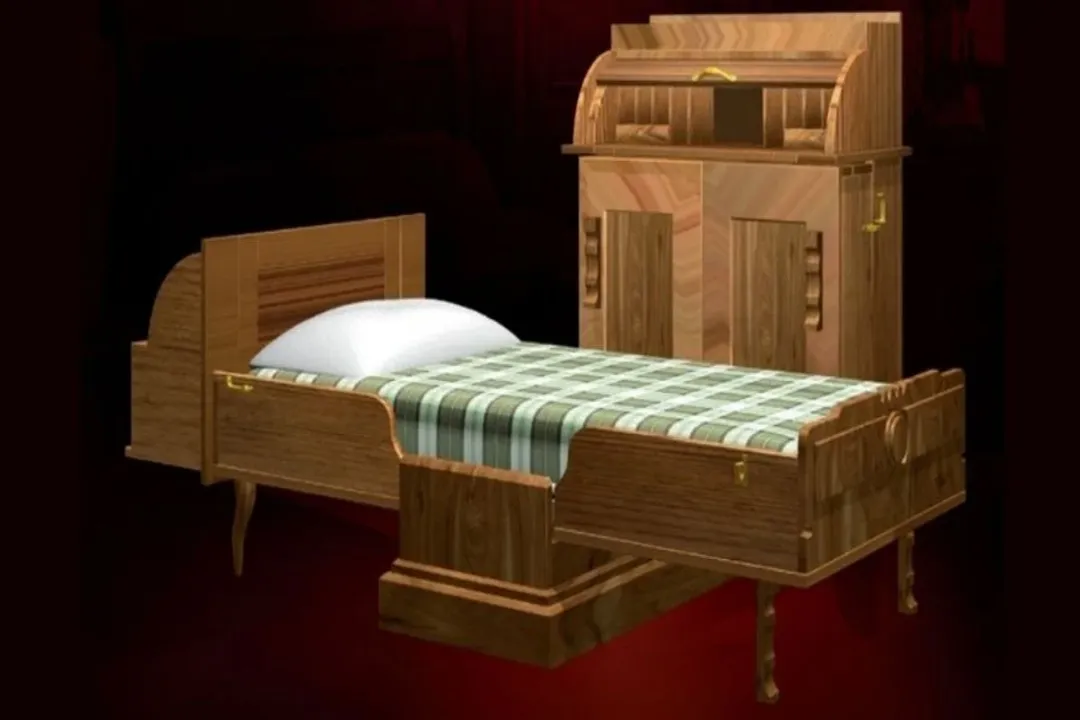
Goode's primary documented achievement is her invention of a unique piece of furniture: a cabinet bed. This was not merely a new style of bed frame; it was a clever, multi-functional design aimed squarely at maximizing limited square footage. The invention essentially combined a desk or cabinet with a folding bed.
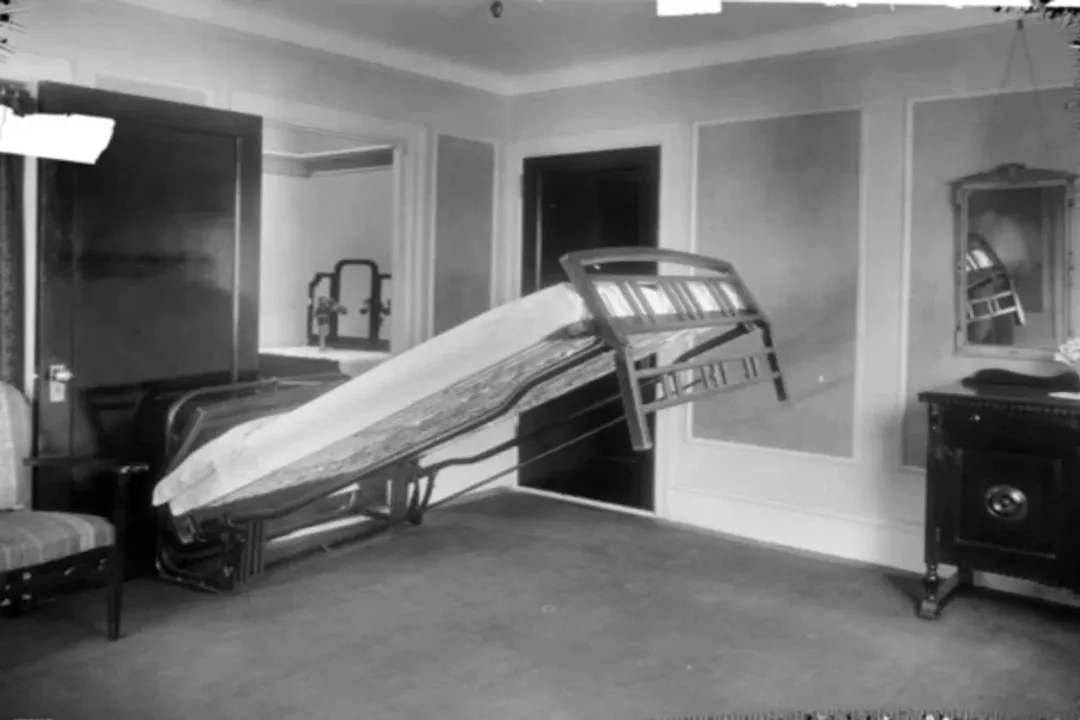
When folded up, the piece presented itself as a compact cabinet or desk, allowing a single room to serve dual purposes—as an office or sitting area during the day and a sleeping area at night. This functionality was perfectly suited for the tight quarters common in tenement buildings or smaller urban homes in cities like Chicago during that time. Imagine a family living in a one- or two-room apartment; the ability to instantly convert a workspace into a private sleeping area offered both utility and a psychological sense of space that standard, fixed furniture could not provide.
The design ingenuity lay in its mechanism and structure, ensuring that the surface of the desk remained level when folded up, preventing items placed upon it from falling. This detail separates it from simpler, less refined fold-out designs that might have existed previously. This focus on practical, user-friendly mechanics highlights an inventor deeply concerned with usability.
# Patent Achievement
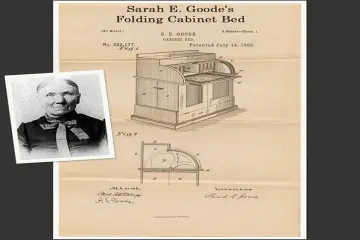
The tangible proof of Sarah E. Goode’s accomplishment arrived with the granting of U.S. Patent No. 470,537. The patent was officially issued on March 8, 1892. This date is critical because it firmly places her among the very first African American women to receive a federal patent. While historical documentation can sometimes be murky regarding patent issuance order, Goode is widely celebrated for being one of the first, if not the first.
To put this achievement into a historical frame, consider the landscape of invention at the time. While Thomas Edison and other well-known male inventors were receiving patents for industrial innovations, Goode was securing intellectual property rights for a piece of functional domestic equipment. Her success meant that she legally controlled the right to manufacture and sell her specific design, establishing a degree of economic autonomy that was rare for women of her background.
| Detail | Specification | Significance |
|---|---|---|
| Inventor | Sarah E. Goode | Recognized early African American female inventor. |
| Patent Number | 470,537 | Federal protection for her design. |
| Issue Date | March 8, 1892 | Places her at the beginning of recognized female Black inventors. |
| Invention Type | Folding Cabinet Bed | Solved urban space constraints with multi-functionality. |
This patent, secured in a time where ownership and intellectual property rights were often challenging for marginalized groups to enforce, represents a significant personal and legal victory. Her patent filing would have required precise drawings, detailed descriptions, and the payment of official fees, all requiring a level of organization and access to resources that is often overlooked when assessing historical innovators.
# Navigating the Professional Barrier
The distinction of being an early patent holder like Sarah Goode deserves closer examination beyond the invention itself. When one examines the broader context of innovation in the late 19th century, the odds were stacked against her. Many women inventors of the era often had their patents filed under their husbands’ names, or they were relegated to the realm of "household arts" with less perceived commercial value. Goode managed to secure the patent in her own name, or at least under her own recognized identity as an inventor, which carries significant weight.
This act of independent intellectual recognition is a powerful counterpoint to the era's prevailing attitudes. In many ways, her patent certificate was not just a grant for a piece of furniture; it was evidence of her legal standing and inventive capacity in a system designed to overlook both. This required a level of self-advocacy and networking that is difficult to quantify but undeniably present in the final documentation. Her achievement provides a tangible example that innovation was not exclusive to wealthy, white, male industrialists, but was being generated in the very homes that the industrial economy was crowding together.
If we consider the potential royalty stream or business that could have been built from this, even modest success would have represented a financial foundation unavailable to most Black families at the time. While we do not know the extent of her commercial success following the patent, the act of patenting remains the monumental accomplishment.
# Enduring Legacy and Recognition
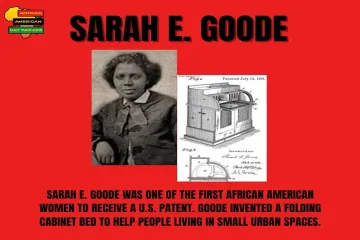
While Sarah E. Goode may not have achieved the household name status of some of her male contemporaries, the historical record has increasingly recognized her pioneering status. In recent decades, institutions dedicated to preserving and honoring innovation have brought her story back into the public consciousness.
One significant form of recognition is her induction into the National Inventors Hall of Fame. Being included in such esteemed company affirms her contribution not just to furniture design, but to the broader American narrative of invention. This modern acknowledgment helps correct historical oversights, ensuring that her contribution is not lost to time. Furthermore, her story is often featured in contexts dedicated to celebrating women’s history and African American history, cementing her as an icon of early achievement in technology and business.
It is telling that her name appears in records pertaining to legal history and foundation classes for women inventors. This broad recognition suggests that her accomplishment resonates across multiple historical disciplines, from intellectual property law to social history. For those seeking inspiration, Goode’s patent serves as a concrete example of how inventive thought can emerge from necessity and manifest into legally recognized property, regardless of societal limitations. Her legacy is a testament to the idea that groundbreaking solutions can come from the most practical of needs, transforming simple domestic objects into patented innovations. Her work reminds us that foundational contributions to modern life were often established by individuals working quietly outside the spotlight, making small, brilliant adjustments to the objects that structure our days.
Related Questions
#Citations
Sarah E. Goode - Invention, Life & Facts
Sarah E. Goode
Sarah Goode, One Of The First Black Women To Earn A ...
Sarah E. Goode - Clara Barton Museum
Sarah E. Goode
Sarah E. Goode was an inventor and entrepreneur who ...
Women who made legal history: Sarah E. Goode
Sarah E. Goode (c.1855?-1905)
Inventor Sarah E. Goode, the first Black woman awarded a ...