Who is Joseph Jacquard?
Joseph Marie Jacquard was a figure whose seemingly singular mechanical achievement cracked open the door to both mechanized textile production and the distant future of automatic computation. Born around 1752 in Lyon, France, Jacquard emerged from the world of weaving, a trade steeped in tradition and exacting manual labor. [1][2][9] His life was not one of immediate academic acclaim but rather one shaped by the practical demands of his craft and the tumultuous political landscape of late 18th-century France. [2][9]
# Early Trades
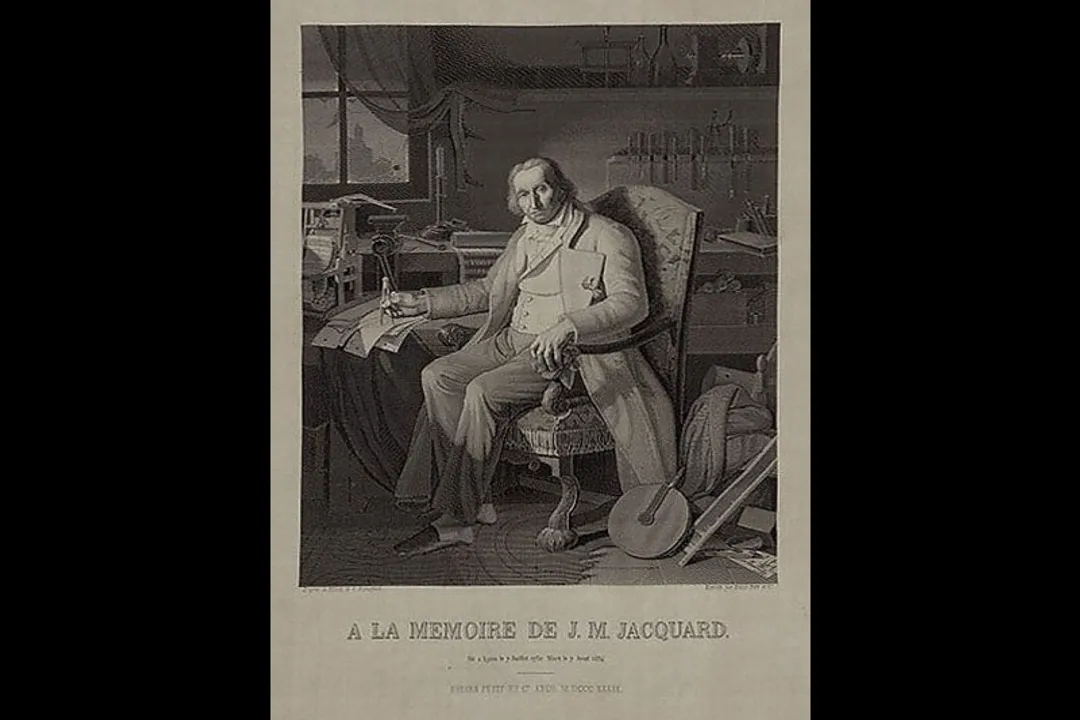
Jacquard’s origins placed him squarely within Lyon’s renowned silk industry, though his initial path involved various employments. [9] He was the son of a weaver, which gave him firsthand knowledge of the complexities involved in creating figured fabrics—those woven with intricate, repeating patterns. [9] Before dedicating himself to invention, Jacquard worked variously as a mason, a printer, and even briefly served as a soldier during the early years of the French Revolution, an experience that sometimes led him into temporary imprisonment. [1][2][9] This background, combining manual skill with exposure to revolutionary pressures for efficiency and change, seems essential to understanding the problem he would later solve. [2]
The traditional method of creating complex woven patterns was agonizingly slow. Weavers relied on specialized assistants, often children, known as draw-boys, who had to manually lift and control hundreds of individual warp threads according to a sequence dictated by memory or detailed drafts. [5][9] This process limited the complexity, increased the labor cost, and often resulted in inconsistent quality. Jacquard recognized that automating this step—separating the pattern instruction from the physical act of weaving—was the key to unlocking mass production of luxury textiles. [5]
# Concept Evolution
It is important to recognize that Jacquard did not conjure the idea of automated weaving from thin air; rather, he refined and perfected predecessors’ concepts, integrating them into a functional, commercially viable system. [5][8] Earlier innovators, like Basile Bouchon in 1725 and Jacques de Vaucanson in 1745, had already experimented with using paper rolls with holes to control the loom, a precursor to the modern concept of programming. [1][5] However, these earlier mechanisms were often cumbersome, expensive to set up, or limited in the complexity of the patterns they could manage. [5][8]
Jacquard’s genius lay in finding a simple, robust, and easily replicable method for storing and reading the pattern instructions: the punched card. [1][7] He presented his improved loom to the jury of the Paris Exhibition in 1801, and by 1804, he had perfected his design, which he patented in 1804. [7]
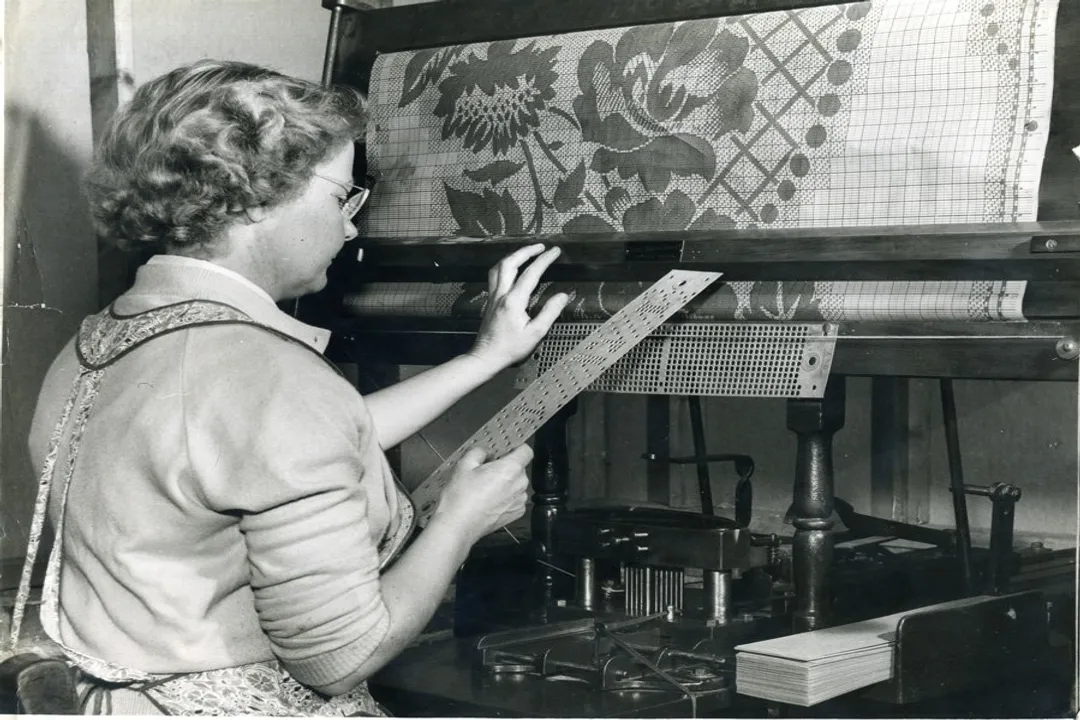
The mechanism itself was an elegant addition to the existing loom structure. Instead of relying on complex internal mechanical linkages to dictate the pattern, Jacquard introduced a series of individual cards that were linked together to form a continuous chain. [1][5] Each card corresponded to a single row of the final pattern. [5] A hole in a specific position on a card allowed a corresponding needle to pass through it, which in turn controlled the lifting mechanism (the harness) for that particular warp thread. [1][5] If there was no hole, the thread remained down.
The entire design was governed by the sequence of cards. To change the pattern—say, from a floral motif to a geometric repeat—the weaver simply had to replace the stack of cards with a new set. [1][5]
# The Loom's Mechanics
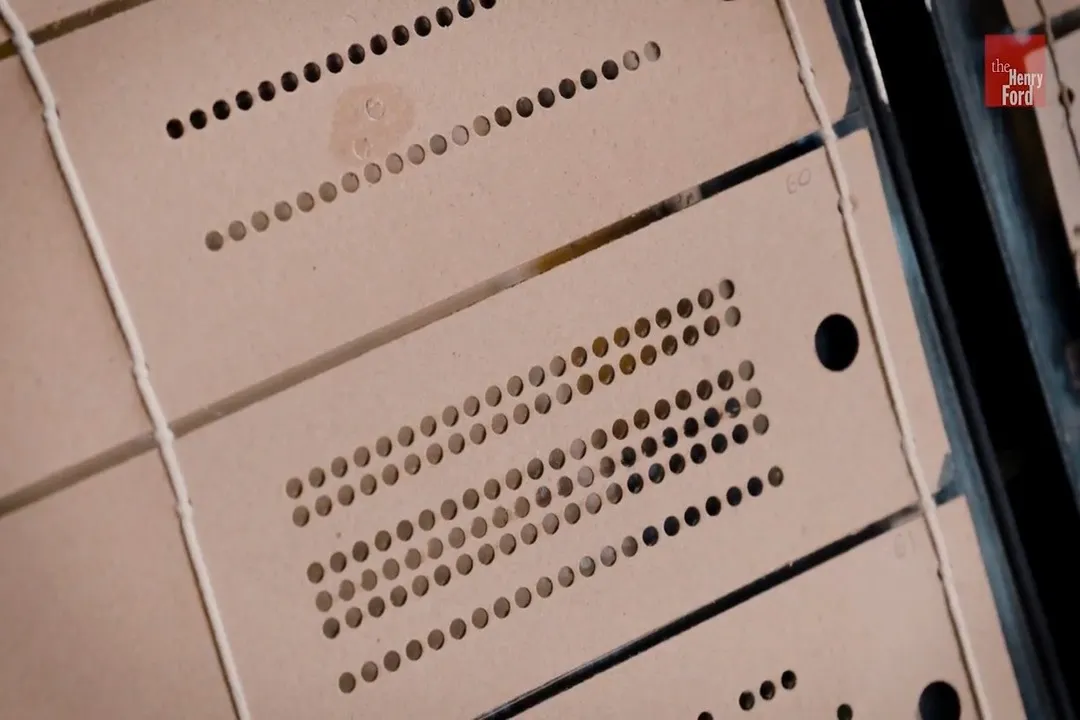
The physical operation of the Jacquard attachment involved several key components working in harmony: [5]
- The Cards: These stiff cards, perforated with holes, were the data. [5]
- The Needles: A bank of needles corresponding to the warp threads would probe the card stack. [1]
- The Harness: Needles that found a hole allowed their associated harness (which lifts the warp threads) to move according to the loom's main action, while needles blocked by the card were prevented from moving that particular harness. [1]
- The Card Chain: After one row was woven, the loom automatically advanced the stack, dropping the just-used card and bringing the next card into position for the next row. [1]
This system dramatically reduced the labor and skill required for pattern creation. The complexity of the design was now stored externally on disposable, interchangeable media. [5] Consider the scale: weaving an elaborate brocade might involve manipulating thousands of warp threads across hundreds of rows, requiring an unmanageable number of individual manual settings without the cards. [5] The Jacquard loom performed this sequence automatically, driven purely by the physical arrangement of holes. [5]
# Industrial Repercussions
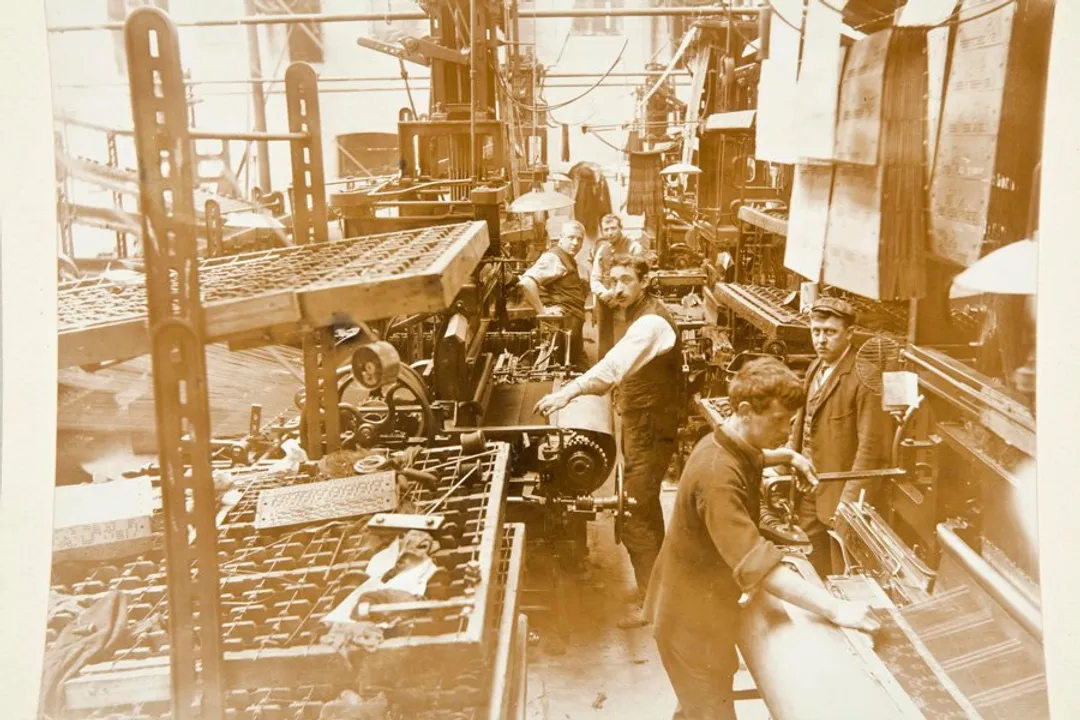
The immediate effect of the Jacquard loom was felt most strongly in Lyon. By 1812, thousands of these looms were in operation, marking a significant technological leap in the European textile sector. [2][9] This invention allowed for the rapid, cost-effective production of previously costly, highly ornamented fabrics, democratizing access to complex designs, even if it simultaneously disrupted the traditional artisanal workforce. [5][9]
The technology was adopted because it made economic sense, allowing manufacturers to produce highly desirable, intricate goods with less specialized human intervention. [5] The adoption, however, was not entirely smooth. Like many labor-saving devices, the loom faced initial resistance from workers fearing obsolescence. Jacquard himself reportedly received little financial reward during his lifetime, even though his invention was widely adopted—a common tragedy for many inventors of the Industrial Age. [2][9] The French government eventually granted him a pension and eventually a medal, though not before significant industrial unrest that mirrored later Luddite movements. [2][9]
An interesting way to view the Jacquard loom, especially from a modern perspective, is to recognize it as the first practical example of programmable machinery where the process instructions were entirely decoupled from the machine itself. [8] The loom body is the hardware—the physical apparatus for weaving. The stack of punched cards is the software or the stored program. This separation is a profound conceptual leap. Before Jacquard, to change the pattern, you had to rebuild or significantly retool the machine's internal mechanics. With the cards, you only needed to swap the input media. This established a fundamental principle that would underpin not just future automation in factories, but the entire architecture of digital computing a century later. [8] It is a clear demonstration of the concept of stored-program control applied to a physical task.
The loom's success in textiles meant its principles were too powerful to remain isolated within the silk industry. The concept of using a pattern of holes in a card to drive a mechanical action became a foundational idea for information technology. The linkage between Jacquard's cards and subsequent calculating machines is direct and significant. When Herman Hollerith developed his electromechanical tabulating system for the 1890 U.S. Census, he directly adapted the mechanics of the Jacquard loom's punched card reader to process demographic data. [8] In essence, the method Jacquard devised to dictate which thread goes up or down became the method used to count and sort millions of census records. [8]
# Global Reach and Artistic Context
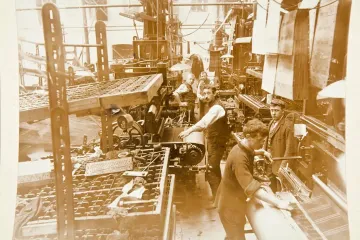
While the invention centered in France, its influence spread quickly across industrializing nations. [2] The Science and Industry Museum in Manchester, for example, houses examples of this technology, underscoring its international significance in the history of manufacturing and mechanical engineering. [5] The technology’s influence also extended into the realm of applied arts, as seen in museum collections that feature textiles woven on Jacquard-controlled looms. [6] These artifacts are not merely historical curiosities; they represent textiles with an unprecedented level of design complexity achievable at scale. [6]
It is worth considering the economic structure of Lyon at the time. The city operated under a system where small master weavers relied on the merchants (the fabricants) who often supplied the raw silk and dictated the patterns to be woven. [9] Jacquard's invention empowered the fabricants by making pattern replication simple and less reliant on the specialized, often difficult-to-manage skills of the master weavers and their draw-boys. [9] While this created massive efficiency gains for the capital holders, it simultaneously eroded the specialized knowledge base held by the traditional artisan class, leading to social friction as the traditional social contract of skilled labor was rewritten by mechanics. [9]
# Preserving the Legend
Despite the transformative nature of his work, the preservation of Jacquard's personal story faced hurdles. Because his invention was an attachment to an existing machine rather than an entirely new machine, it was sometimes difficult to secure intellectual property rights or recognition in the way a completely novel apparatus might receive. [8] The narrative surrounding his life often focuses heavily on the loom itself, sometimes overshadowing the broader context of his era—a time characterized by intense mechanization and social upheaval following the French Revolution. [2][9]
Institutions dedicated to technology history actively work to preserve the legacy of Jacquard and the looms he influenced, recognizing them as critical milestones bridging the pre-industrial artisan era and the mechanized factory system. [8] The continued existence and demonstration of these looms—sometimes centuries later—serves as a tangible link to the very origins of automated logic. [4][8]
If we analyze the speed of adoption, it took decades for the technology to become ubiquitous even in its home base of Lyon, showing that even brilliant, economically superior inventions require infrastructure, capital, and time to overcome inertia and resistance. [2][9] For a small weaver to invest in the complex attachment, he needed assurance that the merchant demand for complex, patterned work would sustain the investment. This dependence highlights an often-overlooked aspect of technological change: it requires an entire economic ecosystem to evolve concurrently, not just a single mechanical breakthrough.
Joseph Marie Jacquard passed away in 1834. [1] Though he did not live to see the full impact of his conceptual contribution—the idea that information could be encoded mechanically and read sequentially to direct action—his invention remains a monument to mechanical ingenuity. He took the delicate, thread-by-thread art of the master weaver and translated it into the universal language of binary states—hole or no hole, thread up or thread down—a translation that irrevocably changed the world. [5][8] The loom was not just a better way to make silk; it was a new way to instruct machines, setting the stage for nearly every automated process that followed. [8]
Related Questions
#Citations
Joseph Marie Jacquard - Wikipedia
Joseph-Marie Jacquard | Biography, Loom, Invention ... - Britannica
Joseph-Marie Jacquard - Linda Hall Library
Jacquard Loom - Facebook
Programming patterns: the story of the Jacquard loom
Didier, Petit et Cie - Joseph Marie Jacquard - French, Lyons
1801: Joseph Marie Jacquard Invents The Loom - Pivotal Moments
Artifact Adopted! Preserving the Legend of J. M. Jacquard - CHM
Joseph-Marie Jacquard (1752–1834) - Biography – ERIH