Who initiated the principles of error proofing?

The genesis of modern error-proofing principles is firmly rooted in the operational philosophy developed in Japan during the post-war industrial expansion, specifically within the manufacturing culture of the Toyota Motor Co.. The concept now universally known as Poka-Yoke was introduced by the industrial engineer Shigeo Shingo in 1961. This systematic approach to eliminating mistakes was formalized as an integral component of the broader Toyota Production System (TPS).
# The Architect
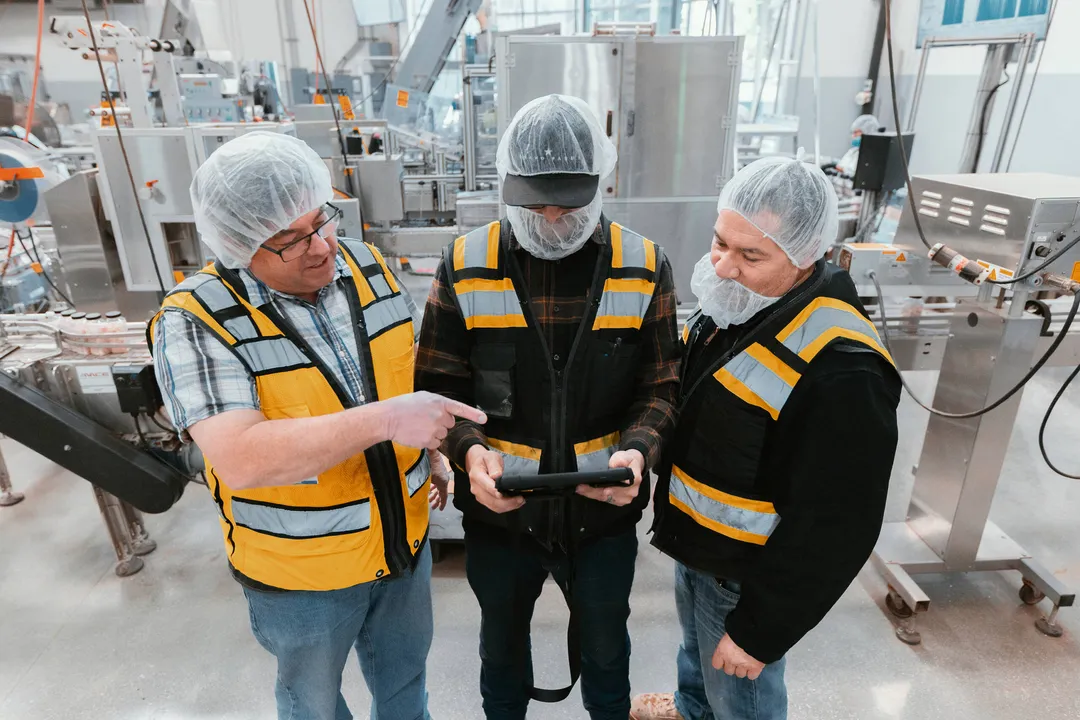
Shigeo Shingo, recognized as a leading figure in the development of TPS, saw that while inspection was necessary, it was far more effective and cost-efficient to prevent defects from ever occurring on the production line. This viewpoint aligns closely with the teachings of other quality advocates, such as W. Edwards Deming, who asserted that quality stems from improving the process rather than merely inspecting the outcome. Shingo’s core insight shifted the blame away from the worker and onto the process design itself, recognizing that human error is natural and inevitable under flawed systems.
Shingo’s initial work focused on immediate, practical problems. One often-cited example involved a small switch assembly where workers frequently forgot to insert a necessary spring under one of the buttons. Shingo addressed this by redesigning the task into two distinct steps: first, preparing the two required springs and placing them in a placeholder, and second, inserting them from the placeholder into the switch. If a spring remained in the placeholder at the end, the worker immediately knew they had made a mistake and could correct it right then, preventing the error from becoming a downstream defect. This immediate detection and correction is what underpins the entire methodology.
# Naming Respect
The initial terminology Shingo used for this concept was baka-yoke, which translates rather harshly as "fool-proofing" or "idiot-proofing". This terminology, while perhaps reflecting the severity of the problem in his mind, was not conducive to a culture built on respect for people, a key component of the larger Toyota philosophy. In 1963, a worker at what is now Toyota Auto Body Co. reportedly refused to use mechanisms labeled baka-yoke due to the offensive connotation. Consequently, the term was updated to Poka-Yoke, meaning "mistake-proofing" or "error-proofing".
This nomenclature change is significant because it embodies a deeper philosophical commitment. By changing the term, the focus officially moved from blaming the operator’s lack of intelligence (baka) to designing systems that prevent mistakes (poka). Shingo clearly distinguished between an error (a deviation from the specified manufacturing process) and a defect (an error that has reached the customer). Poka-Yoke’s primary goal is to eliminate defects by catching errors immediately at the source. This is a foundational element of a true Lean mindset: designing systems that absorb responsibility for quality rather than demanding perfection from the individual.
# Shingo’s Error Classification
Shingo formally categorized the mechanisms used for implementing Poka-Yoke, providing a practical taxonomy for engineers and operators. He recognized that error-proofing could either warn the operator that a mistake is imminent or control the situation by physically preventing the mistake from occurring or continuing. These two approaches are applied through three core methods:
| Method Classification | Focus | Description |
|---|---|---|
| Contact Method | Physical Attributes | Relies on testing product shape, size, color, or other physical characteristics to ensure correctness, often through direct contact or placement. |
| Fixed-Value Method | Quantity Control | Alerts the operator if a certain number of movements or operations are not completed, often involving counters or checks for completeness. |
| Motion-Step Method | Sequence Control | Determines whether the prescribed steps of the process have been followed in the correct order. |
For instance, a physical fixture that only allows a part to be held in the correct orientation uses the Contact Method. If a system requires exactly four turns of a nut, and a counter monitors this, that is the Fixed-Value Method. If a safety interlock prevents a machine from running until the previous operation’s confirmation button is pressed, that is the Motion-Step Method.
Furthermore, sources detail broader philosophical principles that guide the application of these methods, ensuring a comprehensive approach to quality design. These principles suggest attacking the problem at its deepest root:
- Elimination: Removing the error-prone step entirely through process redesign or automation.
- Replacement: Substituting a problematic process or material with one that cannot be done incorrectly (e.g., replacing a complex multi-piece assembly with a single casting).
- Prevention: Designing constraints, like fixtures or guides, so only the correct action is physically possible.
- Facilitation: Making the correct action significantly easier and faster than the incorrect one.
- Detection: Implementing real-time alerts or checks to flag an error immediately after it occurs.
- Mitigation: If the error cannot be stopped, reducing the resulting damage or cost.
This layered approach demonstrates that Shingo’s initiation was not merely about physical gadgets but a complete engineering mindset focused on designing out the opportunity for error.
# Error Proofing in Design
A critical component of Shingo’s initiation, which has become a staple in modern quality assurance, is applying these principles as early as possible—at the design stage. It is far less expensive and complex to fix a potential error in a blueprint than it is on the assembly line, or worse, in the customer’s hands. Engineers are encouraged to use tools like Failure Mode Effects Analysis (FMEA) during design to proactively identify where a product or process could fail and then apply Poka-Yoke controls against those failure modes.
If a part can be assembled in two orientations, one correct and one incorrect, the designer should strive to make the incorrect orientation physically impossible, perhaps by adding a notch or asymmetry to the part itself. This proactive design philosophy transforms error-proofing from a reactive, shop-floor measure into a standard part of product development.
# Modernizing the Legacy
While Shigeo Shingo’s original concepts were largely mechanical, procedural, or visual—relying on jigs, pins, lights, or checklists—the underlying principles translate perfectly to modern digital manufacturing. Today, digital tools augment and extend Shingo’s original framework. For example, a smart torque tool that logs the exact rotational force used, disabling itself if the reading is outside the acceptable range, acts as a digital Control Poka-Yoke using the Fixed-Value Method. Similarly, using digital work instructions that won't allow an operator to advance to the next screen until a prerequisite step (like scanning a barcode) is confirmed is a digital Motion-Step Method.
One important refinement that has developed since Shingo’s time relates to placement relative to process constraints. While Shingo emphasized immediate detection, contemporary Lean practitioners often advise placing Poka-Yoke mechanisms upstream of any process bottleneck or constraint. The reasoning here is to ensure that the most expensive, time-consuming part of the process—the constraint step—is never wasted processing parts that already contain preventable defects. If a stamping press runs 360 pieces per hour but the subsequent welding step can only handle 100, the error-proofing should absolutely be placed before the stamping press, or at least before the welding step, to protect the bottleneck’s capacity. This analysis of throughput capacity relative to error-proofing placement adds a layer of economic optimization to Shingo’s pure quality focus.
# Cultivating a Proofing Culture
Implementing Poka-Yoke effectively, honoring its origin, requires more than just installing hardware; it requires cultural alignment. Shingo believed that supervisors and engineers often incorrectly blame operators when errors occur, failing to account for the design of the work environment. True error-proofing alters that environment to reduce the opportunity for human mistakes, recognizing human limitations in vision, hearing, and repetitive tasks.
For any organization looking to adopt this method today, the principle of simplicity, heavily favored by the TPS pioneers, remains paramount. One illustrative example from a soap factory showed that instead of complex sensors, a simple fan aimed at the conveyor line effectively blew away light, empty boxes—a physical, low-tech, elegant control poka-yoke that solved a quality issue. This preference for simple, durable, and reliable fixes over over-engineered digital solutions is a direct echo of Shingo’s practical, shop-floor focus.
Another valuable operational tip, often integrated into modern quality systems, is the concept of a "Red Rabbit" test. This involves running a known defective item through the process to verify that the Poka-Yoke device or sensor successfully detects and stops the error as designed. Incorporating these verification steps, perhaps via layered process audits or digital checks, ensures that the system itself does not fail silently over time, a vital step in maintaining the quality built in by Shingo’s original concepts.
The principles initiated by Shigeo Shingo over sixty years ago remain the standard for quality management today. By shifting the focus from catching mistakes to preventing them through intelligent process and product design, he provided a powerful, dignified, and cost-effective pathway toward manufacturing excellence.
Related Questions
#Citations
Poka Yoke: Time and Money Savings through Error Prevention
Poka-yoke - Wikipedia
Poka Yoke: Mistake-Proofing in Manufacturing - Redzone
Improve Productivity With Poka-Yoke - Assembly Magazine
Implementing Poka-Yoke in Lean Manufacturing: A Guide for ...
Error Proof Your Business with Poka-Yoke Strategies | Creately
Poka-Yoke: The Key to Error-Proofing Processes and Enhancing ...
Poka Yoke in Manufacturing: Essential Principles - Ease.io