Who is Frank Whittle for kids?
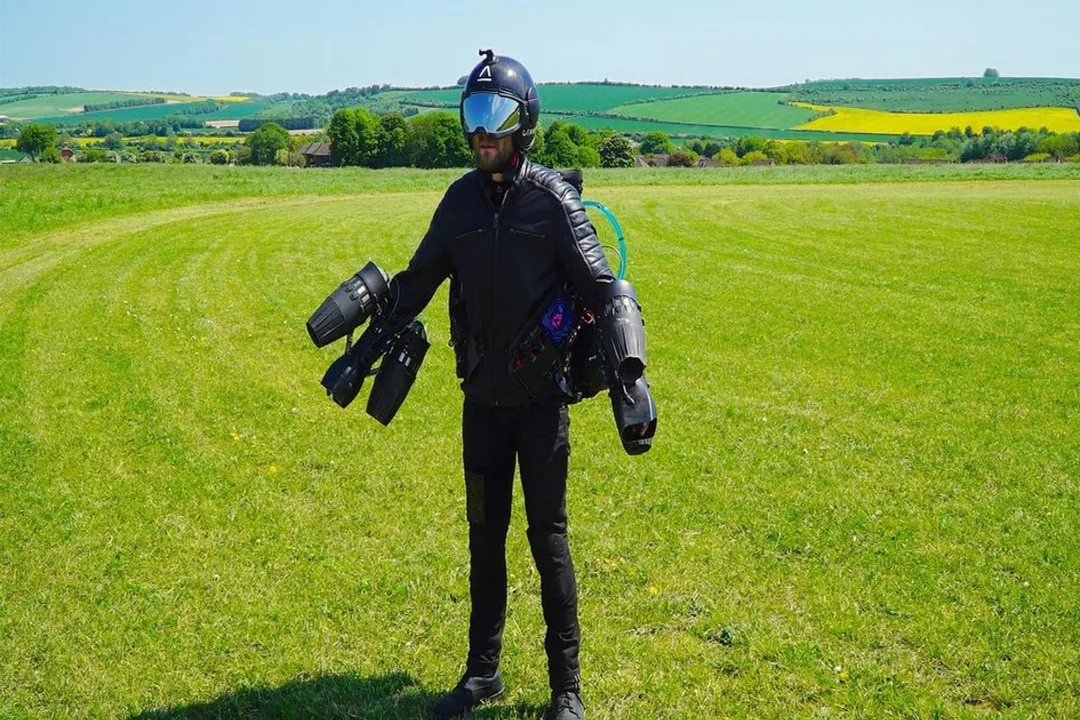
Young people growing up today are used to seeing airplanes that cross continents in hours, roaring through the sky powered by massive engines tucked under their wings. It’s easy to forget that for a long time, airplanes relied on propellers, like giant fans, driven by piston engines, similar to what you find in a car. [1][5] The person who helped unlock the secret to the modern, super-fast way we fly was a British engineer named Sir Frank Whittle. [2][3] He was the main inventor of the turbo-jet engine, a creation that utterly changed aviation forever. [7][8]
# Early Aviation Dreams
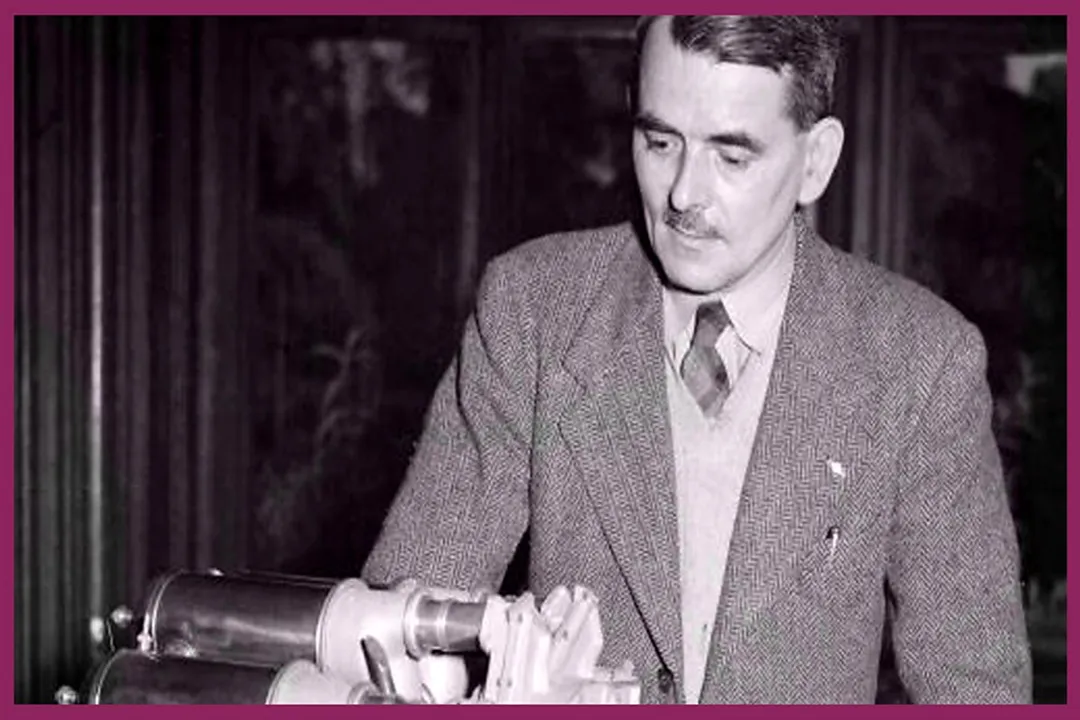
Frank Whittle was born in Earlsdon, Coventry, England, back in 1907. [8][3] Even as a boy, he was fascinated by machines and the idea of flight. [2] This early interest wasn't unusual for the time, as the Wright brothers had only recently shown the world that powered flight was possible. [1] Whittle showed an early talent for mechanics and invention. By the time he was a young man serving in the Royal Air Force (RAF), he was seeing the limits of propeller-driven planes. [3][5] Propellers are great for moving slowly, but they start to struggle when an aircraft tries to go really fast, near the speed of sound. [5]
He realized that if planes were going to get much faster, they needed a completely different way to generate thrust—a way that didn't rely on spinning blades catching the air. [5] This realization set him on a path that would take years of hard work, secret development, and fighting against people who simply didn't believe his ideas could work. [6]
# The Jet Concept
Whittle’s great idea was the turbo-jet engine. [3][7] Think about it this way: instead of pulling the plane forward with a separate fan (the propeller), what if the engine itself created a giant, super-fast jet of hot air pushing out the back?[5]
The basic idea involves a few key steps:
- Suck: Air is drawn into the front of the engine and compressed by a series of spinning blades, making it very dense. [3][5]
- Squeeze and Burn: Fuel is sprayed into this highly compressed air and ignited, creating a powerful, continuous explosion that generates very hot, high-pressure gas. [5]
- Blow: This hot gas rushes out the back, spinning a turbine (which keeps the compressor spinning at the front) and exiting through a nozzle, creating massive forward thrust. [3]
This was revolutionary because it allowed for much higher speeds than piston engines could manage. [5] While today we see this as the standard for modern airliners and fighter jets, back in the 1920s and 1930s, it was pure science fiction to many senior people in aviation. [3] It required complex metallurgy—the ability to create materials that wouldn't melt under the extreme heat and stress—and precise engineering that barely existed at the time. [6]
We often look at modern air travel and take the high speeds for granted, but Whittle’s invention represented a genuine paradigm shift in propulsion technology. It wasn't just an improvement on the propeller engine; it was switching the fundamental power source from mechanical rotation to sustained reaction, much like a controlled rocket. [5] This transition from relying on air being scooped by blades to air being shot out as a continuous exhaust stream is perhaps the single biggest technological leap in flight since the invention of the airplane itself. [7]
# Secrecy and Struggle
Whittle filed his first patent for the jet engine design in 1930. [3] However, getting official support for such a radical departure from established technology was incredibly difficult. [6] He faced years of skepticism from the Air Ministry, who were hesitant to fund risky new projects when traditional propeller planes still seemed adequate for the time being. [3]
To keep his dream alive, Whittle had to work with small amounts of funding and tremendous secrecy. [6] He eventually formed a company called the Power Jets Ltd.. [3] Imagine having a world-changing idea but having to keep it quiet, build working models in secret, and constantly defend your vision against experts who tell you it’s impossible. That was Whittle’s reality for nearly a decade. [3][6]
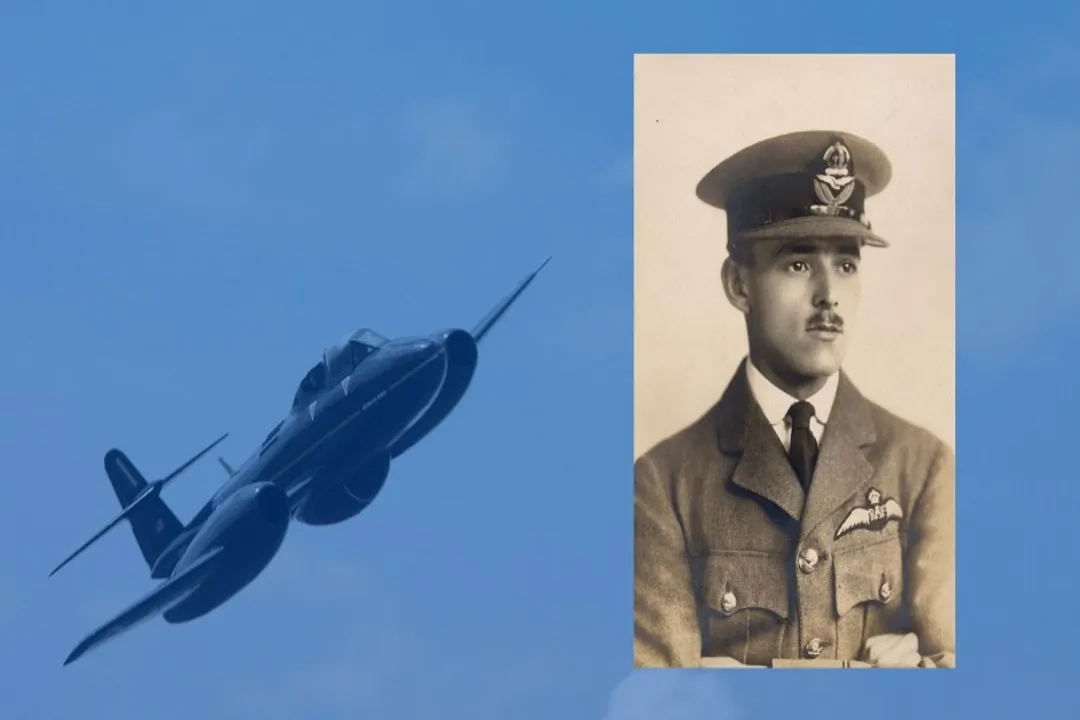
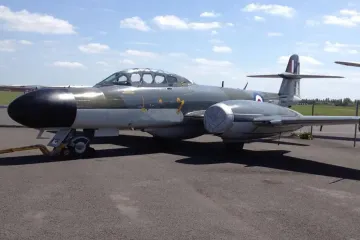
It was only later, as the threat of World War II grew stronger, that the Air Ministry recognized the potential of his invention for faster military aircraft and began to provide more serious funding. [3] The first test of a complete Whittle engine, the W.1 engine, took place in 1941. [3] That same year, the first British aircraft powered by a jet engine, the Gloster E.28/39 flown by Gerry Costello, took to the skies. [3][7] This flight proved Whittle’s theory was sound, though the engine was only used on an experimental aircraft at that point. [3]
# Competition and Recognition
An interesting part of Frank Whittle's story is the global nature of invention. While Whittle was tirelessly developing his concept in England, a German engineer named Hans von Ohain was also working on a similar concept independently. [3] Von Ohain’s engine flew first in Germany in 1939, slightly before Whittle’s first flight. [3] This illustrates a fascinating point about scientific progress: sometimes, when a technology is ripe—when the underlying science and material capabilities catch up—multiple independent thinkers arrive at the same solution around the same time, even if they are separated by distance. [9] However, Whittle’s design eventually proved more robust and scalable for sustained use. [3]
Despite being the technical pioneer in Britain, Whittle faced some administrative hurdles regarding the production and deployment of his engine, sometimes leading to friction with the Air Ministry and even with major manufacturers like Rolls-Royce, who were tasked with building the engines in larger numbers. [3] Even after his success, there were complex issues about patents and recognition that followed him later in life. [7]
Despite the bureaucratic struggles, his achievement was undeniable. He was knighted by the King in 1948 for his contribution to aviation. [3][7]
# A Lasting Skyprint
The immediate impact of the jet engine was on military aircraft, providing a speed advantage crucial during the latter stages of World War II and the early Cold War years. [6] But the most profound effect was on passenger travel. [1] Once adapted for commercial use, the jet engine allowed for the creation of airliners that could fly higher, faster, and more smoothly than any propeller plane. [2][7] This drastically shrank the world, making intercontinental travel a routine part of life rather than a multi-day expedition. [1]
Sir Frank Whittle continued to work in aviation and later moved to the United States, continuing his engineering career. [3] He passed away in 1996. [2]
To truly appreciate his perseverance, one must consider the sheer institutional resistance he faced. It often takes more than just a brilliant idea to change the world; it requires the personal grit to keep working on that idea when the official system tells you it is a waste of time and money. [6] For anyone facing a tough problem in school or life, remembering Whittle’s decade-long struggle to prove the jet engine concept works serves as a potent reminder that true innovators often have to build their own runway before they can take off. [9] His legacy isn't just the metal engine itself, but the proof that singular vision, backed by engineering know-how, can quite literally move the world faster than ever before. [7]
# Key Facts Snapshot
To quickly review the man who gave us the speed of modern flight, here is a small table summarizing some important moments in his life and work:
| Event | Date/Period | Significance |
|---|---|---|
| Birth | 1907 | Born in Coventry, England [8] |
| First Patent Filed | 1930 | Filed the initial concept for the jet engine [3] |
| Company Formed | Power Jets Ltd. | Established to develop the secret engine [3] |
| First Flight (UK Jet) | 1941 | Gloster E.28/39 takes off with a Whittle engine [3][7] |
| Knighthood | 1948 | Recognized by the King for his service [3][7] |
| Death | 1996 | End of a long and influential life [2] |
#Videos
Genius Of The Jet | The Invention Of The Jet Engine: Frank Whittle
Related Questions
#Citations
Frank Whittle Facts for Kids
Frank Whittle Facts, Worksheets, Biography & Turbojet For Kids
Frank Whittle - Wikipedia
Genius Of The Jet | The Invention Of The Jet Engine: Frank Whittle
Sir Frank Whittle and the jet engine - BBC Teach
Frank Whittle and the Jet Man | Episode 2 - PBS
Sir Frank Whittle - San Diego Air & Space Museum
Sir Frank Whittle, Inventor of the Jet Engine - Our Warwickshire
Remembering Sir Frank Whittle - Sapere Books