What did Malcolm McLean do?
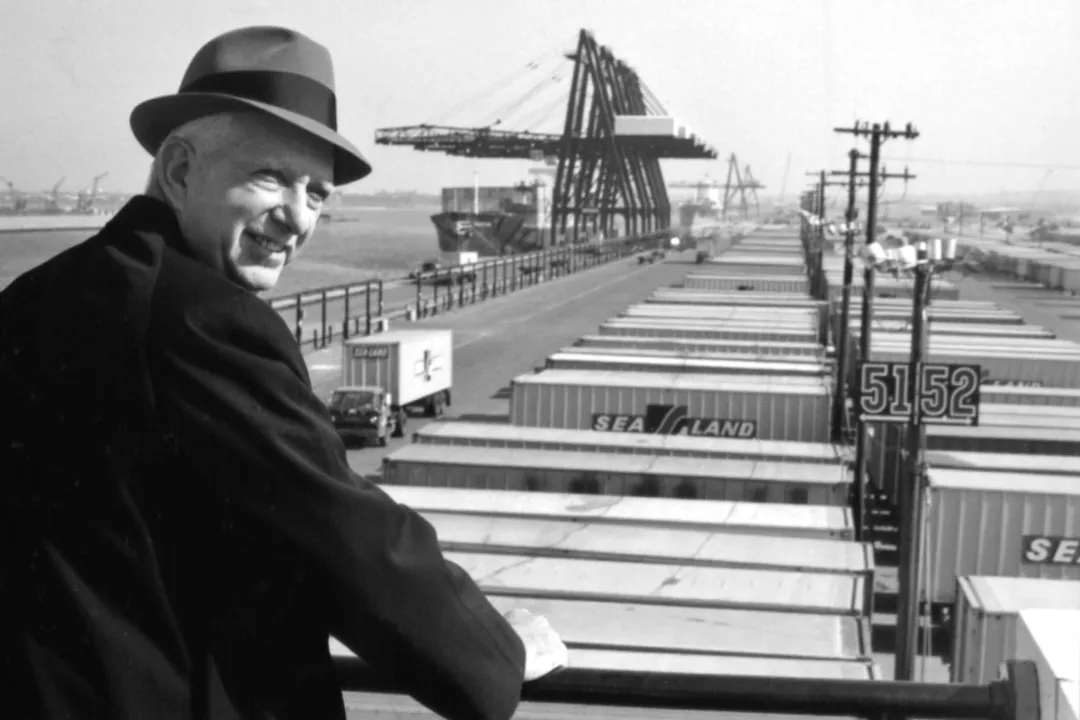
The story of Malcolm McLean is less about building a single device and more about redesigning the entire nervous system of global commerce. He was a simple trucker from New Jersey, a man who saw the grinding, expensive inefficiency of moving goods from the road to the sea and decided to fix it using an elegantly simple idea: standardization. [4][6][7] In the mid-20th century, shipping was a messy affair known as "break-bulk." Goods had to be manually loaded and unloaded, piece by piece—sacks, barrels, crates—onto ships, then onto trucks, or vice versa. [4][6][9] This process was agonizingly slow, required massive amounts of manual labor at every dock, and created perfect opportunities for theft and damage. [4][6]
# Trucking Roots
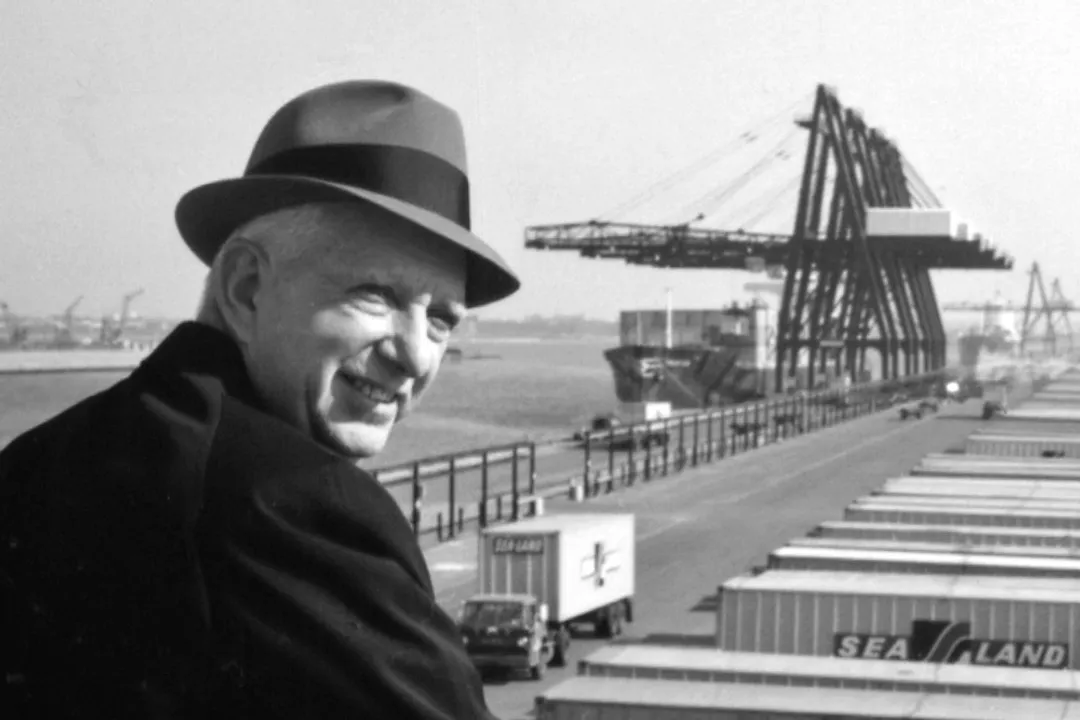
Malcolm Purcell McLean began his career in logistics not on the water, but on the asphalt, founding the McLean Trucking Company in 1934 in Mooresville, North Carolina, though he operated heavily in the New York/New Jersey area. [4][6][7] He started with one truck, hauling tobacco and cotton, but his ambition quickly expanded to include the coastal trade. [6] By the 1950s, his trucking operation was a significant player, but he was perpetually frustrated by the transfer point between his trucks and the ocean vessels waiting at the ports. [4][5] The bottleneck wasn't the trucking; it was the interface between modes of transport. [4]
# Dockside Frustration
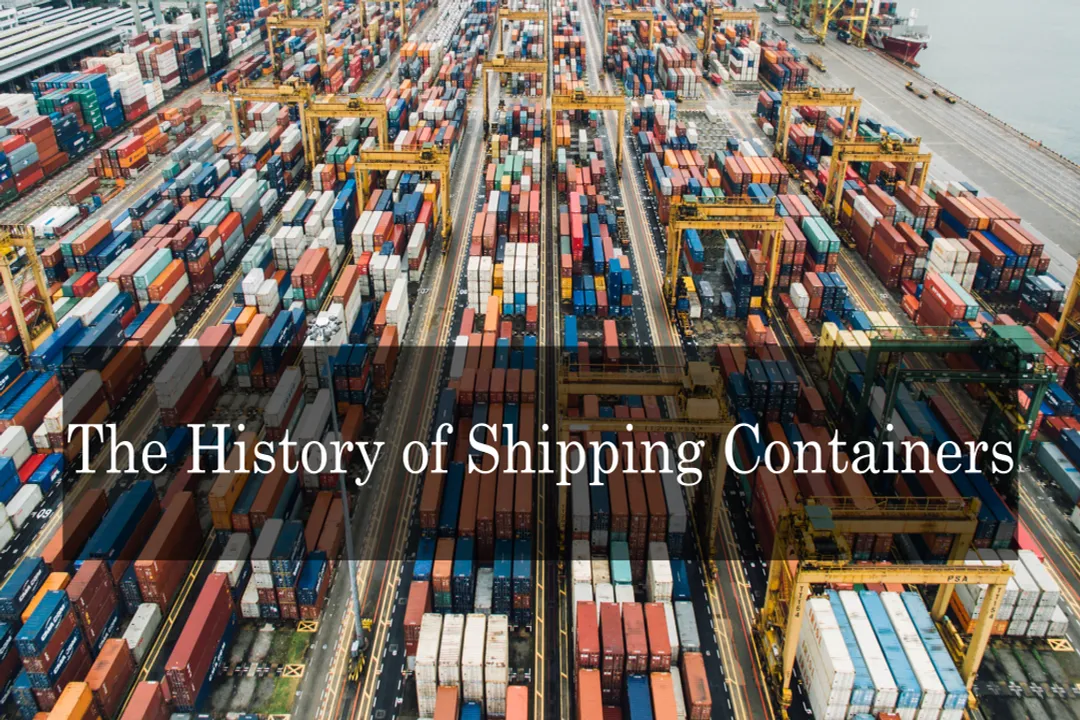
McLean observed firsthand the chaos of the docks. A consignment loaded carefully onto a truck chassis at a warehouse might take days to transfer to a ship, requiring every single item inside the truck's cargo to be handled individually by longshoremen. [4][5] This handling was the primary source of delay and expense. [4][6] A shipment might be handled six or seven times just to get it across the harbor, each touch costing money, adding time, and introducing the risk of loss or damage. [5] McLean’s insight was profound: if the cargo itself—the box—could travel seamlessly, without ever being opened or manually moved between carriers, the entire supply chain would accelerate. [4][6]
# The Box Idea
The concept McLean developed was what we now call containerization. [7] It wasn't just about putting cargo into a big metal box; it was about creating a standardized metal box. [1][2] The genius lay in the uniformity. He envisioned a box of a fixed size and strength that could be lifted by crane and secured onto a specially designed ship, then immediately transferred onto a truck trailer frame or rail car chassis without the contents ever being exposed or rearranged. [1][4][9] This principle, known as intermodality, meant that a single unit could move from the factory floor in the Midwest via rail, transfer seamlessly to a ship at the coast, and then move via truck directly to a European warehouse, all while remaining sealed within the same container. [1]
McLean filed for his first patent for this system in 1952. [7] Imagine the cultural shift required: you were no longer selling shipping space for sacks of coffee or crates of shoes; you were selling space for a standard, uniformly sized steel box. [2] This standardization was the key that unlocked economies of scale previously unimaginable in maritime transport. [1]
# The Ideal X
The theoretical planning culminated in a tangible demonstration on April 26, 1956. [7] McLean purchased an old World War II tanker, the Ideal X, and retrofitted it with supports to hold his newly designed, standardized containers. [4][5][7] This vessel made its inaugural voyage from Port Newark, New Jersey, heading for Houston, Texas. [4][5][7]
This single sailing marked the true beginning of the modern logistics era. [7] The Ideal X carried 58 of his aluminum truck trailers, which were essentially the first true shipping containers, lifted on and off the vessel in just a few hours. [4][5] Prior to this, loading a similar amount of cargo might have taken a week or more. [4] When the ship arrived, the containers were simply lifted off the deck, placed onto waiting truck chassis, and driven away to their destinations. [4] The speed was astonishing, and the reduction in handling—the very thing McLean hated—was dramatic. [4][6] This event proved the physical viability of containerization. [7]
# Transformation of Trade
The adoption of the standardized container had immediate and staggering economic consequences that reshaped the world economy. Before McLean's innovation, the cost of loading and unloading a ton of cargo often exceeded the cost of the sea voyage itself. [5][6]
The impact can be seen in a simple comparison of costs associated with moving freight across the ocean:
| Metric | Pre-Container (Break-Bulk) | Post-Container (Early Adoption) | Reduction |
|---|---|---|---|
| Cost per Ton | Approximately 1.00 | Over 80% [5][6] | |
| Labor Handling | Every piece manually moved | Container lifted as one unit | Massive time savings [4] |
| Security Risk | High (multiple exposure points) | Low (sealed box) | Improved cargo integrity [6] |
By streamlining port operations, McLean’s system slashed handling costs by up to 90% in some lanes. [5][6][9] This massive cost reduction made international trade accessible to countless new products and markets that were previously too expensive to move across oceans. [2][4] It wasn't just about moving goods faster; it was about making formerly non-viable trade routes profitable, effectively shrinking the globe for commerce. [7] The consistency of the container size meant that port infrastructure, cranes, ships, and even the internal logistics planning could all be rationalized around one universal physical unit. [1]
# Industry Resistance
It is important to remember that this revolution was not welcomed by everyone initially. [5] The established shipping lines and, particularly, the powerful dockworker unions saw McLean’s system as an existential threat. [5][6] Why pay hundreds of longshoremen for days of laborious work when a few crane operators could do the job in hours?[5] McLean had to fight significant legal and labor battles to gain acceptance, especially in high-profile ports like New York. [5][6] He correctly anticipated that while the upfront investment in specialized ships and port cranes would be enormous, the long-term savings would compel the industry to adapt. [4]
# Financial Reversal
While his technical and logistical vision was unmatched, McLean’s business acumen regarding the required capital proved to be his undoing in the short term. [4][5] He borrowed heavily to expand his vision, building his own container ships and developing container terminals. [4][5] In 1958, he sold the trucking company portion of his business, which was highly profitable, to raise capital for his container interests. [4]
By the late 1960s, the massive debt load associated with building the future overwhelmed him. [4][5][7] He lost control of his company in 1968 or 1969 due to financial difficulties tied to this aggressive expansion into maritime assets. [4][5][7] It is a poignant historical note that the man who revolutionized global trade lost his fortune because he moved too quickly to build the infrastructure necessary for that revolution. [4][5] He died in 1990. [6]
# Enduring Influence
Despite the personal financial setback, the system he created endured and became the globally accepted standard for shipping goods across continents. [1][7] The dimensions of his initial containers—the 8-foot width and 8-foot height—became the basis for the international standards established by the International Organization for Standardization (ISO). [7] While modern containers have since standardized on 20-foot and 40-foot lengths, the fundamental principle of the standardized, stackable, transferable metal box remains McLean’s primary gift to the world. [1][2]
His recognition came later, cementing his place as an essential figure in industrial history. In 1993, he was inducted into the National Inventors Hall of Fame. [2] A decade later, in 2004, he was posthumously inducted into the International Logistics Hall of Fame, an honor recognizing those who have shaped the world of freight transport. [1] For anyone ordering goods manufactured overseas, working in a modern warehouse, or simply observing a massive container ship docking, they are witnessing the direct, everyday result of the long-haul trucker who refused to accept inefficiency at the water's edge. [2][4] His invention is arguably the most important physical innovation in the history of global capitalism since the steam engine, enabling the interconnected supply chains we now take for granted. [9]
Related Questions
#Citations
Malcom McLean - Logistics Hall of Fame
NIHF Inductee Malcom McLean Made Shipping Container History
Malcolm McLean: Unsung Innovator Who Changed the World
The Truck Driver Who Reinvented Shipping | Working Knowledge
Who Made America? | Innovators | Malcom McLean - PBS
Malcolm Purcell McLean: The Father of Modern Container Shipping
Malcolm McLean, Containerization Innovator - NC DNCR
Malcolm McLean - A Shipping Visionary | Richmond Fed
The History of the Shipping Container | Malcom McLean